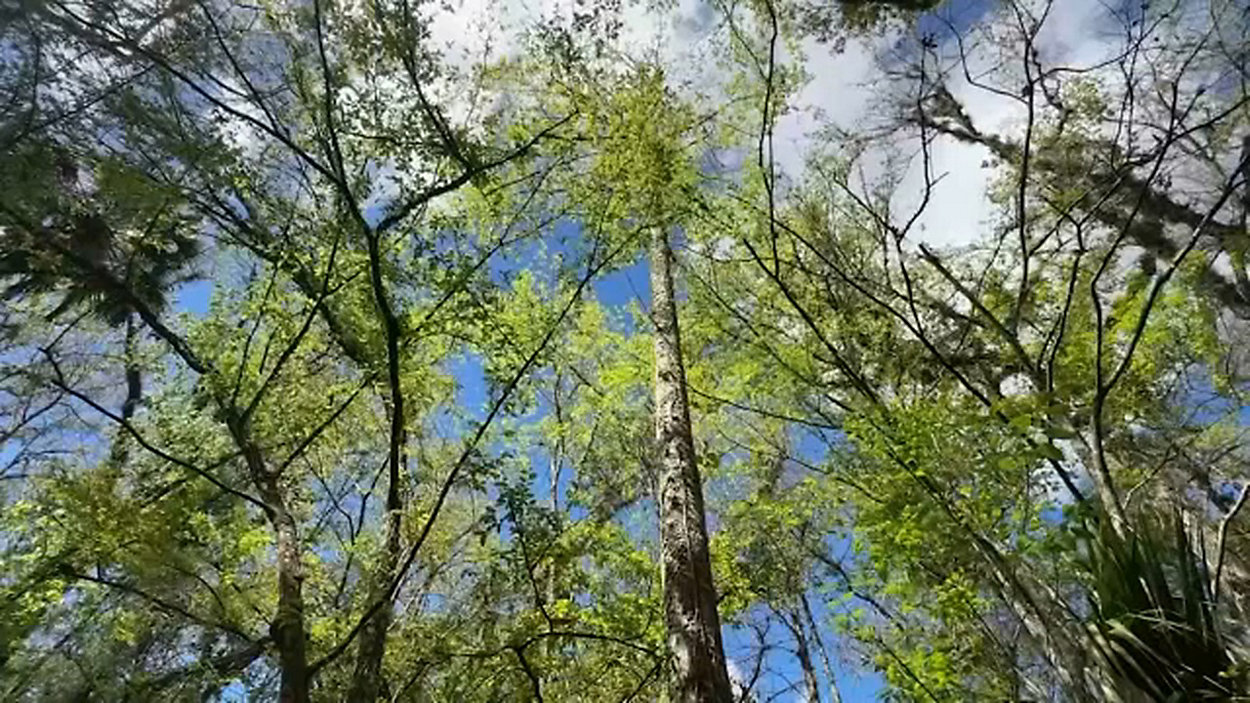
Tampa city officials are reviewing recommendations from the University of South Florida on how to rebuild and better protect Tampa’s urban tree canopy after recent hurricanes caused significant losses.
A USF study, presented at a recent city council workshop, found that hurricanes Helene and Milton reduced Tampa’s tree canopy by roughly 5% — a loss that effectively wiped out approximately four years of progress the city had made in expanding its urban greenery.
No immediate policy changes are expected, but city leaders are signaling that priorities could shift in the coming years as they work to rebuild and strengthen the canopy, with plans to plant more trees, adopt a species-selection strategy based on size, location, and wind resistance, and increase overall tree diversity.
On that last point, USF’s Dr. Shawn Landry of the School of Geosciences cautioned against Tampa’s heavy reliance on live oaks. Landry warned that if a disease were to affect live oaks — long a defining feature of Tampa’s landscape — the city would be particularly vulnerable, and that diversifying the tree population is essential.
Tampa has already launched 11 projects under its ReLeaf program, which began in June 2024, with plans to plant more than 3,000 trees across the city. The effort calls for smaller trees in dense urban areas like Ybor City, downtown, and West Tampa, and larger trees in neighborhoods where space allows.
Long-term tree maintenance remains a challenge, however, as care costs can be high over a tree’s lifespan, and city officials are still evaluating how to fund ongoing maintenance programs.
Tampa also offers residents free tree plantings in the public right-of-way through its “Tree-Mendous” program, which has been running since 1997.
Officials say the USF study could shape how the city manages and grows its tree canopy for decades to come.
Follow the St. Pete-Clearwater Sun on Facebook, Google, & X
St. Pete-Clearwater Sun: local St. Pete-Clearwater news at PIE-Sun.com


Leave a Reply