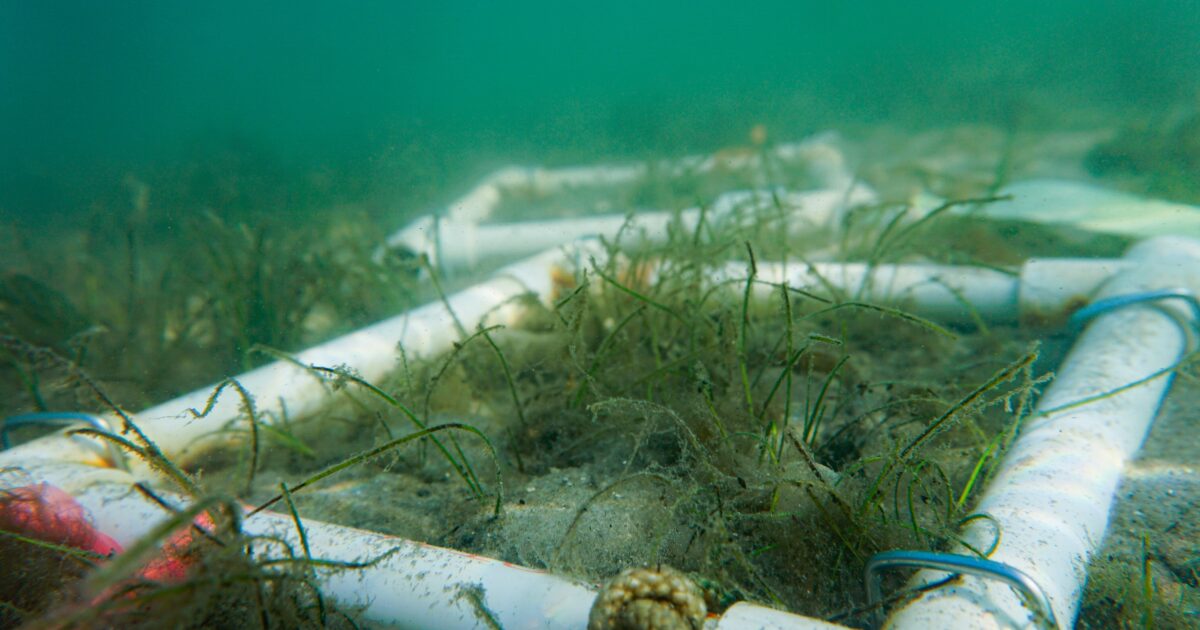
Seagrass conditions across much of the Tampa Bay region are improving, according to preliminary survey results released Wednesday by the Southwest Florida Water Management District (SWFWMD).
Scientists conducted field surveys this week near Fort DeSoto Park in Pinellas County, including in Boca Ciega Bay, to verify aerial photography taken from small aircraft. Chris Anastasiou, the district’s Chief Water Quality Scientist, said the ongoing drought has helped reduce macro algae growth, which in turn has benefited the seagrass beds.
“We’re very pleased to see that there wasn’t much macro algae, a lot more seagrass,” Anastasiou said. “During dry conditions, we tend to see less macro algae, which is ultimately good for the seagrass.”
Healthy seagrasses are considered a key indicator of overall ecosystem health, providing food and shelter for a wide range of fish and marine life. The district has recorded record seagrass levels since it began mapping in the 1980s.
However, the positive news is not uniform across the bay. Anastasiou noted that Old Tampa Bay continues to struggle, with ongoing seagrass loss. The district is working with partners, including the Tampa Bay Estuary Program, to develop potential solutions for that zone.
SWFWMD teams regularly conduct surveys, combining aerial imagery with on-the-ground field verification to track the health and extent of seagrass across the region.
Follow the St. Pete-Clearwater Sun on Facebook, Google, & X
St. Pete-Clearwater Sun: local St. Pete-Clearwater news at PIE-Sun.com

Leave a Reply