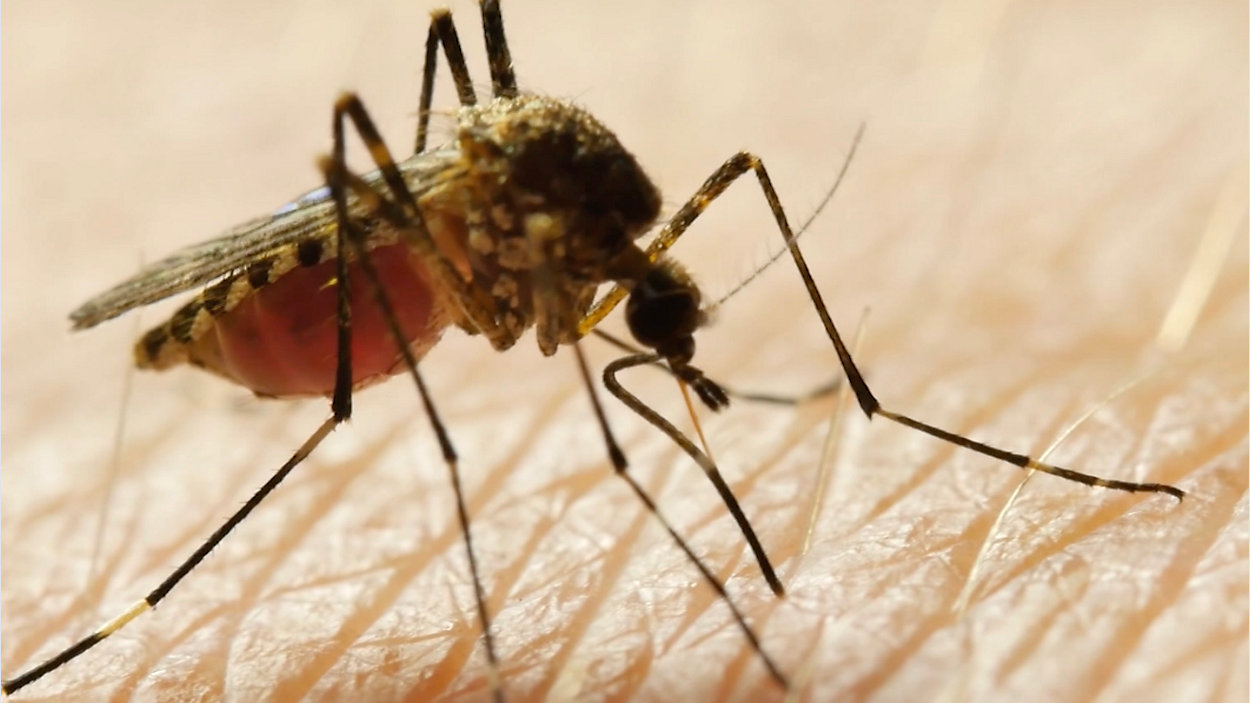
As Florida’s rainy season approaches, Pinellas County officials are calling on residents to take steps now to reduce mosquito breeding around their homes.
County Mosquito Control officials warn that mosquitoes can breed in surprisingly small amounts of standing water — as little as a quarter of an inch, roughly the volume of a bottle cap, is enough for larvae to develop. Caroline Pickart, a senior environmental specialist with Pinellas County Mosquito Control and Vegetation Management, noted that mosquitoes are highly adaptable and will use nearly any water-holding container as a breeding site, including children’s pools, old tires, and potted plants.
The concern goes beyond nuisance. Mosquito-borne diseases can be fatal, and Florida has seen cases of dengue fever and malaria in recent years. Brevard County alone reported more than 60 dengue cases last year.
Once the rainy season begins, Pinellas County plans to deploy helicopters to apply BTI, a naturally occurring soil bacterium that targets mosquito and black fly larvae without harming other organisms. Mosquito Control Manager Alyssa Berro oversees the program.
The county also conducts ongoing disease surveillance, including a sentinel chicken program. Mosquitoes frequently feed on birds, and while chickens don’t become ill from viruses like West Nile, their blood can develop detectable antibodies, giving officials an early warning system for disease activity in the area.
Residents are advised to dump and drain any standing water on their property, apply EPA-registered insect repellent, and wear long sleeves and pants during peak mosquito hours.
Follow the St. Pete-Clearwater Sun on Facebook, Google, & X
St. Pete-Clearwater Sun: local St. Pete-Clearwater news at PIE-Sun.com

Leave a Reply