
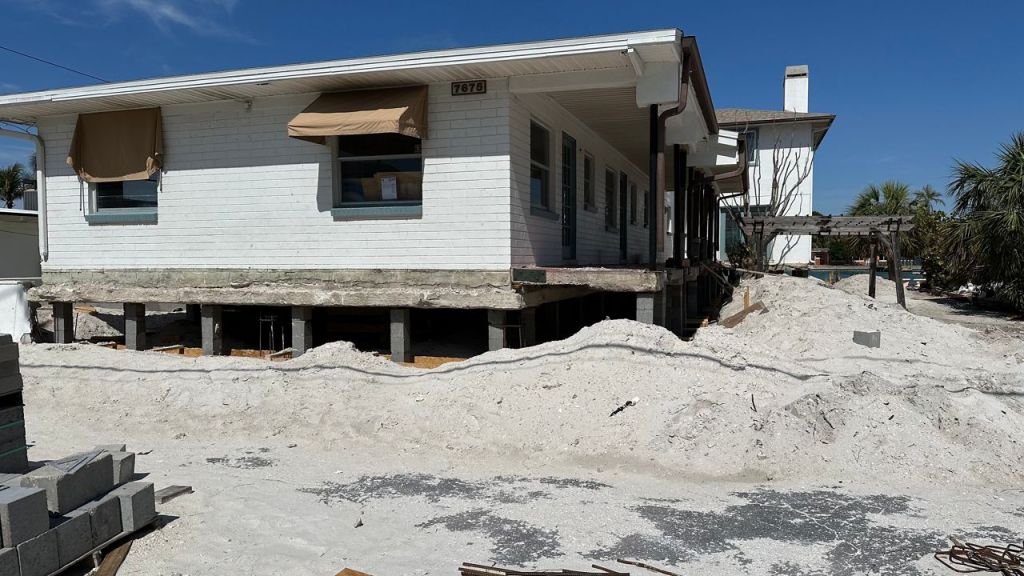
Treasure Island residents now have the option to voluntarily elevate their properties, including garages, driveways, and seawalls, using fill dirt to protect their homes from rising sea levels.
Since the 1940s, sea levels around the island have risen by 9 inches, with high tide events, including sunny day flooding, causing stormwater to back up into city streets. Projections suggest that sea levels could rise an additional 7 inches by 2040, 2 feet by 2070, and over 3 feet by 2100, intensifying the need for flood protection.
The increase in sea levels is primarily driven by the burning of fossil fuels, which trap heat in the atmosphere, expanding water molecules and melting land-based ice, thereby contributing to higher ocean volumes.
A proposal introduced last summer, known as the Terrain Modification Program, called for residents in flood zones to raise not only their homes but also surrounding properties, including driveways and garages, to mitigate the impacts of sea level rise. While the idea gained support from some, it was met with resistance from others who expressed concerns about the financial burden and the timing of road elevation efforts. A particularly controversial element was the suggestion to evaluate improvements made to homes over the past 10 years, which many misunderstood as applying to recent history.
In August, after a lengthy public meeting, the plan was tabled for further review. The situation was tragically underscored a month later when Hurricane Helene struck, causing seven feet of storm surge and resulting in four fatalities on Treasure Island.
In April, after revising the proposal, commissioners approved a voluntary elevation program that allows homeowners to use fill dirt for elevation, effective May 1. The policy no longer mandates the use of fill dirt or a 10-year look-back for improvements. However, the city encourages this approach to combat the rising sea levels.
“We’ve given the community a toolbox to help protect against sea level rise at their discretion,” said Justin Keller, a civil engineer with Advanced Engineering and Design. Residents will need to follow the city’s Terrain Modification Manual to ensure proper floodplain management and avoid creating flooding risks for neighbors.
The elevation program, according to Keller, is designed to allow the city’s infrastructure to adapt alongside private development in the coming decades. He emphasized that the initiative is an alternative to “managed retreat,” which advocates for relocating communities and infrastructure due to climate change. Keller argued that the program offers a “fighting chance” for the island, preventing it from being overtaken by rising waters.
Stacy Boyles, who was the Public Works Director at the time, echoed this sentiment, stressing the worsening flooding issues in the Sunset Beach area over the years. Despite strong opposition from the public, she and Keller stood by the plan, advocating for a proactive response to the crisis.
Due to public backlash, two new commissioners, Tammy Vazquez and Chris Clark, were elected, both of whom opposed the original plan. Boyles left her position to work for Pinellas County, and Keller’s contract was nearly terminated but was saved by a narrow 3-2 vote.
Follow the St. Pete-Clearwater Sun on Facebook, Instagram, Threads, Google, & X
(Image credit: Spectrum News)
PIE-Sun.com: local St. Pete-Clearwater news


 St. Pete-Clearwater Sun
Leave a comment