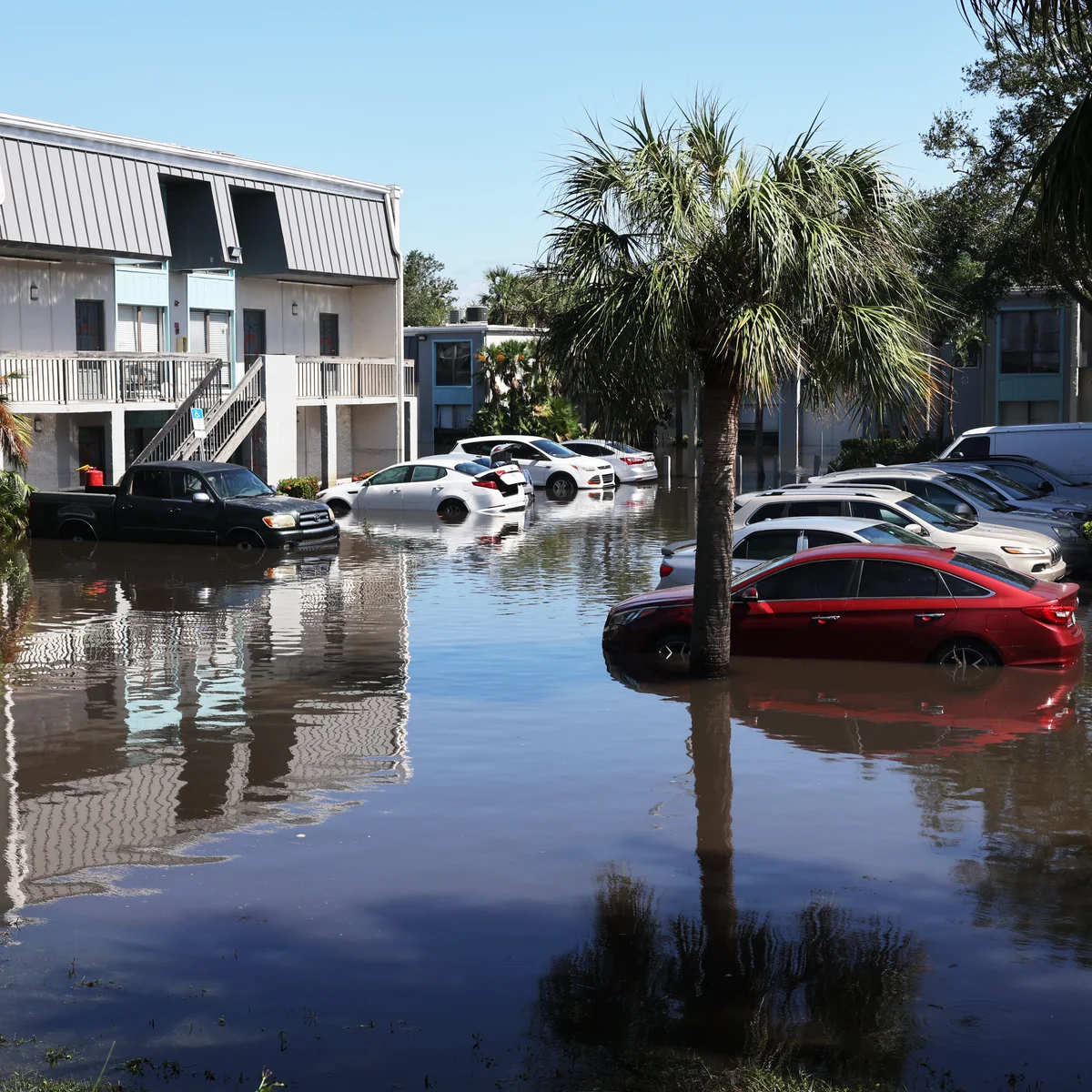
The car insurance sector is bracing for multibillion-dollar losses due to vehicle damage from recent hurricanes, which could push up insurance rates next year.
Eva Kelly-Cubells experienced firsthand the chaos caused by Hurricanes Helene and Milton, as her 2016 Chevy Cruze, along with many others, was submerged. The 86-year-old from Punta Gorda, along with her cat, sought refuge at a friend’s house on September 26, hoping to escape the worst of Hurricane Helene. But as night fell, she heard the ominous sound of water rushing over roads and the distressing noise of car alarms signaling the destruction.
“Then it would stop, and you’d know that was the end,” Kelly-Cubells recounted.
Hurricane Auto Claims Expected to Reach Six Figures
By October 28, Florida had seen nearly 91,975 insurance claims for damaged cars from Hurricanes Helene and Milton, according to data from the state Office of Insurance Regulation. Although Milton caused more property damage, Helene led to significantly more auto claims, by about 70%.
Fortunately for drivers, car insurance typically includes flood coverage, unlike most home insurance policies. However, this coverage has its limits. Policies only compensate for the current value of the vehicle, not its replacement cost, which left Kelly-Cubells with a $9,500 payout — insufficient for a similar new car.
The 2024 hurricane season’s impact might ripple into next year’s insurance rates for car owners in Florida and beyond, with insurers facing significant payouts due to vehicle losses across several states including Georgia, North Carolina, South Carolina, and Tennessee.
Insurance agents suggest that the full financial impact on Florida drivers’ insurance rates might not be clear for another year, but it’s not expected to be positive. Florida residents are already paying some of the highest car insurance rates in the U.S., averaging $3,594 annually for full coverage, according to Bankrate.com, just behind New York and Louisiana.
Similar Issues Driving Both Residential and Car Insurance Costs
Just as with property insurance, the car insurance industry relies on reinsurance markets to manage the risk of weather-related catastrophes. The back-to-back hits from Helene and Milton are likely to strain these markets even further.
“When reinsurance gets tight, costs to the insurance companies go up,” explains Caple Howden, owner of an Orlando-based insurance agency. “And so insurance companies, unfortunately, pass their costs on to the consumers.”
However, any increase in car insurance rates would need to pass through state regulatory oversight.
Mark Friedlander of the Insurance Information Institute notes that while car insurance rates might rise, the impact won’t be as severe as seen with property insurance. “Auto insurers may purchase reinsurance (especially major national carriers) but vehicle losses from hurricanes are nowhere near the level of property losses in the scope of total insured losses from storms,” Friedlander stated.
Car Insurance Costs in Florida Partially Tempered
Nationally, car insurance rates have increased by about 14% over the last year due to various factors including higher accident rates and repair costs. In Florida, legislative changes like the ban on assigning benefits for windshield replacements, effective from May 2023, have moderated these increases somewhat by reducing litigation.
For Kelly-Cubells, this experience has led to a decision to forego car ownership. “I’d have to get a loan and I don’t think I want to do that,” she said, choosing instead to share a car with a friend and use her insurance payout for travel to Spain and the Holy Land.
Want to win a $25 Amazon gift card?
To enter, simply follow us on Facebook, Instagram, Threads, or X between now and Tuesday, December 24th. (Psst… You can enter up to 4x by following us on all four! But sorry, U.S. residents only.)

(Image credit: Spencer Platt/Getty Images)



Leave a Reply