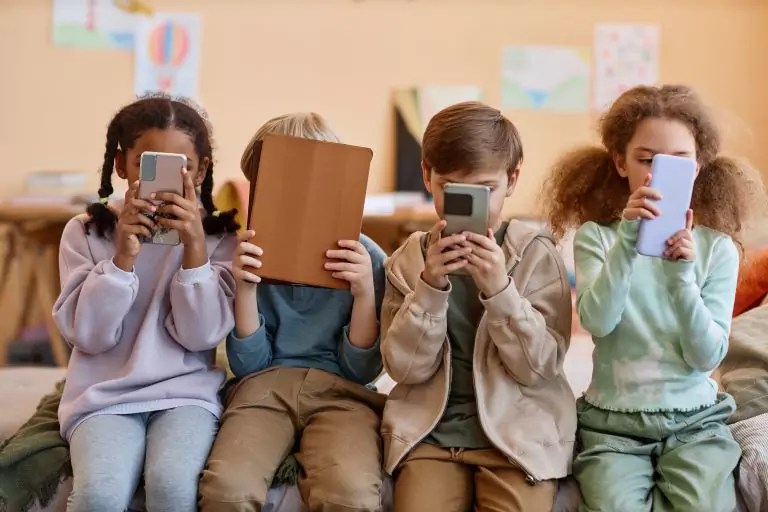
The University of South Florida is embarking on a groundbreaking 25-year study, the Life in Media Survey, to explore how digital media usage affects the attitudes, behaviors, and health of preteens over time.
Lead researcher Justin Martin explained that the study aims to understand not just the immediate effects of digital media use during childhood but also its long-term impact on wellness into adulthood.
“This interdisciplinary lifespan study is long overdue,” said Martin. “To be honest, this study probably should have been started 10 years ago.”
While there have been shorter-term studies on the topic, Martin emphasized that an extended analysis tracking the same children over time has been missing. “Many studies are just snapshots and don’t follow the same children over time. That’s what the Life in Media Survey aims to do,” he added.
Martin anticipates finding a correlation between increased media consumption and higher levels of depression and anxiety, noting, “Social media use and excessive screen time are likely positively associated with depression and anxiety.”
The study will survey up to 9,000 preteens across the United States every six months for the next quarter century, gathering data once during the school year and again over the summer break. Participants, aged 11 to 13, were selected from a nationwide panel from the Harris Poll, a global research firm partnering with USF for the study. They will be compensated with points from Harris, redeemable for gift cards and other rewards.
The survey will examine a range of digital behaviors, including listening to podcasts, binge-watching, and music streaming, beyond just the time spent on social media platforms like Instagram.
Martin, who is also the Eleanor Poynter Jamison Chair in Media Ethics & Press Policy at USF St. Petersburg, highlighted the high costs associated with such longitudinal studies. While initial funding came from an endowment for his position, the study will need to secure additional funds throughout its duration.
The survey will also investigate how adults become consumers and sharers of “ethically grounded news and information.” Results will be released biannually, allowing the community to monitor the effects of social media use throughout the research.
Before launching the full lifespan study, researchers are conducting a pilot survey with around 1,500 Floridians to refine the survey questions and methodology.
“We have some expectations, but we’re also trying to answer questions that haven’t been asked before,” Martin said.
This study marks a significant step towards understanding the long-term implications of growing up with digital media in an increasingly connected world.
Follow us on Facebook, Instagram, Threads, Google, & X
(Image credit: My Easy Wireless.com)




 St. Pete-Clearwater Sun
Leave a reply to New Florida Law Restricting Social Media for Minors Takes Effect Jan. 1 (Along with 8 Others) – St. Pete-Clearwater Sun Cancel reply