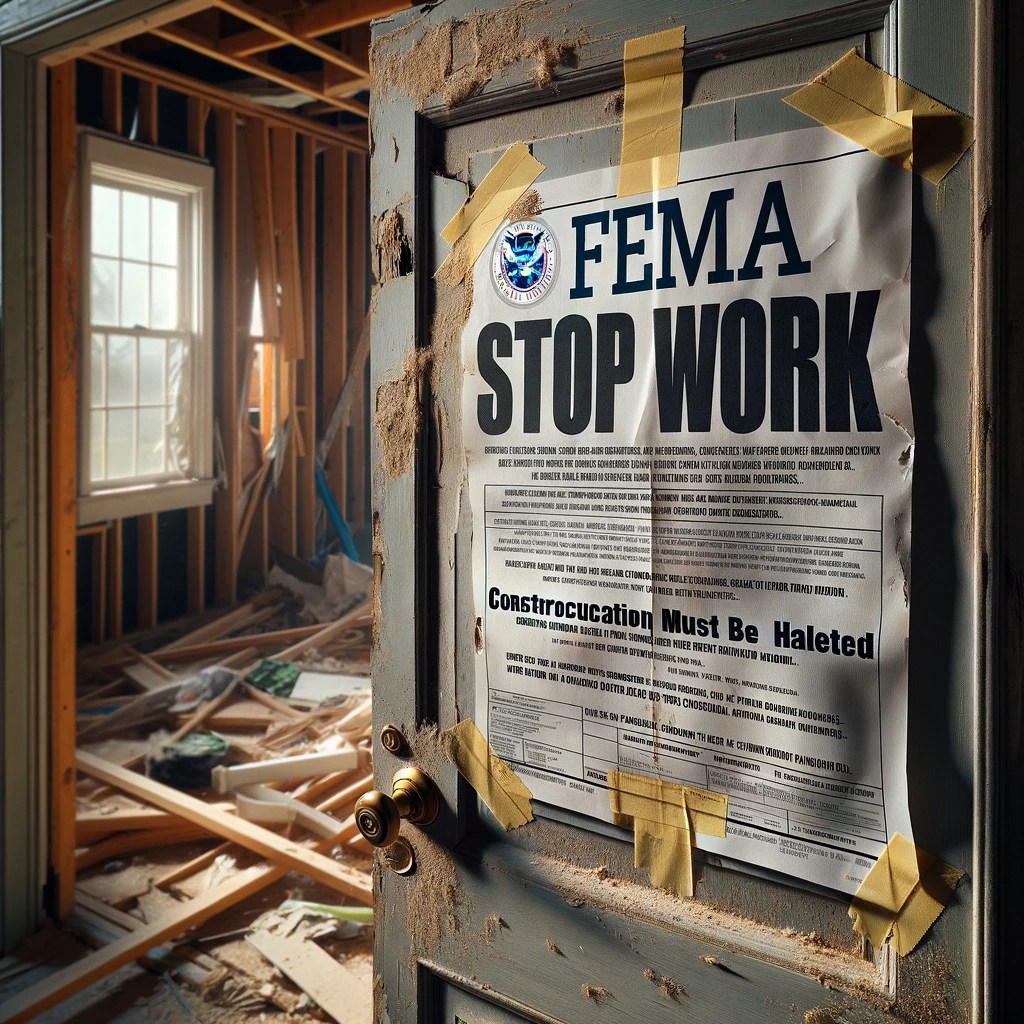
After a major disaster, property owners often rush to repair and rebuild, driven by an urgent need to restore their homes and businesses. However, FEMA, the Federal Emergency Management Agency, issues stop work orders to pause certain reconstruction projects, ensuring that all rebuilding efforts meet safety and regulatory standards.
But how often are these stop work orders issued, and what causes them? While exact numbers are difficult to track, trends indicate that these orders are not uncommon. For example, after Hurricane Debby, an extensive study found that Citizens Property Insurance denied 77% of claims filed. And, the same will probably be true of Hurricanes Helene and Milton. This sheds light on the challenges of post-disaster recovery, including the prevalence and reasons behind FEMA’s stop work orders.
How Many FEMA Stop Work Orders Are Placed on Damaged Homes?
The frequency of FEMA stop work orders can vary widely, depending on the disaster’s size and impact. Smaller-scale events may see only a few orders, while large-scale disasters affecting thousands of properties can result in hundreds or even thousands of orders. The issuance of these orders depends on factors such as community response speed and the number of individuals needing assistance.
Why FEMA Stop Work Orders Are Important
- Safety concerns. Safety is a top priority. After a disaster, properties may have unseen hazards even if they look sound on the surface. FEMA’s stop work orders allow for expert inspection, reducing potential dangers.
- Legal compliance. Operating without the necessary permits can lead to severe consequences, including fines or required rework. Compliance with stop work orders is crucial for legal protection.
- Protection of federal funding. For those receiving federal disaster aid, adhering to FEMA guidelines is essential. Failure to follow instructions can jeopardize continued assistance, as FEMA ensures public funds are used safely and appropriately. (For instance, the FEMA 50% rule.)
Common Reasons for FEMA Stop Work Orders
Understanding why these orders are issued can help prevent them. Here are a few frequent causes:
- Unpermitted work. Certain repairs require specific permits. Beginning work without them can lead to a stop work order.
- Zoning issues. Compliance with local zoning laws is essential. Projects that violate these regulations may prompt authorities to step in.
- Quality concerns. If work appears unsafe or substandard, local inspectors may issue a stop work order to prevent further risks.
What Should Property Owners Do If They Receive a Stop Work Order?
If you receive a stop work order, it’s essential to remain calm and take the following steps:
- Cease all work. Comply immediately by stopping any ongoing repair or construction activities.
- Review the order. Carefully read through the order to understand its basis and what needs to be corrected.
- Contact authorities. Reach out to your local building department or FEMA for guidance on the next steps.
- Secure permits. Often, these orders are due to missing permits. Apply for the necessary permits before resuming work. (This may take time as municipalities can be slow, due to increased demand.)
FEMA stop work orders serve as crucial safeguards, ensuring that post-disaster rebuilding efforts are safe, legally sound, and properly funded. Property owners can navigate disaster recovery more effectively by understanding the role and process of these orders. Staying informed and compliant is key to protecting your property and investment during challenging times.
Follow us on Facebook, Instagram, Threads, X
(Image generated by AI)

 St. Pete-Clearwater Sun
Leave a reply to State Study Reveals Permit Denials Affecting 14.5% of Florida Homeowners Due to Lookback Periods – St. Pete-Clearwater Sun Cancel reply