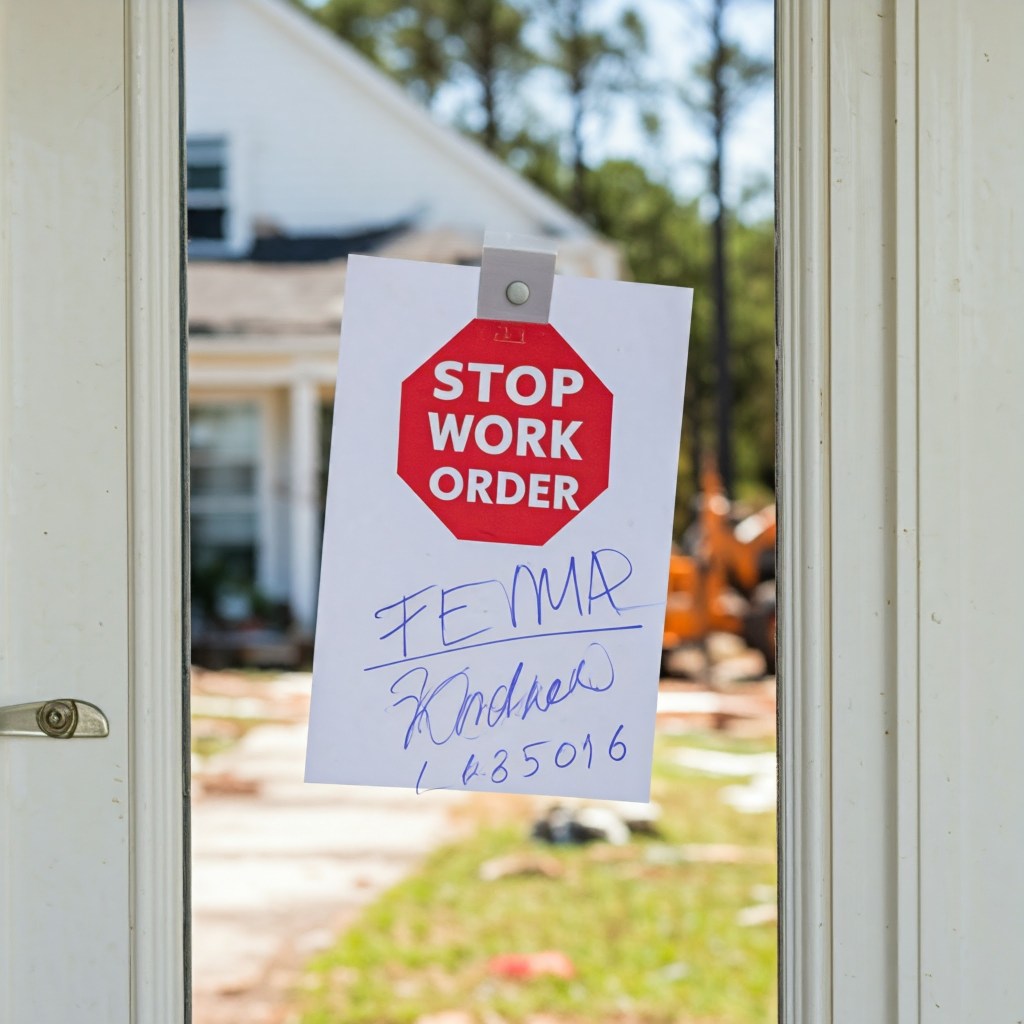
When disaster strikes, many property owners rush to fix the damage. But what happens when the Federal Emergency Management Agency (FEMA) places a stop work order on these repairs? Understanding this can save you a lot of headaches down the road.
What Is a FEMA Stop Work Order?
A FEMA stop work order is a big red light for construction and repair work. It tells property owners to halt any ongoing work immediately. This order can catch people off guard, especially when they’re eager to restore their homes or businesses after a disaster. But why does FEMA do this?
Why Does FEMA Issue Stop Work Orders?
Compliance with Federal Regulations
FEMA has strict rules. When a disaster occurs, the agency must ensure that funds are allocated properly and that repairs meet specific guidelines. If a property doesn’t follow these rules, FEMA can step in and issue a stop work order. This is often about protecting federal money and making sure that repairs are done correctly.
Assessing Damage
After a disaster, it’s critical to assess the extent of the damage before piling on repairs. A stop work order gives officials time to check the entire property. Imagine trying to fix a car without knowing what’s wrong with it. You might end up fixing the wrong part. Similarly, FEMA ensures that all damage is evaluated before repairs start. This is also the time property owners will find where they stand on the FEMA 50% rule, which states that if the cost of repairs exceeds half the market value, the entire home must comply with all the latest safety and building standards. Unfortunately, many property owners cannot afford such costs, leading some to gut and sell their properties “as-is.”
Preventing Future Issues
Sometimes, repairs can create future problems. For instance, if a homeowner tries to fix a foundation without addressing drainage issues, they might find themselves in a worse situation later. FEMA’s stop work order helps to mitigate these risks and ensures repairs are safe and sound.
What Happens After the Stop Work Order Is Placed?
Once the stop work order is in place, the property owner must pause all repair activities. But don’t panic, because this doesn’t mean all hope is lost. FEMA often provides guidance on what needs to happen next. Here’s what typically occurs:
Reassessment by FEMA
FEMA will send officials to reassess the property. They’ll look at the repairs underway and determine whether they meet federal standards. Homeowners might be asked for additional documentation, too. It’s akin to a teacher reviewing a student’s project to ensure everything is in order.
Communication Is Key
During this time, clear communication between the homeowner and FEMA is crucial. Property owners should ask questions and seek clarity on what steps they need to take. It’s always better to know where to go from here rather than feeling lost in the process.
How Can Property Owners Prepare?
Preparation can make a huge difference when dealing with FEMA. Here are a few simple tips you can use to prevent being hit with a FEMA Stop Work Order (though there are no guarantees as specific circumstances may apply):
Document Everything
Taking photos before and after a disaster can be incredibly helpful. This documentation serves as proof of damage and the steps taken for repairs. This will act as a diary of your home’s repair journey.
Understand FEMA Regulations
Being familiar with federal regulations can empower property owners. Knowledge is power, and knowing what’s required can reduce the chances of facing a stop work order.
Reach Out for Assistance
If you’re feeling overwhelmed, consider reaching out for help. Local agencies and community organizations often have resources to guide homeowners through the FEMA process.
FEMA stop work orders are quite frustrating, but they play a vital role in ensuring that repairs are done correctly and safely. By understanding the reasons behind these orders, property owners can navigate the process more effectively. Remember, patience and preparation are key when dealing with the aftermath of a disaster. So, stay informed, stay organized, and keep those lines of communication open.
How Many FEMA Stop Work Orders Are Issued Against Property Owners After a Disaster?
After a catastrophic event, the aftermath often involves a flurry of activity as property owners rush to repair and rebuild. However, amid this urgency, not all reconstruction efforts go smoothly. FEMA, the Federal Emergency Management Agency, issues stop work orders to halt certain projects, ensuring that rebuilding adheres to safety and regulatory standards.
But just how many of these stop work orders are issued, and what factors lead to them? Well, it’s difficult to quantify. We know from an extensive study that Citizens Property Insurance rejected 77% of claims filed due to Hurricane Debby. So next, we’ll get into the frequency and reasons behind FEMA’s stop work orders following disasters, shedding light on an often overlooked aspect of disaster recovery.
Understanding FEMA Stop Work Orders After Disasters: What Property Owners Need to Know
When disaster strikes, many look to repair their homes and businesses as soon as possible. But what happens when you start a repair job without the right permissions? That’s where FEMA stop work orders come into play.
How Many Stop Work Orders Are Issued?
The number of FEMA stop work orders issued varies based on the size and severity of the disaster. In smaller events, you might see only a handful of orders. But for major disasters that affect thousands of homes, the number can soar into the hundreds or even thousands. Each situation is unique, influenced by factors like how quickly the community responds and how many people need help.
Why Do FEMA Stop Work Orders Matter?
- Safety first. These orders are about safety. After a disaster, many hazards can lie beneath the surface. Homes might seem fine from the outside but could have hidden dangers that need expert inspection.
- Legal compliance. Working without proper permits after a disaster can lead to long-term problems. If you ignore a stop work order, you might face fines or have to redo work that doesn’t meet standards.
- Protecting federal funding. If you’re receiving federal disaster assistance, failing to follow guidelines could result in losing that support. FEMA wants to ensure that public funds are spent correctly and safely.
Common Reasons for Stop Work Orders
Understanding why stop work orders get issued can help you prevent them. Here are a few frequent scenarios:
- Unpermitted work. Some repairs might need specific permits. If you jump into work without them, you risk getting a stop work order.
- Zoning issues. Properties need to comply with local zoning laws. If your project doesn’t, authorities might step in.
- Quality concerns. If there are signs that work is being done poorly or dangerously, local inspectors may issue a stop work order to prevent further issues.
What Should Property Owners Do?
If you receive a stop work order, don’t panic. Here’s a simple plan:
- Stop work immediately. Though it may not seem fair at the time, it’s best to comply. Simply follow the order and halt any ongoing repair or construction work.
- Read the order carefully. Don’t just dismiss it as bureaucratic paperwork or red tape. Instead, try to understand why the order was issued and what you need to fix.
- Contact local authorities. Reach out to your local building department or FEMA. They can guide you on the next steps.
- Get permits. This is one of the most common reasons stop orders are issued. If needed, apply for the correct permits before resuming work.
FEMA stop work orders are crucial tools designed to protect both people and communities after disasters. They ensure safety, legal compliance, and proper use of federal funds. By understanding how these orders work, property owners can navigate the recovery process more smoothly. Remember, staying informed and compliant is the best way to protect your home and investment during challenging times.





 St. Pete-Clearwater Sun
Leave a reply to State of Florida Aids Beach Cities Struggling with Hurricane-Related Permit Backlogs – St. Pete-Clearwater Sun Cancel reply