

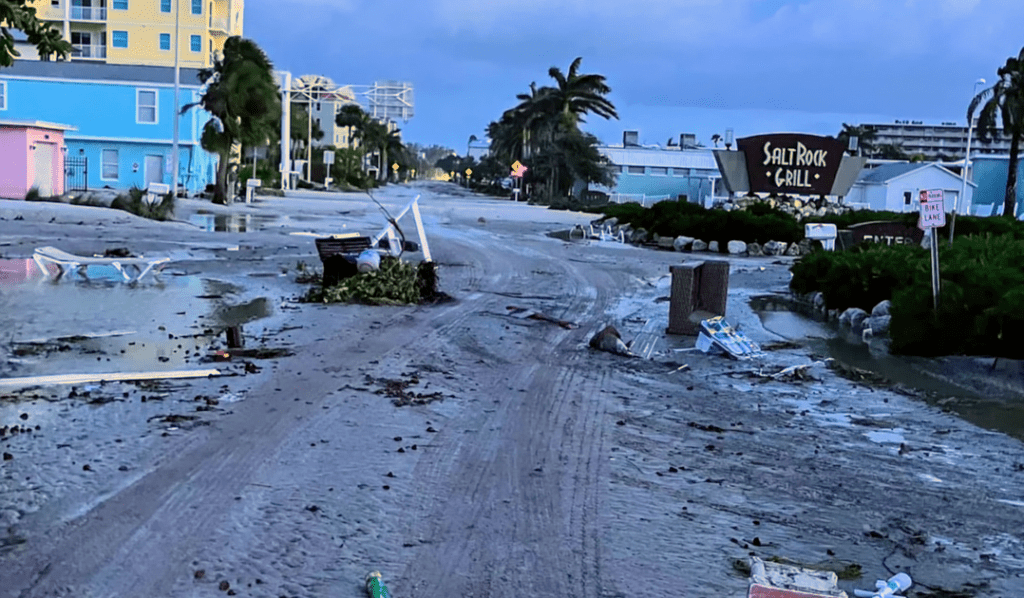
Hurricane Helene has etched its name in U.S. history as one of the most catastrophic storms to strike the mainland in half a century. As southeastern states grapple with the aftermath, the toll on human life and infrastructure continues to mount. (photo credit City of Treasure Island)
Grim Statistics and Historical Context
The latest figures paint a sobering picture: at least 191 confirmed fatalities, with hundreds still unaccounted for. This tragic count positions Helene as the second-deadliest hurricane to hit the U.S. mainland in recent decades, surpassed only by Hurricane Katrina’s devastating toll of 1,833 lives in 2005.
North Carolina bears the brunt of the loss, with 95 deaths reported, primarily due to catastrophic flooding in mountain communities. The death toll extends across multiple states: 39 in South Carolina, 25 in Georgia, 19 in Florida, 11 in Tennessee, and two in Virginia.
Long-Term Health Implications
A recent study suggests that Helene’s impact on public health could be far more extensive than immediate fatalities indicate. Research shows that tropical cyclones indirectly contribute to thousands of additional deaths over subsequent decades. Scientists estimate that since 1930, such storms have played a role in between 3.6 million and 5.2 million deaths, affecting various health conditions including diabetes, cardiovascular disease, and cancer.
Widespread Power Outages Persist
Nearly a million residents across the Southeast remain without electricity. South Carolina faces the most severe outages, with approximately 379,000 customers affected. North Carolina follows with 292,000, Georgia with 250,000, while Virginia and Florida report 25,000 and 20,000 outages respectively.
Potential for Further Weather Disturbances
As recovery efforts continue, meteorologists are closely monitoring a system of disorganized showers and thunderstorms that have moved from the Caribbean into the Gulf of Mexico. The National Hurricane Center has reduced the likelihood of this system developing into a tropical depression to 30% over the next week. Regardless of its classification, the system is expected to bring heavy rainfall to parts of Mexico and potentially the Florida peninsula in the coming days.
As communities across the Southeast begin the long process of rebuilding, the full extent of Hurricane Helene’s impact continues to unfold, leaving a lasting mark on the region’s landscape and its people.


 St. Pete-Clearwater Sun
Leave a comment