
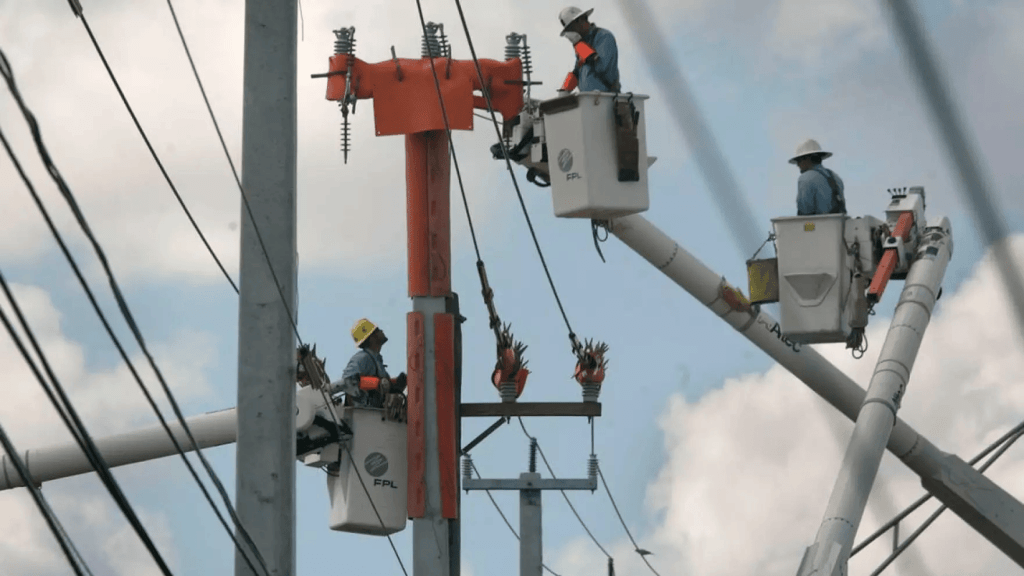
Florida Power & Light retained 27 cents of every dollar in revenue as profit in 2025, ranking it first among investor-owned utilities in the nation that year, according to a report released in March by the Energy & Policy Institute, a utility watchdog organization.
The report analyzed financial data from 110 investor-owned utilities from 2021 through 2024, with 2025 data included for 79 utilities that had filed annual results with the Securities and Exchange Commission in time for the analysis. FPL’s average profit margin over that period was 23.5%, second only to MidAmerican Energy’s 27% average. FPL’s margins in both 2024 and 2025 were 27%, the highest in the nation.
The findings do not account for a $7 billion rate hike state regulators approved for FPL in November 2025, which consumer groups characterized as the largest in U.S. history. That rate hike is currently facing a legal challenge in state court. FPL, which serves 12 million Florida residents, did not respond to requests for comment.
Across the utilities studied, about 13 cents of every dollar paid by consumers between 2021 and 2025 was retained as profit, a figure that rose to 15 cents in 2025 — meaning roughly $30 of a $200 electric bill went to investors.
Electricity rates are rising nationally for several reasons, including fluctuating natural gas prices, utility investment in new infrastructure such as power plants and transmission lines, and costs associated with hurricane damage and grid repairs.
Florida’s average electric bill in 2025 was $167.51, up from $128.65 in 2020, according to an Inside Climate News analysis of federal Energy Information Administration data. In 2025, Florida’s bills ranked seventh-highest in the nation.
Advocates say lower-income residents bear the heaviest burden. Bradley Marshall, a senior attorney at Earthjustice, said over a million FPL customers are disconnected each year for inability to pay, forcing families to choose between electricity and basic necessities like medicine and food.
The Energy & Policy Institute report did not include municipal utilities, rural electric cooperatives, or other nonprofit utility structures, which operate differently from investor-owned utilities.
Follow the St. Pete-Clearwater Sun on Facebook, Google, & X
St. Pete-Clearwater Sun: local St. Pete-Clearwater news at PIE-Sun.com


 St. Pete-Clearwater Sun
Leave a comment