
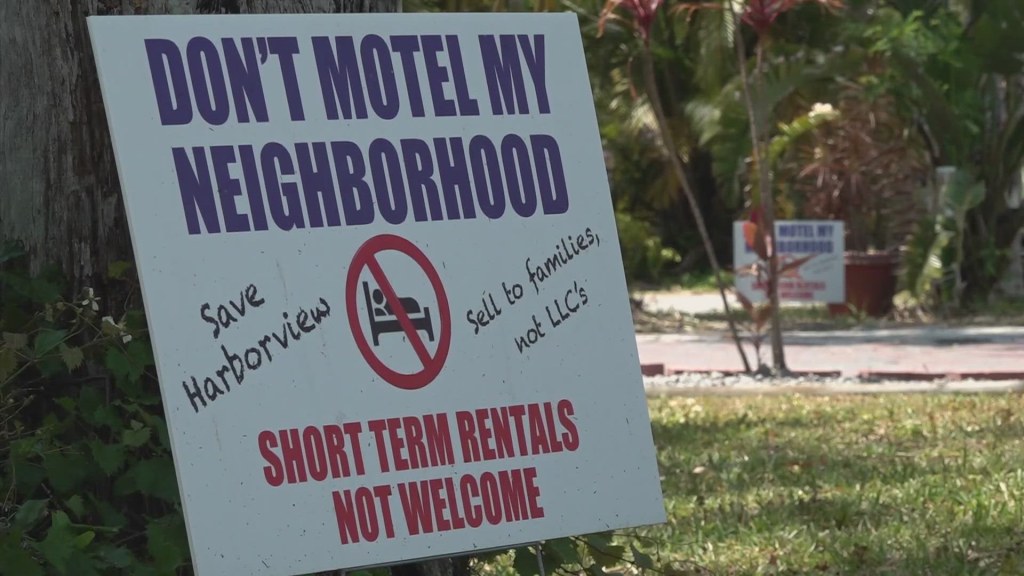
If you’ve lived near a beach house that doubles as an Airbnb or VRBO, you’ve probably heard the buzz: Pinellas County has been wrestling with how to manage short-term rentals — and it’s moved from the complaint box into the county code.
After months of public hearings, planning board recommendations, and at least one ordinance adoption, the Board of County Commissioners has formally adopted a revamped short-term rental ordinance for unincorporated areas of the county, including popular beachside neighborhoods. The goal is simple in theory — curb rowdy behavior, protect neighborhoods, and ensure safety — but on the ground, it’s proving a little messier.
What’s New in the STR Rulebook
Under the new rules — now official county policy — owners of properties used as short-term rentals must:
- Apply for a Certificate of Use before marketing their place for stays of less than 30 days more than three times a year.
- Pass a safety inspection before the certificate is issued, then every two years after.
- Follow occupancy limits (two people per bedroom plus two in common areas, up to a max of 10 guests).
- Meet parking requirements — one off-street space per three guests.
- Observe quiet hours from 10 p.m. to 9 a.m.
- Provide guests with property rules and emergency information inside the rental.
- Notify authorities if a guest is a registered sex offender, per state law.
There’s also a fee schedule attached — around $450 for the certificate (paid in installments the first year), plus inspection and renewal fees — and failure to comply may result in fines and code enforcement actions.
Why These Changes?
Commissioners and county planners have been under pressure for more than a year as complaints about noise, parking chaos, and late-night parties have spiked. When the Planning Board backed the idea of a certificate-of-use approach earlier this year, it was with the intent of bringing a bit more accountability and “neighborhood peace of mind” to areas where short-term rentals have proliferated.
County staff data showed thousands of STRs and a noticeable increase in complaints — a trend that planners flagged as a reason to clarify definitions and strengthen enforcement.
Mixed Early Reactions From Residents
Locals are still sorting out how effective the new rules will be.
Some residents told county commissioners that they want even stricter controls — especially around noise enforcement — and argued that the current approach doesn’t go far enough to stop what they call “party houses.”
Others who hoped the ordinance would rein in ongoing disturbances say the response system hasn’t fixed everything yet. One neighborhood reported more than 170 noise complaints to the county’s STR hotline in just a few months after the new rules took effect — but they say patrol deputies sometimes struggle with enforcement tools like decibel meters.
Commissioners have said they’re watching the data and that part of the ordinance’s intention is to track complaints and trends so future tweaks can be made.
What’s Next
The certificate program is rolling out with staggered deadlines for applications based on ZIP codes, giving owners and operators time to get compliant without being slammed overnight.
But the conversation is far from over. Expect future commission meetings, resident feedback sessions, and perhaps new proposals as both sides — neighbors and hosts — continue to weigh in on how Pinellas balances tourism with quality of life along its iconic beaches.
Follow the St. Pete-Clearwater Sun on Facebook, Instagram, Threads, Google, & X
St. Pete-Clearwater Sun: local St. Pete-Clearwater news at PIE-Sun.com


 St. Pete-Clearwater Sun
Leave a comment