
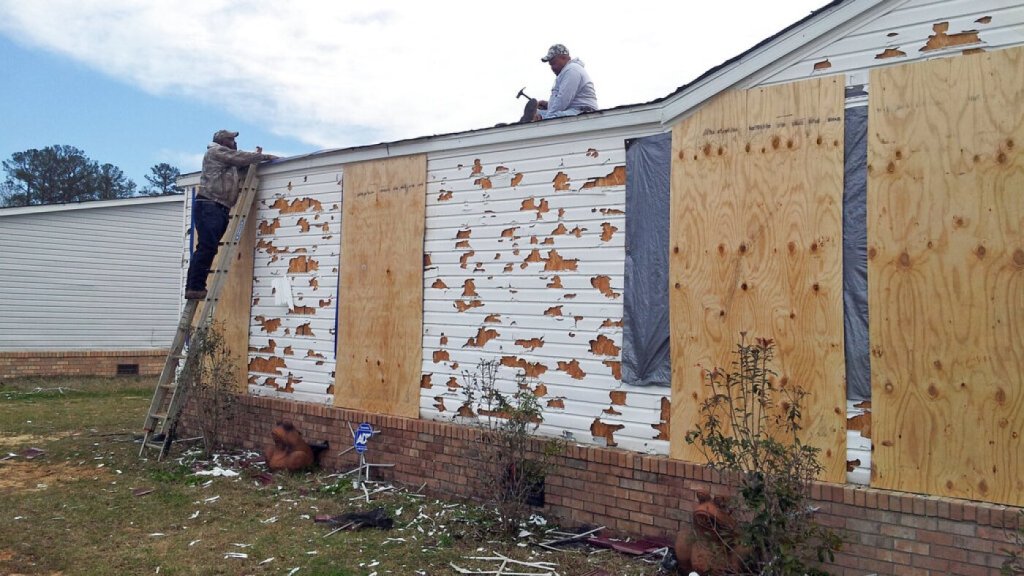
Home insurance premiums are rising dramatically across the central United States, driven largely by increasingly destructive hailstorms that cause billions of dollars in property damage, according to recent federal reports and industry data.
In June 2024, softball-sized hail struck Cozad, Nebraska, a town of 4,000 people, causing an estimated $100 million in damage. Nearly every roof, vehicle, and northwest-facing window in town was damaged or destroyed. The local hospital’s emergency department shut down for several hours, and repairs continue more than a year later.
While hailstorms rarely make national headlines because they typically affect small geographic areas and cause fewer fatalities than hurricanes or wildfires, researchers warn that extremely costly hailstorms are becoming more likely as the planet warms. The central United States faces the worst hail risk on the planet, and conditions that produce large hail have become more common across the central and eastern United States.
In 2024, hailstorms caused an estimated $160 billion in damage to homes nationwide, according to the Insurance Information Institute. This mounting damage has led insurance companies to raise premiums significantly. Between 2018 and 2022, insurance costs rose about 8% faster than inflation nationwide, according to a Treasury Department report published in January.
The Great Plains region now faces some of the highest insurance costs in the country. Nebraska’s average homeowners insurance now costs nearly $6,400 annually, the highest in the nation and almost $4,000 above the national average. In Omaha, insurance broker Josh Tapio reports that policies that cost $1,500 a few years ago now run between $3,000 and $4,500.
The insurance industry recorded $26 billion in profits in 2024 after losing more than $10 billion in 2023. Industry representatives attribute price increases to rising disaster costs, inflation, and higher construction material expenses.
The rising costs are particularly challenging for seniors on fixed incomes and residents of historically low-cost areas. Many homeowners now face higher deductibles and policies that don’t cover the full cost of roof replacement. Some property owners have been forced to sell rental properties when insurance companies refused to renew policies or when new premiums made ownership financially unfeasible.
In Cozad, 72-year-old Baltazar Avalos continues repairing his storm-damaged home because his insurance didn’t cover the full cost of repairs, while also facing a 10% increase in his premiums. The local hospital now pays more for insurance with a much higher deductible, creating, its CEO says, “a point of unsustainability.”
Follow the St. Pete-Clearwater Sun on Facebook, Instagram, Threads, Google, & X
St. Pete-Clearwater Sun: local St. Pete-Clearwater news at PIE-Sun.com

 St. Pete-Clearwater Sun
Leave a comment