

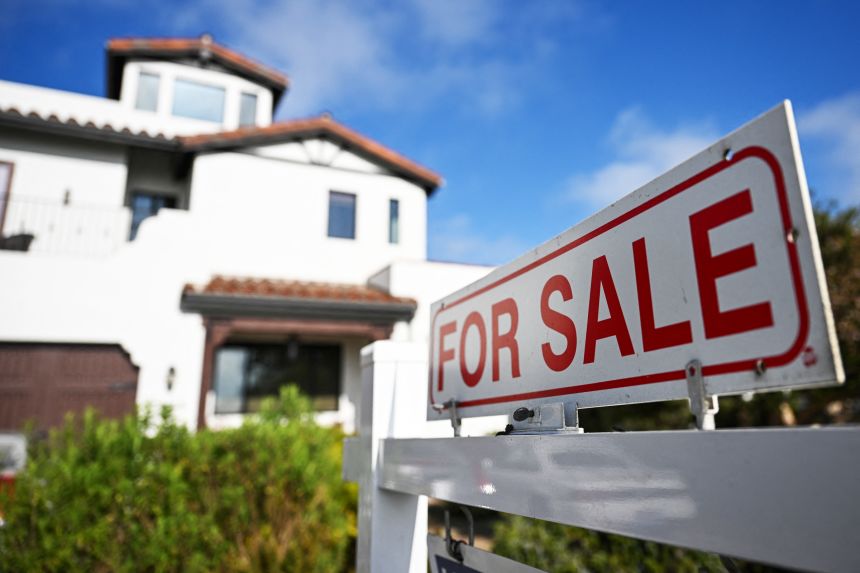
As skyrocketing home values squeeze Florida’s middle-class families, Gov. Ron DeSantis and state lawmakers are ramping up efforts to overhaul the Sunshine State’s property tax system.
With the 2026 legislative session looming, proposals to phase out property taxes are gaining traction, promising relief for homeowners while raising alarms about funding essential services. But how would such a shift work, and does the cure outweigh the cost?
Florida’s property taxes, levied by counties, cities, and school districts, rake in over $55 billion annually — the backbone of local budgets.
They fund about 50% of local government operations, including public schools, fire and police protection, roads, and libraries. Homestead exemptions already cap assessed value increases at 3% yearly under the 1995 Save Our Homes amendment, shielding long-time residents from sharp hikes. Yet, with median home prices topping $400,000, the average homeowner still pays around $2,500 annually — a burden DeSantis calls “unfair” and ripe for reform.
Enter the phased shift: A cornerstone of House Joint Resolution 203 (HJR 203), sponsored by Rep. Monique Miller, R-Palm Bay. This constitutional amendment outlines a 10-year glide path to eliminate non-school homestead property taxes — those that fund county and municipal services, excluding education.
Starting in 2027, millage rates (tax per $1,000 of assessed value) would drop by 10% annually for qualifying primary residences, hitting zero by 2036. School-related levies remain untouched, preserving K-12 funding.
To plug the revenue gap — estimated at $20-30 billion statewide over the decade — the plan leans on a multi-pronged offset strategy. First, redirect a slice of Florida’s robust sales tax haul (currently 6% state rate, plus local add-ons) to local coffers, potentially hiking the base rate by 1-2 percentage points, phased in tandem with cuts.
Second, bolster state general revenue funds from tourism surcharges, corporate fees, and untapped growth in documentary stamp taxes on real estate deals. Non-homestead properties, like vacation homes and rentals (which generate 64% of current collections), would face steeper taxes to shoulder a greater share of the burden.
Critics note this requires voter approval via ballot in November 2026, plus legislative tweaks to ensure no service disruptions. DeSantis champions full elimination but endorses the gradual approach for feasibility.
The Upside: Breathing Room for Families
Proponents hail the shift as a game-changer for affordability. Phasing eases the budgetary blow, delivering incremental savings — up to $1,000 per household per year by mid-decade — without abrupt shocks. It targets fixed-income seniors and young families, curbing out-migration from high-cost areas like Miami-Dade.
Economically, lower taxes could juice home sales and construction, fueling Florida’s boom. Environmentally, it might discourage sprawl by reducing the “tax on staying put.” And by sparing schools, it sidesteps education crises.
The Downside: A Revenue Reckoning
Detractors warn of a fiscal tightrope. Local governments could lose 28% of their budgets without full offsets, leading to service cuts or layoffs.
Replacing funds might demand $2,000+ per capita in new levies — equivalent to a 30% sales tax spike — hitting renters and low earners hardest in a sales-tax-heavy state.
Non-homeowners, including 35% of Floridians, get no direct break, exacerbating inequality. Long-term, unchecked spending could balloon deficits if growth falters, per the Tax Foundation.
Plus, the 10-year drag breeds uncertainty for planners.
As the session heats up, stakeholders from the Florida Realtors to budget hawks lobby fiercely. Whether it soars or stalls hinges on balancing dreams with dollars — a quintessentially Sunshine State showdown.
Follow the St. Pete-Clearwater Sun on Facebook, Instagram, Threads, Google, & X
(Image credit: Shutterstock)
St. Pete-Clearwater Sun: local St. Pete-Clearwater news at PIE-Sun.com

 St. Pete-Clearwater Sun
Leave a comment