

When Jim and Rachelle Pennington bought their house in St. Pete’s Oak Ridge neighborhood in March of 2001, they imagined it would be their forever home—a safe and comfortable place to grow and raise a family. The property had everything the young couple needed to build a firm foundation for the kids they had planned and started having in earnest seven years later.
However, even before the birth of their first child, Micah, something unsettling occurred just a couple of years after they moved into the house. In 2003, a simple summer thunderstorm brought water into their garage, and as the rain poured down, it began to trickle into the inside. Subsequently, subtle yet nagging events slowly unfolded, and the couple began to realize that there was more to the situation than the minor signs initially revealed.
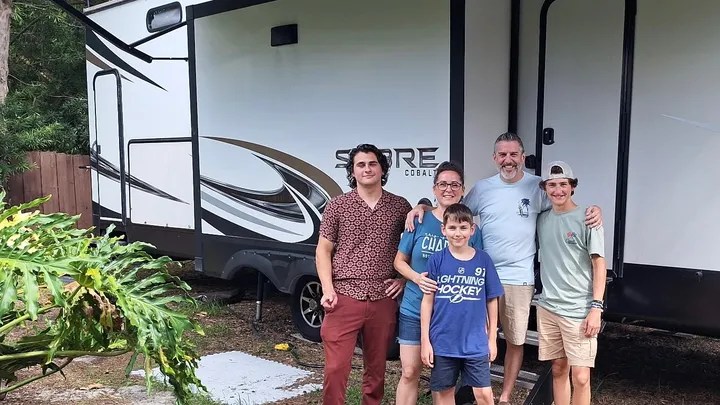
Now, 22 years later, their house remains empty, unoccupiable, and the family of five is living in a borrowed RV on a friend’s side yard.
So, what happened?
When Jim and Rachelle welcomed their first boy in August of 2004, they had only experienced negligible incidents due to flooding from intense rainstorms. Recurring events happened sporadically, but never caused significant damage, allowing them to make simple repairs and lead a relatively normal life in their St. Pete home. The couple had their second son, Luke, in July 2008, their third boy Caleb, June 2011, and then their fourth son, Zeke, in May 2014.
Still, the situation gradually worsened, although it wasn’t until two years thereafter that the family experienced the true extent of the problem, so they thought.
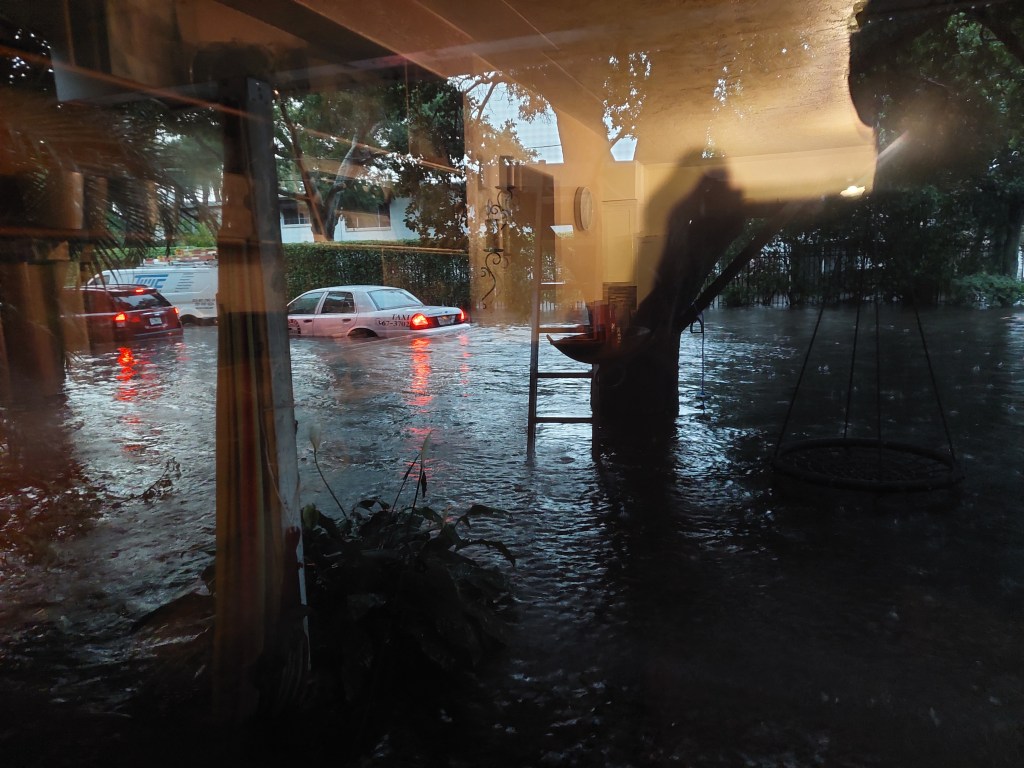
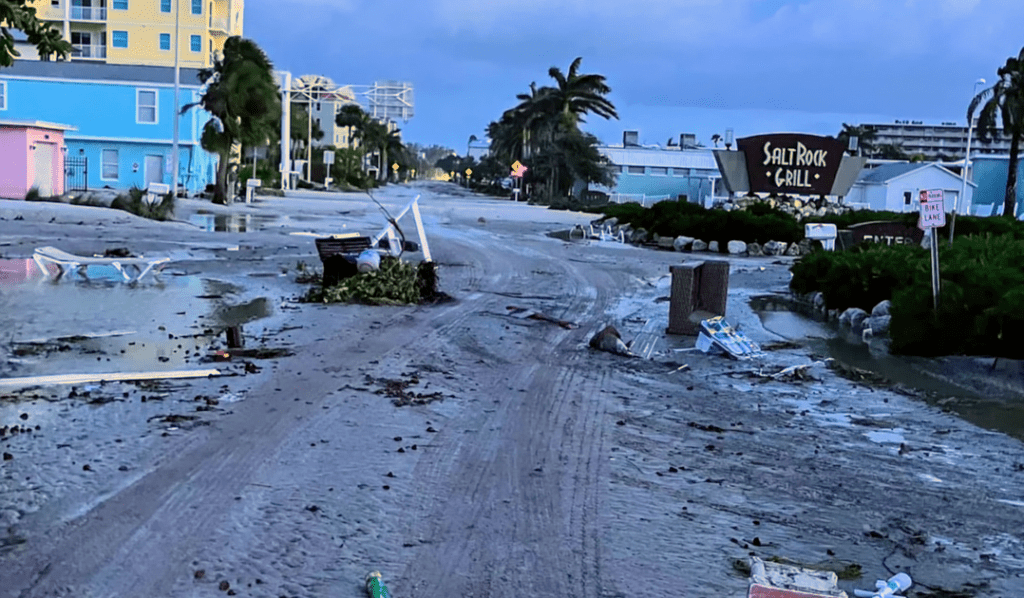
Things dramatically changed for the worse in 2016 when Tropical Storm Hermine struck, causing an estimated $550 million in total damage across Florida, bringing nearly 16 inches of rain to some areas. At Maximo Marina in St. Petersburg, the storm surge caused water to rise 6 inches over the dock at high tide.
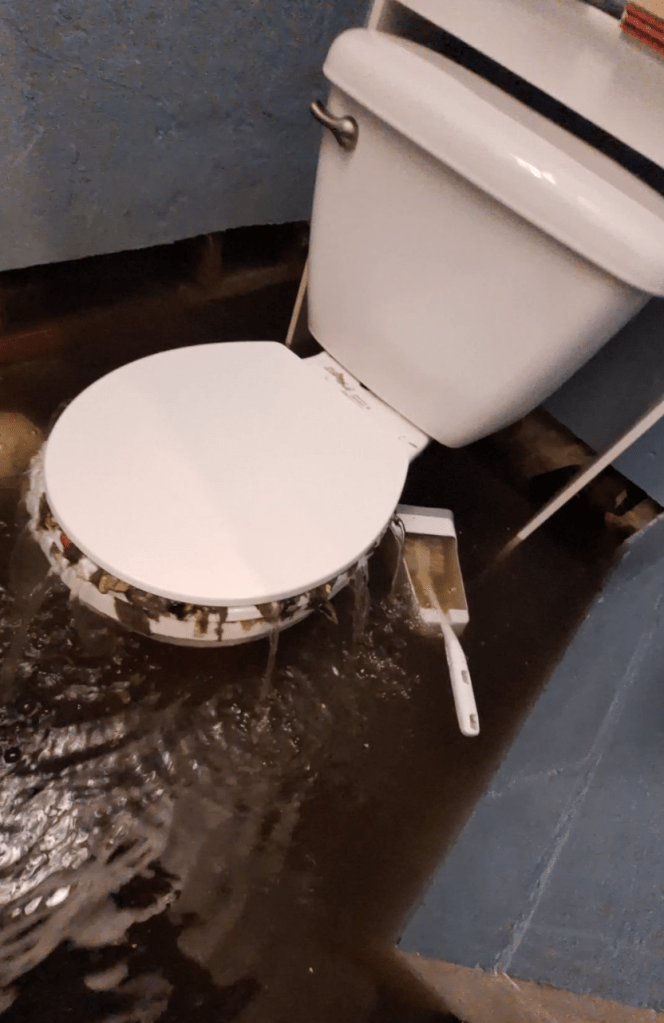
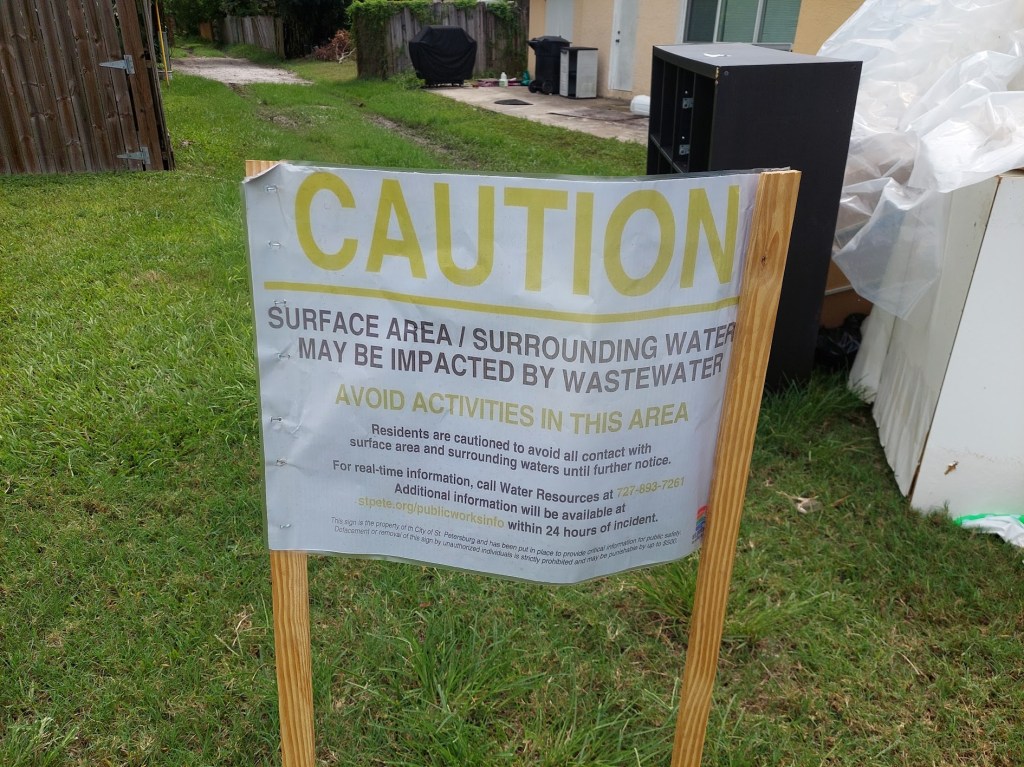
This time, the Penningtons’ house, located at 601 56th Street North, sustained extensive damage when sewage backed up into their home from a toilet for the first time. But it wouldn’t be the last. Their house has flooded dozens of times over the years, bringing sewage in again and again, and the frequency and severity of these floods have only increased, despite their property not being in a designated flood zone.
After Tropical Storm Hermine, the City of St. Petersburg installed a new lateral line with a clean-out to alleviate the problem. The City instructed the Penningtons to open the clean-out during flooding events. According to the couple, this was a tantamount acknowledgment by the City of St. Pete that its own infrastructure was a strong contributing cause of the system failure.
Regardless of the new installation, the house would sustain more damage through similar events, which occurred for approximately another seven years. Each time, contaminated water flooded their 4-bedroom, 2-bath home.
Then, on September 4th, 2024, a severe thunderstorm triggered the biggest incident yet. A massive sewage backup from the same toilet discharged raw waste and stormwater into the Pennington home for over two hours. The resulting six inches of contaminated water destroyed their floors, walls, furniture, and many personal possessions, ultimately rendering their house uninhabitable. Still, the couple saved what they could and hoped to find a quick resolution.
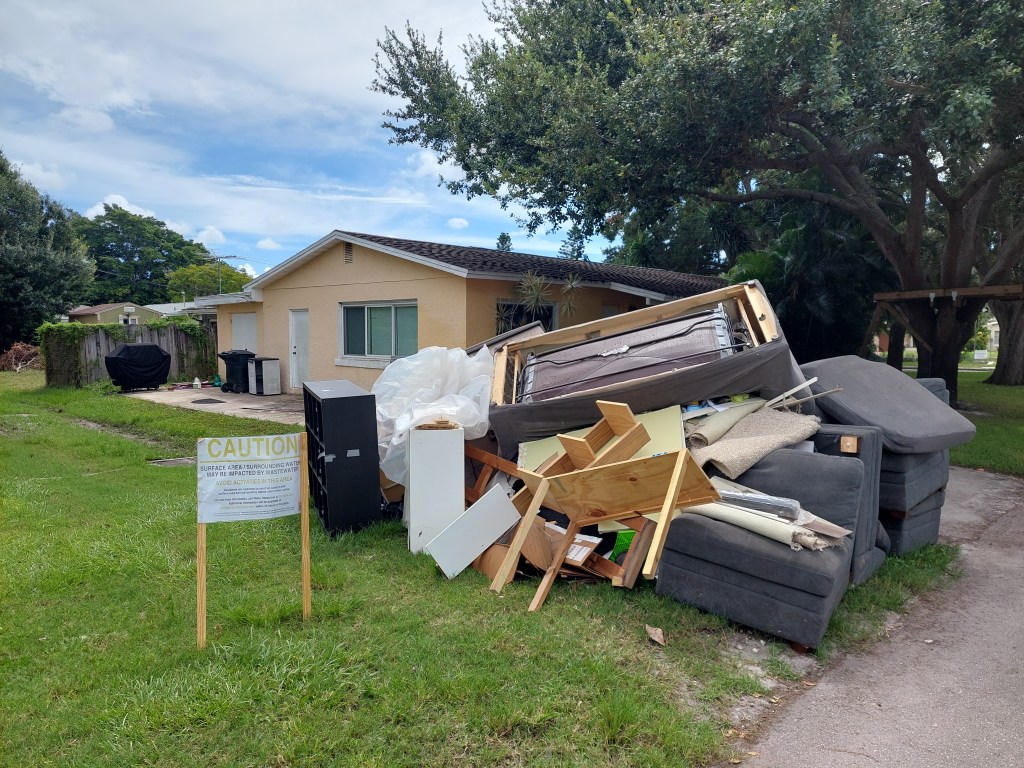
However, just over a month later, on October 9th, Hurricane Milton roared along the coast, and the worst flooding ravaged the house, destroying what few personal possessions the family had managed to salvage in September. Gone forever were countless precious memories and irreplaceable items. Once again, sewage flooded the property, reaching its highest level.
Since then, the Penningtons have lived through an unimaginable, irreconcilable series of events that most ordinary people would not dare imagine.
Jim and Rachelle filed a claim with their homeowners’ insurance, but were denied because the insurer concluded that the flooding was the fault and responsibility of the City of St. Petersburg, and the municipality’s infrastructure was the root cause of the problem.
Consequently, the Penningtons, now exhausted from multiple instances, filed a formal claim with the City of St. Petersburg’s Risk Management Division for the losses they suffered. Over the following several weeks, the couple met with City officials, including Stormwater and Pavement Director, Marshall Hampton. According to the Penningtons, Mr. Hampton stated that infrastructure limitations were the cause of the sewage back-ups and suggested that the City consider purchasing their Oak Ridge home.
The couple agreed to pursue the purchase option, and their claim for losses incurred was placed on hold by the City of St. Pete. In March 2025, their house was appraised twice for the City. By April, the Penningtons received confirmation that the Public Works Department was reviewing both property appraisals to determine a final decision.
However, on May 20th, Public Works Administrator Claude Tankersley informed the family that the City would not move forward with the purchase of their property. Although the municipality subsequently installed a backwater valve.
Less than a month after receiving the devastating news, on June 13, 2025, Claims supervisor Eric Thomas phoned Rachelle, informing her that the City of St. Pete had also completely denied the family’s Claim for Losses—the Penningtons state they were not given a reason for the denial, though.
Unable to live in the house, the family of five moved out and is currently living in an RV on a friend’s side lawn. Jim, an IT professional at Calvary Chapel St. Petersburg, provides the family’s sole source of income, and the couple continues to pay the mortgage on their uninhabitable and severely damaged property. At the same time, Rachelle homeschools the three youngest of their four boys in tight quarters.
Now, even their temporary living arrangement in the RV is in jeopardy, as they have a limited amount of time under emergency housing regulations.
After interviewing Jim and Rachelle Pennington, The St. Pete-Clearwater Sun reached out to Public Works Administrator Claude Tankersley and Stormwater, Pavement, and Traffic Operations Director Marshall Hampton for comment. Mr. Hampton did not respond, but Mr. Tankersley did reply, writing in an email:
“As this is an open claim, we cannot comment on the matter. However, as we told the Pennington’s [sic], we deliberated the decision to purchase the property through two lenses:
- Could the property be used to the benefit of our stormwater system?
- Could the property be used to the benefit of our wastewater system?
The answer to both questions is ‘no.’”
Jim and Rachelle have also tried reaching out to their local and state representatives, spoken with an attorney, and explored the possibility of selling their property as-is but learned it is ostensibly unsellable under the current infrastructure circumstances; which is why they still hope for a resolution with the City of St. Pete, as selling the property would present a number of challenges and cost the family dearly: “…even if someone bought it, we’d likely have to sell it for way less than it would be worth without the flooding issues, likely losing at least $100,000-$200,000 in equity. Losing that equity means we can’t go buy another house and get ourselves out of this situation,” the couple explains.
Ultimately, the Penningtons would prefer to have the issues fixed so they can move back into the home they love and miss so desperately.
In the meantime, they’ve set up a GoFundMe account to help alleviate their deep pain and unmitigated frustration: https://www.gofundme.com/f/help-jim-and-rachelle-overcome-unfair-sewage-devastation
To see what the Pennington’s have been dealing with, just scroll to the media posted below.
Follow the St. Pete-Clearwater Sun on Facebook, Instagram, Threads, Google, & X
(Image credit: Jim and Rachelle Pennington)
PIE-Sun.com: local St. Pete-Clearwater news



 St. Pete-Clearwater Sun
Leave a comment