

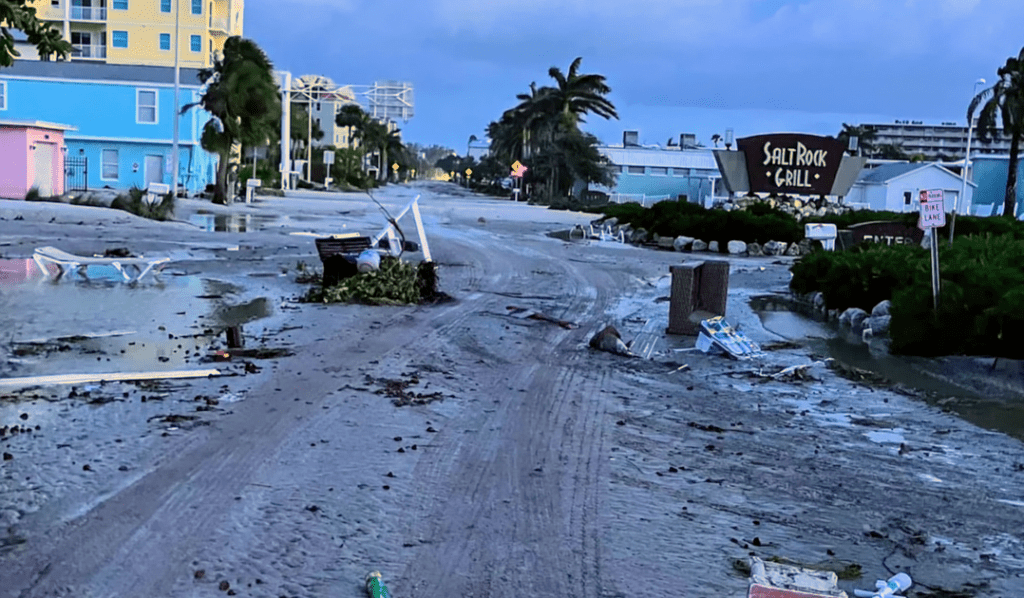
A hurricane recovery law touted as a way to speed rebuilding across Florida is now facing pushback from communities, advocacy groups, and some local officials who say it strips cities and counties of important decision-making powers.
State Rep. Linda Chaney (R–St. Pete Beach) says she will push next session to roll back parts of Florida Senate Bill 180 that restrict local authority.
What’s in SB 180?
Signed in July with near-unanimous support, SB 180 was promoted as a tool to cut post-storm red tape. It streamlines building permits, reduces certain fees, and expands training for emergency management staff.
“It’s based on real-life recovery experience, and there’s a lot of good in it,” Chaney said. “But the poison pill was the local preemption, and that’s what I’m trying to fix.”
Temporary ban on local rule changes
One section of the law prevents cities and counties hit by Hurricanes Debby, Helene, and Milton from changing development rules until October 2027. Critics say that freeze undermines flood prevention, environmental safeguards, and growth management during the recovery period.
“The broad overreach puts more Floridians at risk of damaging floods, increased pollution, and sprawl,” said Kim Dinkins, policy and planning director at 1000 Friends of Florida. “It ties the hands of local governments…making them unable to update policies or regulations.”
Local impacts in Manatee County
In Manatee County, commissioners say the law blocks them from adding new wetlands protections designed to help reduce flooding.
“If a local government can’t respond to flooding, water quality issues, and sprawl, then they can’t protect the residents who count on them,” Dinkins said.
Chaney’s plan
Chaney says she will introduce a bill in the 2026 legislative session to repeal the preemption provisions while preserving the faster-recovery measures.
Follow the St. Pete-Clearwater Sun on Facebook, Instagram, Threads, Google, & X
(Image credit: WTVT)
PIE-Sun.com: local St. Pete-Clearwater news



 St. Pete-Clearwater Sun
Leave a comment