
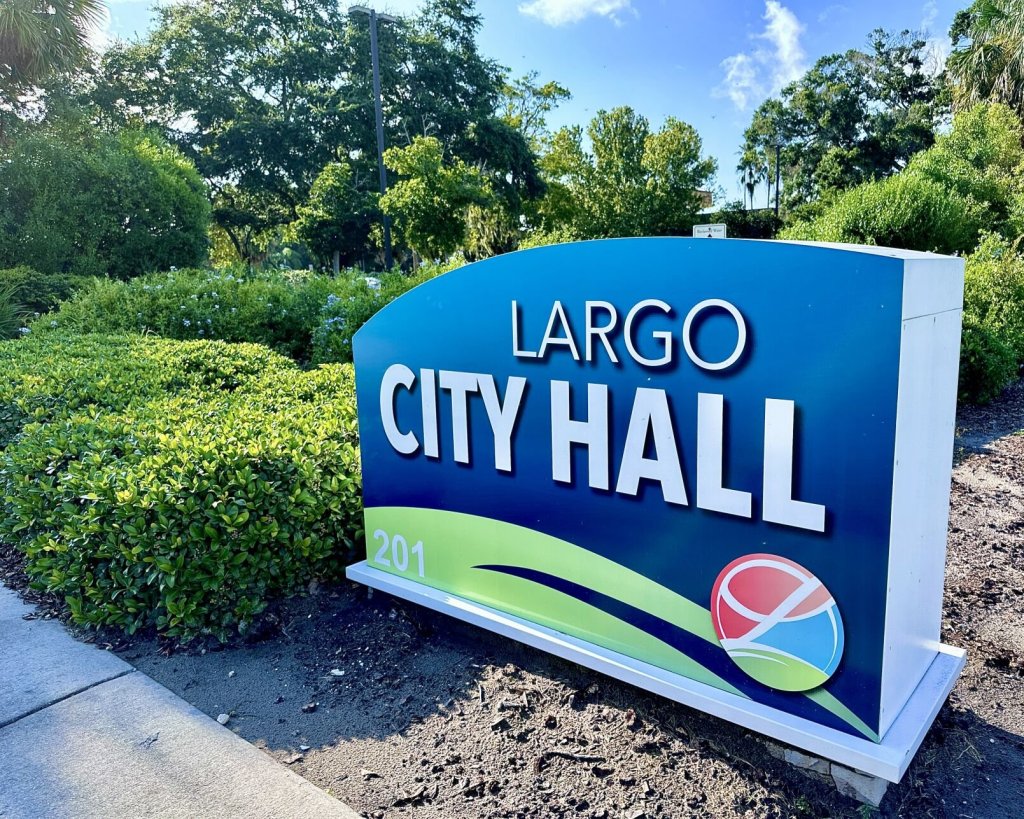
Largo city leaders voted July 15 to raise utility rates, a move expected to increase the average resident’s monthly bill by more than $7.50. Combined with a proposed 2.6% property tax hike, some residents could face nearly $10 in added monthly costs.
Commissioners gave initial approval to three ordinances: a 10% increase in solid waste fees (from $27.96 to $30.76), a 5% jump in wastewater rates (from $71.63 to $75.24), and a 15% rise in stormwater charges (from $15.41 to $17.72).
The city, like others in Pinellas County, is grappling with rising costs for staffing, vehicles, and operations. Despite public criticism, officials say the increases are needed to maintain essential services.
Resident Melanie Wood voiced concerns during the meeting, criticizing the burden on working-class locals.
“Not everyone here comes from New York with millions from a home sale,” she said. “Some of us are just trying to survive. The people who work here can’t afford to live here.”
Planning Board member Matthew Faustini said city spending has spiraled out of control, estimating that property taxes have gone up by $303 annually for the average resident since 2019.
“We cannot afford these above-inflation increases,” Faustini said. “This has to stop.”
Some commissioners acknowledged residents’ frustrations. Michael Smith and Michael DiBrizzi opposed City Manager Henry Schubert’s proposed maximum millage rate of 6.5065 mills, even though the figure is non-binding and serves as a placeholder on residents’ TRIM notices.
“I know this is just for flexibility,” DiBrizzi said. “But I won’t support putting that number out there, even symbolically.”
Smith agreed, noting, “Perception is reality when people see that number.”
Smith’s motion to keep the proposed maximum millage at the current 5.52 mills passed 6-0. Mayor Woody Brown was absent.
During the discussion, Faustini criticized a $250,000 utility rate study, claiming he could generate similar results in hours using AI and regional data.
That drew a pointed response from Smith, who voted against the study but warned against relying on Faustini’s methods.
“If I see a study that cost us that much and it includes Mr. Faustini’s AI-generated figures, I’m going to be really upset,” Smith said.
Faustini also reignited debate over potentially disbanding Largo’s police department in favor of contracting with the Pinellas County Sheriff’s Office. He cited the city’s per capita police spending of $430.78, compared to $272.81 for unincorporated county areas.
“When we’re hitting people with 15% rate increases year after year, we have to consider serious spending cuts,” he said.
The commission unanimously approved the solid waste and stormwater rate hikes. The wastewater increase passed 4-2, with Smith and DiBrizzi in dissent.
Despite approving the increases, several commissioners stressed the need to maintain services.
“I don’t love raising rates either,” said Commissioner John Lauser. “But I want my house protected from flooding, and I want my trash picked up. Modest increases are sometimes necessary.”
Vice Mayor Curtis Holmes, a longtime advocate for frugal government, said outsourcing services once seemed like a good way to cut costs — until quality declined.
“You save money on paper,” Holmes said. “But the service went to hell.”
He urged residents to stay involved and offer alternatives.
“If you don’t want us to spend money on something, tell us what to cut,” Holmes said.
The commission will hold final readings of the utility rate ordinances on August 5, ahead of September’s budget hearings.
Follow the St. Pete-Clearwater Sun on Facebook, Instagram, Threads, Google, & X
(Image credit: Jeff Rosenfield/TBN)
PIE-Sun.com: local St. Pete-Clearwater news

 St. Pete-Clearwater Sun
Leave a comment