
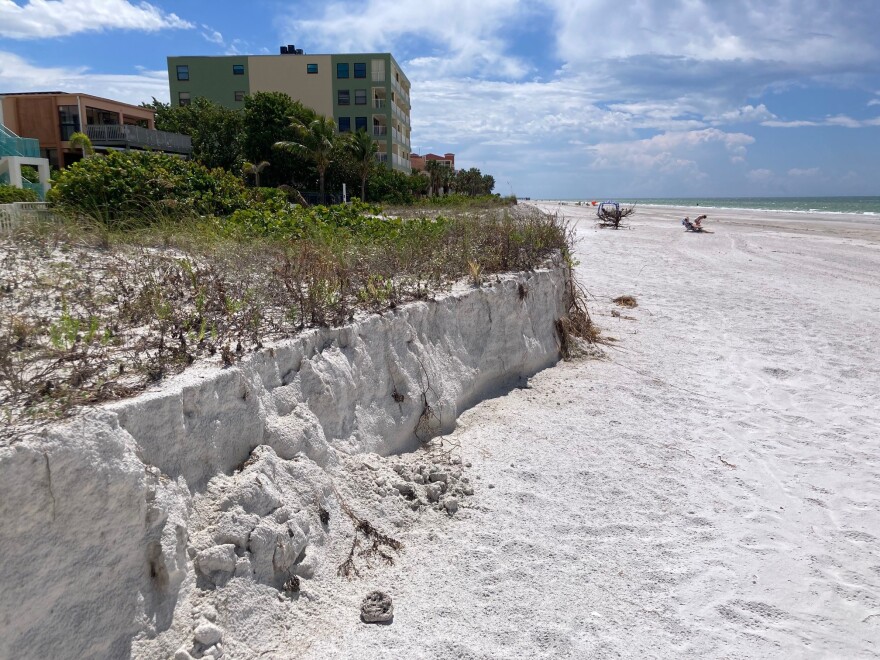
Pinellas County is launching a $125 million beach renourishment project to restore eroded shorelines along Treasure Island, Sand Key, and Long Key-Upham Beach, aiming to better protect homes and infrastructure from future storms better.
The project, which begins in September, will place 2.5 million cubic yards of sand dredged from the Gulf of America onto 12 miles of critically eroded beaches. But to carry out the work on private property, the county needs temporary easements from beachfront owners—and more than 130 are still missing.
Despite the shortfall, the county plans to move forward. Without full participation, though, the sand will be applied unevenly—potentially creating low-lying pockets along the shoreline that could trap water and increase flooding risk.
“This sand is essential to protect our homes, businesses, and infrastructure,” said County Commissioner Kathleen Peters at a public meeting in Treasure Island on July 9. “Much of that protection is gone.”
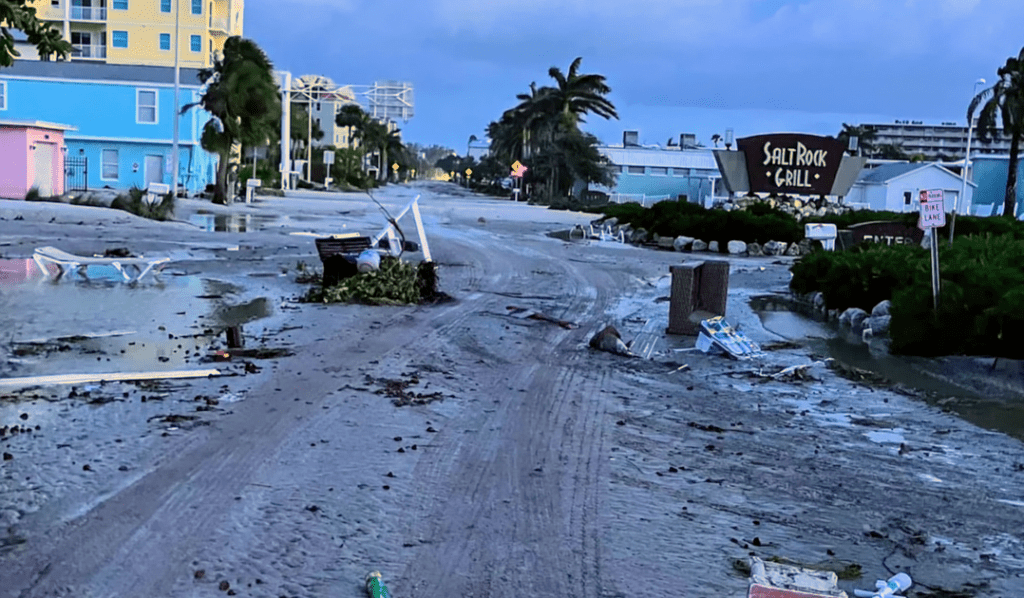
Still, not all residents are on board. Some say sand dunes added after Hurricane Idalia in 2023 made matters worse during Hurricane Helene, when wind and waves pushed large piles of sand onto their properties.
County officials say participation is critical. The temporary easements allow contractor Weeks Marine Inc. to place sand on private beach areas as part of this one-time project. These easements expire in 2029, and property owners may also opt in to have sand dunes built for added protection.
John Bishop, the county’s coastal management coordinator, compared beach renourishment to wearing protective gear: it helps, but it’s not a guarantee. The goal is to extend the beach’s width to absorb storm energy.
If hurricanes approach during construction, work will pause temporarily—just as it did during last year’s Pass-a-Grille project.
The U.S. Army Corps of Engineers typically handles such work, covering about 65% of the cost. But federal help requires permanent easements, which allow public access. As of July 10, Pinellas had less than half of the permanent agreements needed.
Commissioner Peters said the county couldn’t afford to wait. “Washington moves slowly,” she said. “We had to act now to be ready for this storm season.”
Some of the areas with the most missing easements are in Indian Rocks Beach, Indian Shores, and Redington Shores. As of Thursday, the county had secured 70% of the agreements it needs but was still missing 148.
Where easements are absent, sand will only be placed up to the public-private boundary line—likely creating divots that collect standing water. “If we don’t place sand behind one home, that becomes the weak point,” said Commissioner Brian Scott.
Resident Tom Spoden agreed. “People who don’t sign are putting others at risk. Water finds the weakest point.”
The project is primarily funded through a 6% tax on hotels and short-term rentals—the same fund that once would have helped pay for a now-defunct Tampa Bay Rays stadium deal. Additional funding comes from various grants.
Officials say this will be the last time the county finances such a large-scale project without federal assistance due to cost.
Two more public meetings are scheduled to explain the project:
- July 16 at 6 p.m. (Zoom, registration required)
- Aug. 6 at 6 p.m. at 444 Causeway Blvd., Belleair Beach
In-person signing events to complete easement forms will be held July 21–23 from 1 to 5 p.m. at Indian Shores Town Hall, 19305 Gulf Blvd.
Follow the St. Pete-Clearwater Sun on Facebook, Instagram, Threads, Google, & X
(Image credit: WUSF)
PIE-Sun.com: local St. Pete-Clearwater news

 St. Pete-Clearwater Sun
Leave a comment