
As storm season ramps up, experts are urging residents to go beyond boarding up windows by preparing their homes, finances, and critical documents before disaster strikes.
While much of the focus has been on protecting flood-prone areas, many residents in neighborhoods that rarely see major storm damage still lack the tools and knowledge to prepare effectively. To close that gap, government agencies are partnering with local nonprofits to expand outreach and education.
One such effort is led by the Corporation to Develop Communities of Tampa (CDC of Tampa), which has long helped residents become homeowners. After last year’s damaging hurricane season, the organization is now shifting focus to keeping those homes—and their owners—safe. Their latest Home Matters course, hosted in collaboration with the City of Tampa on July 15, teaches residents how to stormproof not just their property, but their finances and essential paperwork.
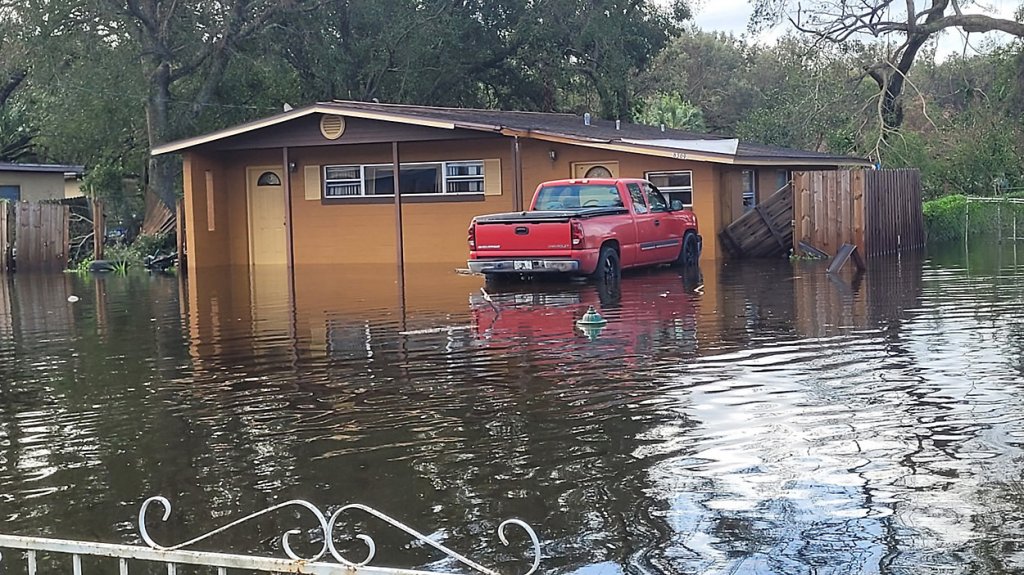
The course is especially important in communities like Progress Village, where residents are still recovering from the aftermath of last year’s storms. Longtime resident and Civic Council President Twanda Bradley has lived in the neighborhood for over 60 years and said last year was the worst she’s seen.
“I could walk the streets and point out house after house that flooded,” Bradley said. “One home had mold a week after the storm, and the resident is still struggling because they didn’t get the help they needed from FEMA.”
She said storm damage in the area went far beyond what was visible. “We had eels, fish, even snakes in the floodwaters. It was bad.”
Progress Village is also dealing with clogged drains and an ongoing drainage improvement project that likely won’t be finished this year. With no quick fixes in sight, Bradley is focused on preparing her neighbors now.
“People still need help—some homes still don’t have drywall because the owners can’t afford it,” she said. “Education before, during, and especially after the storm is critical.”
Vanessa McCleary, VP of Real Estate Development at CDC of Tampa, emphasized that physical prep like sandbags is only one part of the equation. “We also teach how to be financially prepared—having cash on hand, knowing what documents you’ll need to file insurance claims or FEMA applications, and how to assess storm damage properly,” she said.
This kind of preparation, McCleary added, helps homeowners recover faster and more effectively after a disaster.
Residents outside Tampa can check with their local city or county offices to see if similar hurricane preparedness courses are being offered in their area.
Follow the St. Pete-Clearwater Sun on Facebook, Instagram, Threads, Google, & X
(Image credit: Marlise Jones)
PIE-Sun.com: local St. Pete-Clearwater news

 St. Pete-Clearwater Sun
Leave a comment