
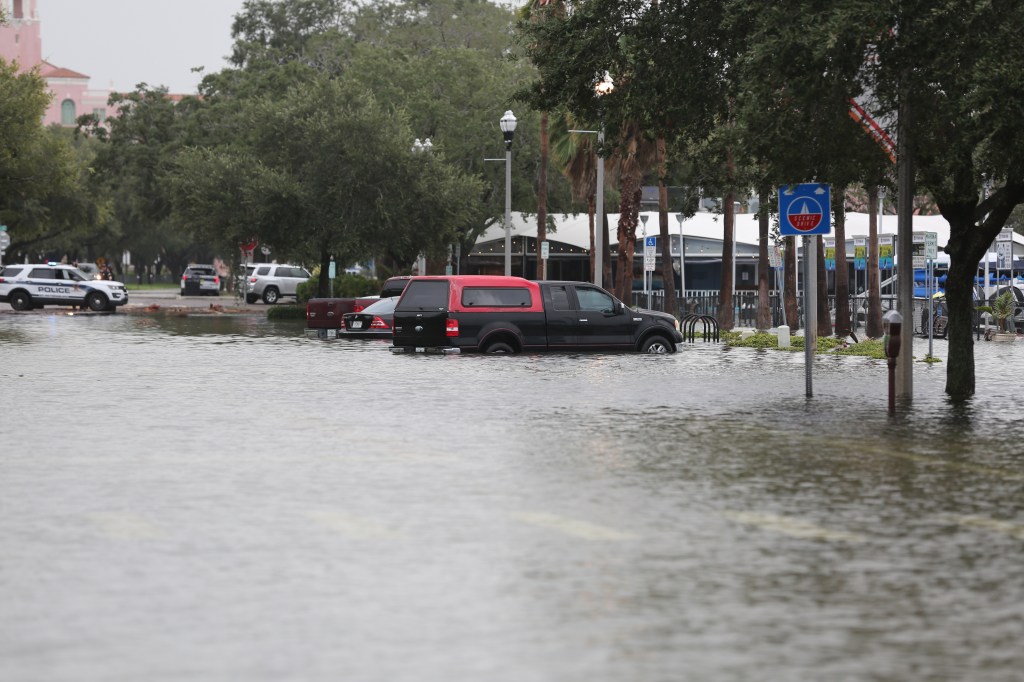
If you’re a new homeowner, you may not realize that flood insurance and homeowners insurance are usually sold separately. In fact, most homeowners policies don’t cover flood damage at all.
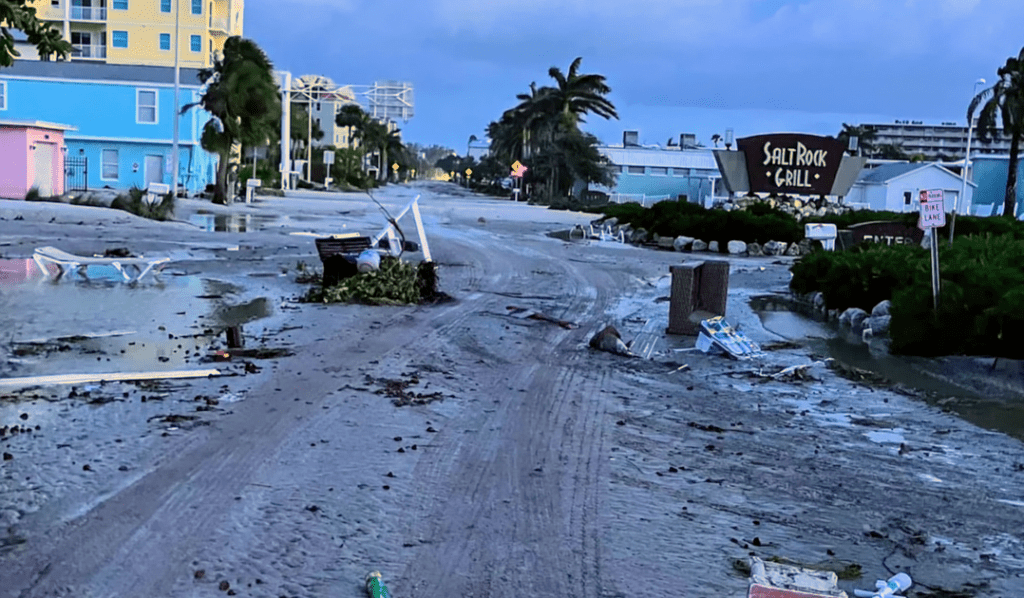
This became painfully clear for many Floridians affected by the devastating 2024 storms. Even with insurance, some found themselves on the hook for costly repairs because their policies didn’t cover flooding.
Many people are surprised to learn that standard policies don’t cover damage caused by water — whether it’s floodwaters creeping into your home or rain pouring through a hole in the roof.
To better understand who needs flood insurance and what it covers, WUSF spoke with Kelly Nugent, Senior Vice President of Sales and Marketing at Wright Flood, based in Clearwater. This interview has been lightly edited for clarity and length.
Who should buy flood insurance?
NUGENT: Everyone should consider it — especially in Florida. If it can rain, it can flood. With the rapid development in places like Hillsborough and Pinellas counties, drainage just isn’t what it used to be.
Flood insurance is critical because typical homeowners or renters insurance doesn’t cover flood damage. It helps cover the cost of repairs or replacement after a flood, and it’s especially important for those with federally backed mortgages in high-risk areas, known as Special Flood Hazard Areas.
Let me give you an example. I was born in Tampa and raised in St. Pete. My parents have lived there for 45 years. They’re close to the bay and always had flood insurance — but their home had never flooded. That changed during Hurricane Helene. Four feet of water came into their home. With all the new construction around them, the land now acts like a bowl — water just sits. Thankfully, they had flood insurance, which helped them recover much faster than people who didn’t.
Should people outside high-risk zones consider flood insurance?
Absolutely. Last year’s storms showed that flooding can happen anywhere — not just in designated flood zones.
Even a few inches of water can cause major damage and financial stress. In fact, over 40% of National Flood Insurance Program (NFIP) claims come from outside high-risk areas.
What about renters? Should they get flood insurance too?
Yes — especially if you’re on a ground-level apartment or in a flood-prone area. Renters insurance usually doesn’t cover flood damage. A separate flood policy can protect your personal belongings — furniture, electronics, clothing — and it’s often affordable.
How much does flood insurance cost?
Premiums vary depending on location, flood risk, elevation, and property type. On average, a flood insurance policy costs about $1,000 per year.
For instance, my parents in low-lying Pinellas County pay around $3,000. I live on higher ground in Hillsborough and pay less than $600. It really depends on your exact location.
Rates have increased over the years. I used to pay under $100 annually for flood insurance in a low-risk area — now it’s closer to $700.
Why are prices going up? Is it due to more storms?
Not necessarily. The change is due to FEMA’s Risk Rating 2.0, which updated how premiums are calculated. Some people are seeing higher rates, but others are actually seeing decreases, depending on factors like elevation, proximity to water, and property characteristics.
What does flood insurance cover that homeowners or windstorm policies don’t?
Flood insurance covers damage from rising water — basically, any water that enters your home from outside. That includes storm surge and flooding caused by heavy rain.
It’s different from homeowners or windstorm policies, which are separate and cover different types of damage. For exact details, you’d need to check each policy.
Could FEMA changes affect flood insurance policies or pricing?
Right now, it’s business as usual. We’re committed to supporting our policyholders and agents regardless of potential shifts in FEMA’s role.
Final thoughts?
If you live in Florida and can afford it, flood insurance is a smart investment. It can make all the difference when disaster strikes — both financially and emotionally — and help you get back into your home faster.
Follow the St. Pete-Clearwater Sun on Facebook, Instagram, Threads, Google, & X
(Image credit: Jennifer Glenfield/Tampa Bay Times)
PIE-Sun.com: local St. Pete-Clearwater news


 St. Pete-Clearwater Sun
Leave a comment