

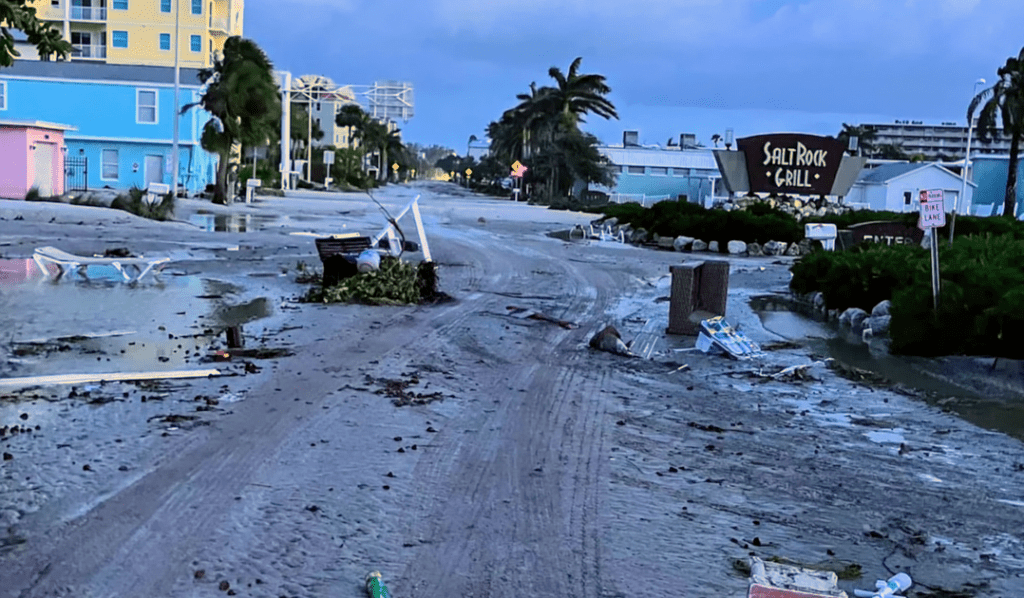
On May 20, St. Pete city officials and business leaders convened at Johns Hopkins All Children’s Hospital for the annual State of the Economy meeting. Since last year, St. Petersburg has weathered significant setbacks—including two major hurricanes, Helene and Milton, and the collapse of the Tampa Bay Rays redevelopment deal. In response, the city is ramping up investments in infrastructure, climate resilience, and economic planning.
A key player in the city’s storm readiness efforts is Saildrone, a local tech company based at The HUB in the Innovation District. The company is conducting advanced mapping of Florida’s coastal waters using uncrewed surface vehicles, contributing to the Florida Seabed Mapping Initiative. “If you don’t know the ocean floor’s topography, your storm surge models will be off,” explained Captain Brian Connon, Saildrone’s VP. The data aims to significantly improve hurricane forecasting and emergency preparedness—demonstrating the power of public-private collaboration.
But the city isn’t waiting for new data to take action. Through the St. Pete Agile Resistance (SPAR) plan, officials intend to invest $545 million over the next five years. Planned projects include flood-proofing critical buildings, installing aqua fences, expanding a citywide rebate program, upgrading the Salt Creek pump station, and assessing vulnerabilities at water reclamation facilities. These initiatives are designed to both protect the city and stimulate long-term growth.
Transportation and Workforce Challenges
Despite earlier gains in employment and population following the pandemic, 2024 marked a turning point. “This was the first year we saw a decline in employment and labor force,” said Brian Caper, managing director of development coordination. Pinellas County experienced a 5.5% employment drop, while St. Pete’s was slightly lower at 3%. Contributing factors include rising living costs, hurricane disruptions, and pre-election economic uncertainty. Nonetheless, the city’s unemployment rate remains relatively low at 3.2%.
In response, the city is prioritizing transportation upgrades to support economic stability. Initiatives include a new bike share program in West St. Pete, a parking garage under construction in the EDGE District, and expanded SunRunner and Spark bus service along 34th Street.
St. Pete-based Power Design, a national design-build contractor, is also boosting the local economy. “We employ 1,823 people locally and have completed 111 projects totaling 27,000 units,” said Russell Williams, director of recruiting. The company is heavily invested in workforce development, having trained and licensed 150 electricians, with hundreds more in the pipeline. Its innovation and training center offers leadership and management courses to support career advancement.
Development Fuels Rising Tax Base
Several major developments have recently launched or are slated to open by year’s end, including Park and Main, The Moxy Hotel, Reflection, Perry’s Porch, Central Park St. Pete, Deuces Townhomes, Art House, Foot Locker, and the 400 Central condo tower. These projects will expand the city’s taxable value base.
In 2024, St. Pete collected $35 billion in taxable value from projects like Camden Central, Elements on Third, Avanti, and Raymond James—some of the city’s top tax contributors. The projected increase in taxable value for fiscal year 2025 will help fund community-focused initiatives such as down payment assistance, the micro fund program, and St. Pete Works.
One major project still hangs in the balance: the Historic Gas Plant District. “We’re disappointed the Rays chose not to proceed with the redevelopment,” said Caper. “But we remain optimistic about the site’s future.” The city is committed to rebuilding the damaged Tropicana stadium and fulfilling a long-standing promise to residents displaced by previous development.
Follow the St. Pete-Clearwater Sun on Facebook, Instagram, Threads, Google, & X
(Image credit: WTVT)
PIE-Sun.com: local St. Pete-Clearwater news
 St. Pete-Clearwater Sun
Leave a comment