
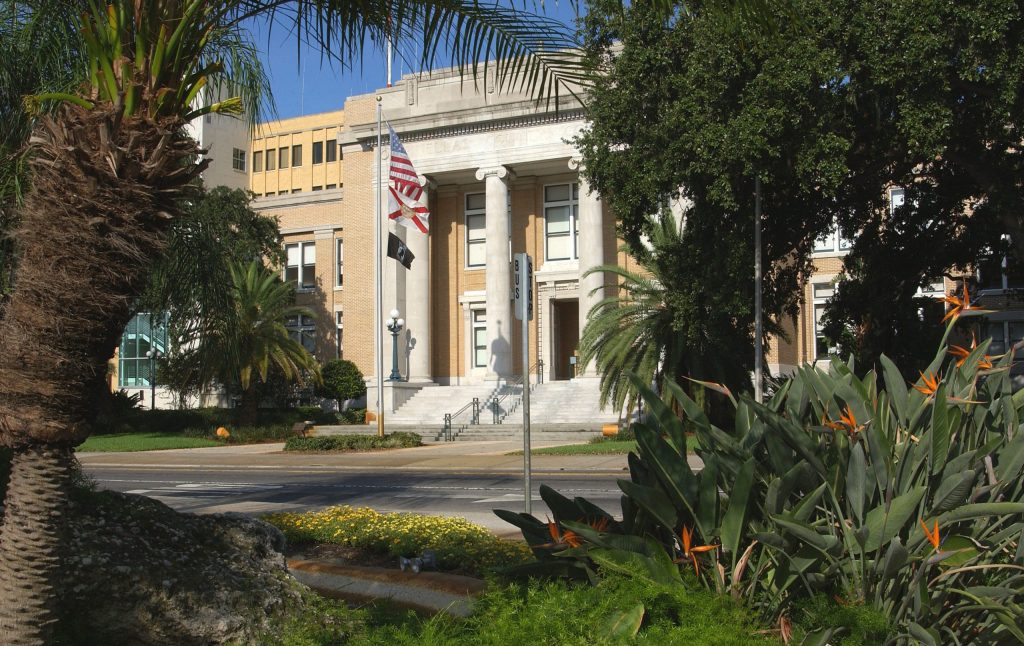
Pinellas County commissioners have opted not to let voters decide on establishing a countywide elected mayor, instead signaling support for enhancing the authority of the commission’s chairperson.
At a May 15 workshop, commissioners expressed a clear preference to maintain the existing commission-administrator form of government—first adopted by Pinellas County in 1964—and build upon it rather than replace it. The discussion was prompted by an April 5 strategic planning session where the idea of a county mayor was first explored.
Commissioner Chris Latvala, who initiated the conversation, emphasized his proposal was not a critique of County Administrator Barry Burton’s performance. “I have no interest in ever serving in that position if it comes to a ballot,” Latvala said, praising Burton’s leadership as “fantastic.”
Latvala noted his motivation stemmed from a belief in voter accountability. “The person making day-to-day decisions should be accountable to the voters,” he said. “The county administrator is the most important person in the county.”
Burton, who has served since 2018, oversees more than 1,900 employees and has led the county through significant challenges, including hurricanes, the COVID-19 pandemic, and a $1.3 billion stadium deal with the Tampa Bay Rays. His role allows him considerable autonomy, especially during states of emergency.
While counties like Miami-Dade, Orange, and Palm Beach operate under a strong mayor system—with elected executives overseeing expansive local governments—Pinellas commissioners questioned whether such a model fits the county’s needs. Pinellas has nearly 1 million residents and 24 municipalities, making any leadership changes impactful.
Commissioners and other officials pointed to Jacksonville and Duval County as cautionary examples. The two consolidated governments in 1968 and have had an elected mayor ever since. But Pinellas Clerk of Courts Ken Burke warned against following suit, saying short mayoral terms often lead to deferred decision-making. “Mayor after mayor said, ‘Let the next guy take care of it,’” Burke said, adding that professional administrators are essential for handling government “nuts and bolts,” especially in crises.
Rather than overhauling the system, Latvala suggested giving more responsibilities to the board chair, an idea that received broad support. Commissioner Kathleen Peters warned that a strong mayor would marginalize the commission and centralize too much power in one office. “I just look around at nearby cities and see why I wouldn’t want that,” she said.
Commissioner Vince Nowicki proposed that the county administrator deliver an annual “State of the County” address to improve transparency and public engagement. He also recommended that the chairperson have a seat on the executive committee during emergencies to better represent the board’s perspective. Peters supported the idea, suggesting the chairperson could also leverage outside political relationships for the county’s benefit.
Current chairperson Brian Scott, who said some constituents asked him to support a countywide mayor during his campaign, thanked Latvala for sparking the discussion. After researching the concept, Scott concluded that the existing system functions well. “I don’t want a solution in search of a problem,” he said.
Though he acknowledged that both systems have merits, Scott noted the chairperson already acts as a de facto mayor in many respects, especially during emergencies. However, he stressed that managing nearly 2,000 employees requires skills typically not found in elected officials.
“I think our government is in a good place,” Scott said. “But I do like the idea of exploring ways to strengthen the chair’s authority—whether through setting the agenda or during emergency response. It’s worth having that discussion.”
Follow the St. Pete-Clearwater Sun on Facebook, Instagram, Threads, Google, & X
(Image credit: Pinellas County Government)
PIE-Sun.com: local St. Pete-Clearwater news


 St. Pete-Clearwater Sun
Leave a comment