

Residents along Phillippi Creek are frustrated, accusing Sarasota County of neglecting critical maintenance like clearing sediment and vegetation from waterways, which they say exacerbates flooding during heavy rains.
Kristy Molyneaux, drawn to Phillippi Creek a decade ago for its serene wildlife and waterfront charm, now faces recurring nightmares after her home flooded three times in 2024. She’s turned activist, attending countless county meetings, but fears the county’s slow response leaves her vulnerable as the June 1 hurricane season looms. “Not one grain of sand has been dredged from Phillippi Creek,” she told WUSF, highlighting decades of sediment buildup that threatens overflows.
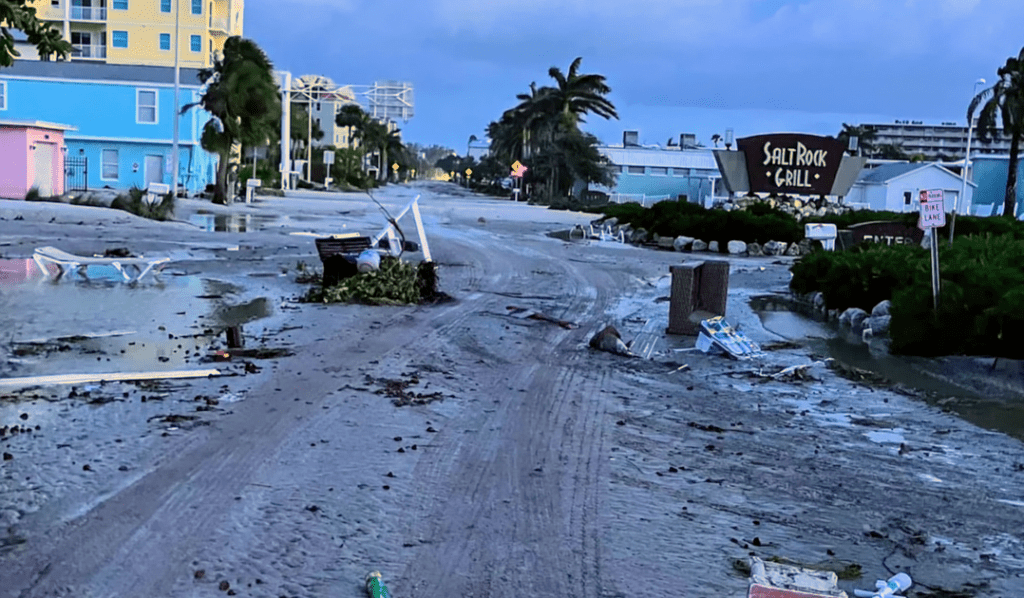
During Hurricane Debby, Molyneaux’s home took in 10 inches of water, leaving behind thick layers of sand. She’s joined forces with groups like SAND (Supporters of Action Now for Dredging) to push for better stormwater system upkeep. “I’m trying to collaborate, not criticize,” she said in early May, with just 23 days until hurricane season.
Stephen Suau, a veteran water engineer, echoes her concerns, blaming decades of neglect for flooding in areas like Laurel Meadows, Celery Fields, and Southgate during Debby’s 17-inch deluge. His models show clogged debris, uninspected dikes, and sediment-filled creeks worsened the damage. “The county’s stormwater revenue has surged, but service levels have dropped,” Suau noted, questioning where the $27 million annual budget goes.
Sarasota’s stormwater department, led by Spencer Anderson, defends its efforts, citing a new property tax fee based on impervious surfaces like concrete to fund rising costs. About a third of the field services budget, which handles maintenance, comes from stormwater funds, but $2.4 million of recent spending went to post-storm debris removal, not proactive dredging.
Residents criticize the county’s bureaucracy, with Suau arguing for an independent stormwater program. Community meetings, like one on May 5 at Gulf Gate Library, reveal tensions—some attendees left when dredging was sidestepped. Anderson insists dredging requires Army Corps of Engineers permits, not just county action. A $75 million federal relief plan to dredge high-sediment spots is in motion, but permit delays may push work to mid-summer, peak hurricane season.
For residents like Jake Crabtree, whose family fled waist-deep floodwaters during Debby, the county’s pace feels far from urgent. “Phillippi Creek is their biggest ditch, and they don’t manage it,” he said. Molyneaux, increasingly frustrated, emailed, “The county is lacking in urgency!” Anderson’s response? “We were just in time.”
Follow the St. Pete-Clearwater Sun on Facebook, Instagram, Threads, Google, & X
(Image credit: Kat Wingert)
PIE-Sun.com: local St. Pete-Clearwater news


 St. Pete-Clearwater Sun
Leave a comment