
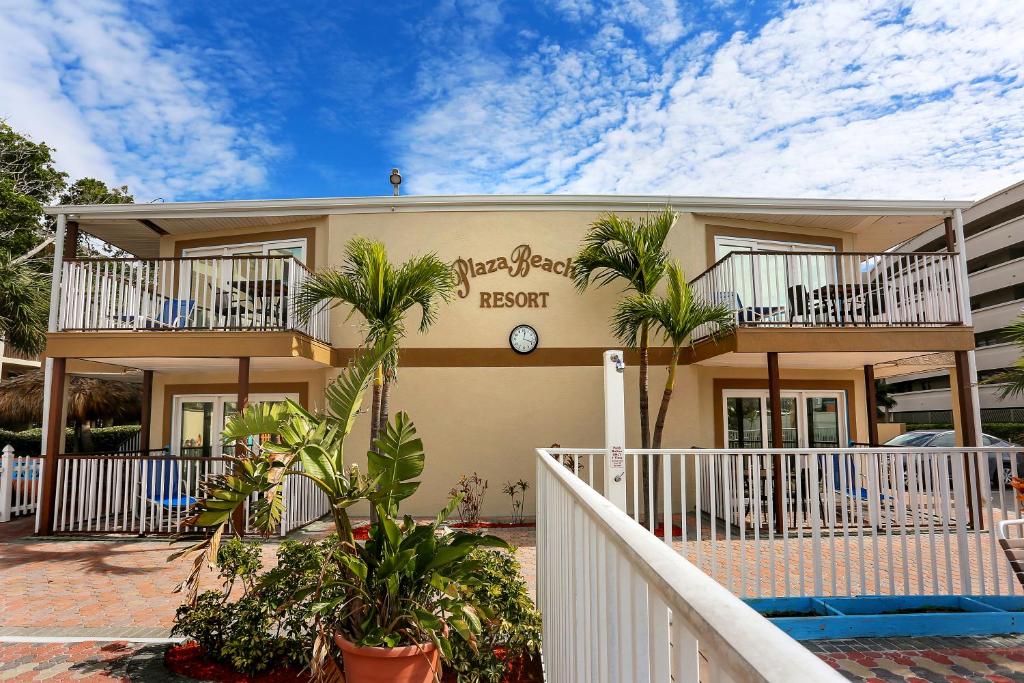
A St. Pete Beach hotel owner who opened his doors to hurricane victims says a federal relief program meant to support recovery has left him footing a massive bill.
Robert Czyszczon, owner of the Plaza Beach Hotel, began housing displaced residents through FEMA’s Transitional Sheltering Assistance (TSA) program after hurricanes struck Pinellas County. For 180 days, FEMA directly covered the cost for dozens of guests staying at his hotel while their homes were being repaired or replaced.
When the program was set to expire on April 10, FEMA announced a 60-day extension—but with stricter eligibility requirements. Believing his guests qualified, Czyszczon informed 63 of them they could stay through the new June 8 deadline.
But by late April, he received a payment from FEMA covering only 15% of the guests still staying under the program. After reviewing the updated rules with FEMA’s processing company, Czyszczon discovered a clause that disqualified most of his guests: anyone who had previously declined FEMA’s direct housing assistance was no longer eligible—even if their home remained uninhabitable.
“We read through it very carefully and went… ‘oh my gosh, this is it,’” Czyszczon said. “One clause is disqualifying about 85% of the people.”
Under the revised guidelines, only those awaiting placement in direct housing or with homes deemed unlivable by FEMA qualify. Czyszczon says many of his guests turned down direct housing because they were already making repairs—and now that decision is costing them a roof over their heads.
“Unfortunately, the way the bill was written, they’re automatically disqualified because they refused the direct housing program. But if your home is in repair, you don’t need the direct housing program,” he explained.
As a result, Czyszczon says he’s out over $200,000 in just five weeks. Now, he faces a difficult choice: evict families who have nowhere else to go, or continue housing them and absorb the financial loss.
“It hurts me financially, but I know what the right decision is. My heart tells me what the right decision is,” he said. “So we’re going to keep them here. But it is definitely going to hurt us at the bottom line.”
Czyszczon has reached out to Senator Rick Scott’s office for help and says they are working together to find a resolution.
In response, FEMA spokesperson Lindsay Tozer issued a statement:
“FEMA’s TSA program provides short-term lodging in participating hotels for eligible disaster survivors. Eligibility is reassessed regularly, in coordination with the state, and survivors must actively work on a housing plan, which may include options like Direct Temporary Housing. Declining a suitable direct housing offer can affect continued TSA eligibility.”
Since the original April 10 deadline, the number of TSA guests at Czyszczon’s hotel has dropped from 63 to 44, as more residents complete repairs and return home.
Follow the St. Pete-Clearwater Sun on Facebook, Instagram, Threads, Google, & X
(Image credit: Booking.com website)
PIE-Sun.com: local St. Pete-Clearwater news


 St. Pete-Clearwater Sun
Leave a comment