
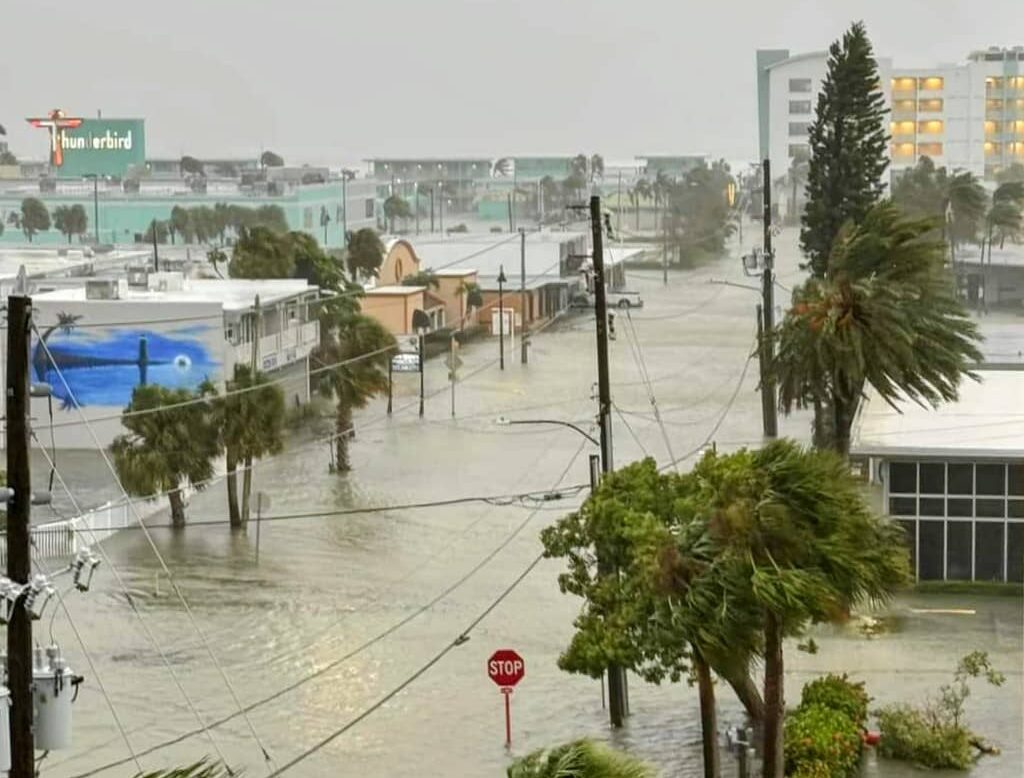
Pinellas County is seeking over $8 million in federal grants to bolster a nearly $11 million project aimed at storm-hardening 35 traffic signals along key evacuation routes.
At their May 6 meeting, county commissioners unanimously approved the application for two state-administered federal grants totaling $8.23 million. The county will contribute a $2.74 million match, already accounted for in the fiscal years 2025 and 2026 public works budgets.
Officials are optimistic about securing the funds. County documents note that Pinellas previously received $10.5 million in Hazard Mitigation Grant Funding following the Presidential Disaster Declaration for Hurricane Debby.
“More resilient traffic infrastructure will be less likely to go out of service during storm events, reducing the risk to public safety,” the application states. Improvements include replacing span wire signals with galvanized steel mast arms and modifying traffic signal cabinets to better withstand flooding—especially on vulnerable barrier island roads.
Each upgraded intersection costs approximately $2.06 million. Funding is still needed for five remaining intersections along evacuation routes.
The upgrades are expected to lower long-term maintenance costs and improve emergency access during storms. During Hurricane Debby, many span wire signals failed, blocking roads and creating hazardous conditions.
The Florida Division of Emergency Management distributes the FEMA funds tied to Debby’s aftermath. However, subsequent storms—Hurricanes Helene and Milton—caused even more widespread damage. Milton alone knocked out more than 100 traffic signals in St. Petersburg. Pinellas, with 24 municipalities, has the second-highest number of traffic signals in the state.
In addition to structural upgrades, the county is elevating traffic control cabinets that house critical electronic systems, including uninterruptible power supplies to ensure continued signal operation during outages.
According to interim public information manager Tony Fabrizio, the countywide initiative is ongoing and not limited to specific municipalities.
If the current grant application is denied, officials plan to resubmit under hazard mitigation programs related to Helene and Milton, especially given the federal cancellation of the $882 billion Building Resilient Infrastructure and Communities (BRIC) program. Homeland Security Secretary Kristi Noem recently announced plans to eliminate FEMA altogether, casting uncertainty over future funding sources.
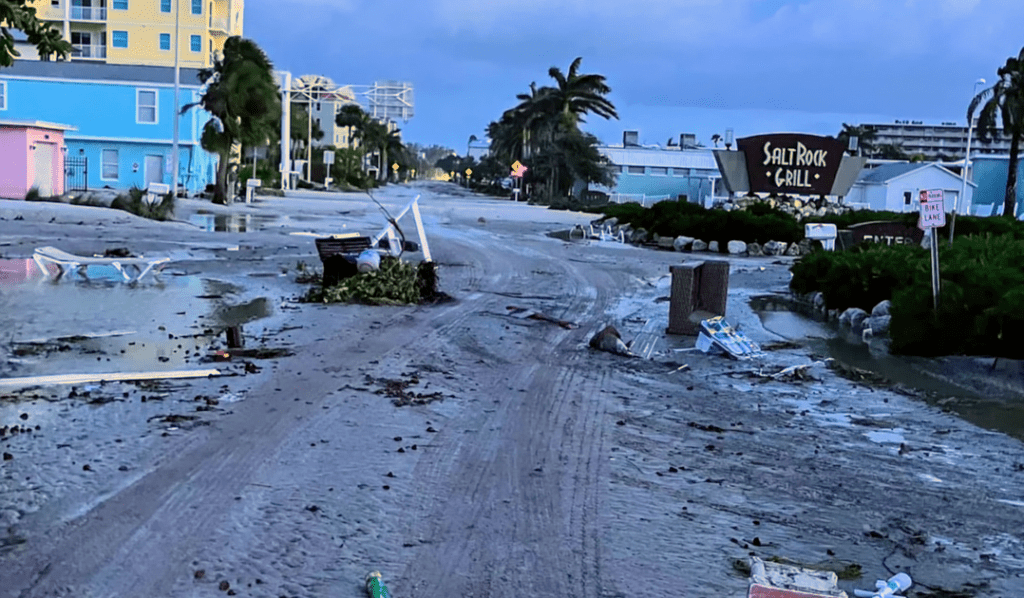
To help bridge that gap, Pinellas also requested $1 million from the state legislature to storm-harden signals along Gulf Boulevard in beach communities. The area, home to roughly 100,000 residents, faces high flood risks.
“The expected benefit will be to maintain operations of the traffic signals and to protect the sensitive electronic equipment inside the traffic control cabinet from saltwater damage during storm surge/flooding events,” the Senate request reads.
The Senate approved the full $1 million. The House has so far agreed to half.
Follow the St. Pete-Clearwater Sun on Facebook, Instagram, Threads, Google, & X
(Image credit: St. Pete Catalyst)
PIE-Sun.com: local St. Pete-Clearwater news


 St. Pete-Clearwater Sun
Leave a comment