
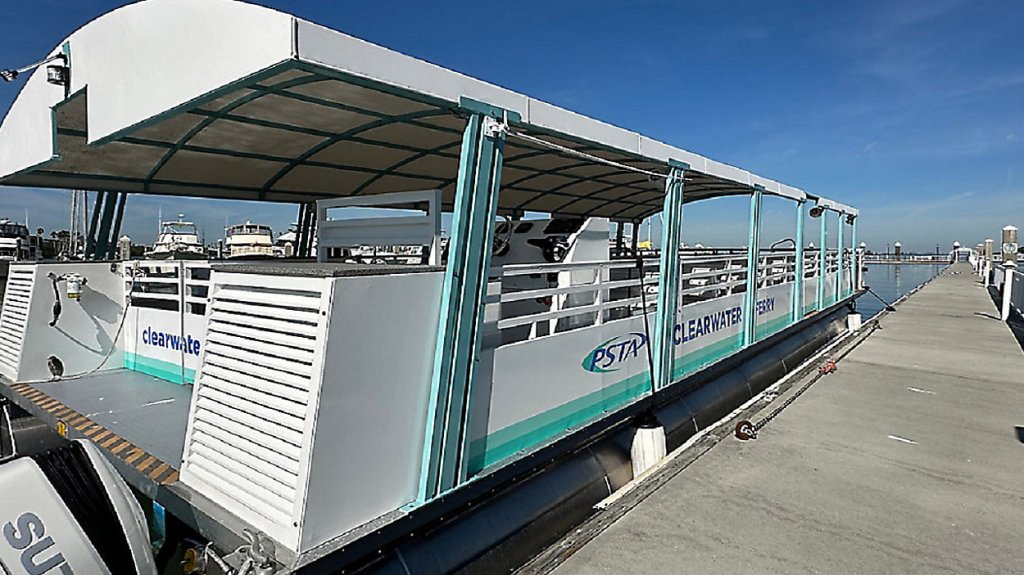
The Pinellas Suncoast Transit Authority (PSTA) has approved the use of a nearly $5 million federal grant to purchase up to two high-speed ferries for a renewed water transit service between St. Petersburg and Tampa.
The $4.86 million grant, originally awarded to the Hillsborough Area Regional Transit Authority (HART) in 2021, was at risk of expiring. PSTA officials plan to use the funds to acquire vessels they would lease to a private operator, aiming to make the seasonal Cross Bay Ferry service more frequent, efficient, and cost-effective. PSTA CEO Brad Miller said ownership would significantly lower hourly operating costs and reduce the need for local subsidies.
On Wednesday, PSTA’s executive committee formally approved the plan, satisfying a condition HART had set before transferring the funds. The ferry program had stalled earlier this year when Hillsborough County canceled its contract with HMS Ferries, effectively shutting down the service.
“We’re taking this step to save money and improve service,” Miller said. “This is what PSTA is about – reducing costs while delivering better transit options.”
The ferry service had operated seasonally since 2016, but hopes for a permanent route were dashed when Hillsborough County abandoned its $76 million expansion plan in August 2023. That proposal included a year-round route between MacDill Air Force Base and Apollo Beach. Instead, county officials chose to prioritize over $1 billion in road projects.
The Cross Bay Ferry made its final departure from Port St. Petersburg on May 1, after a failed attempt at launching its first full-year schedule. Ridership had declined following a location change from the North Yacht Basin to Port St. Pete last fall.
Despite setbacks, Miller noted the ferry still often ran at full capacity, especially with demand surging for trips into St. Petersburg. He emphasized that owning two vessels could double operational flexibility, with boats departing from both cities and shuttling back and forth.
While a brand-new ferry could be cost-prohibitive, Miller said the agency may look to the used market to stretch the grant funds. “Having two boats rather than one would give us more flexibility to operate more hours and improve frequency,” he said.
HART had originally intended to use the federal money to buy a vessel for its own expansion plans but reversed course. Now, the agency is expected to approve the grant transfer on June 1. If HART backs out, PSTA will seek private vendors who already own suitable boats – a move that could increase local costs.
PSTA’s plan would allow private operators to bid for the contract without owning vessels themselves. Miller said this approach supports competition and would help establish a year-round service with a consistent crew. He also believes increased ridership and local control could enhance future federal grant eligibility.
Currently, local governments pay about $450 per hour to use the Cross Bay vessel. Lower operating costs and increased revenue could bring down fares – currently $12 one way – or eliminate the need for public subsidies altogether.
If the new ferry program fails, PSTA would sell the boats. Still, the project has broad support, including from St. Petersburg Mayor Ken Welch, Tampa Mayor Jane Castor, and other regional leaders.
“This is a beloved service,” Miller said. “People love it – locals and tourists alike. Moving forward with this grant and the ferry investment is a win for both PSTA and HART.”
Follow the St. Pete-Clearwater Sun on Facebook, Instagram, Threads, Google, & X
(Image credit: Spectrum News)
PIE-Sun.com: local St. Pete-Clearwater news


 St. Pete-Clearwater Sun
Leave a comment