
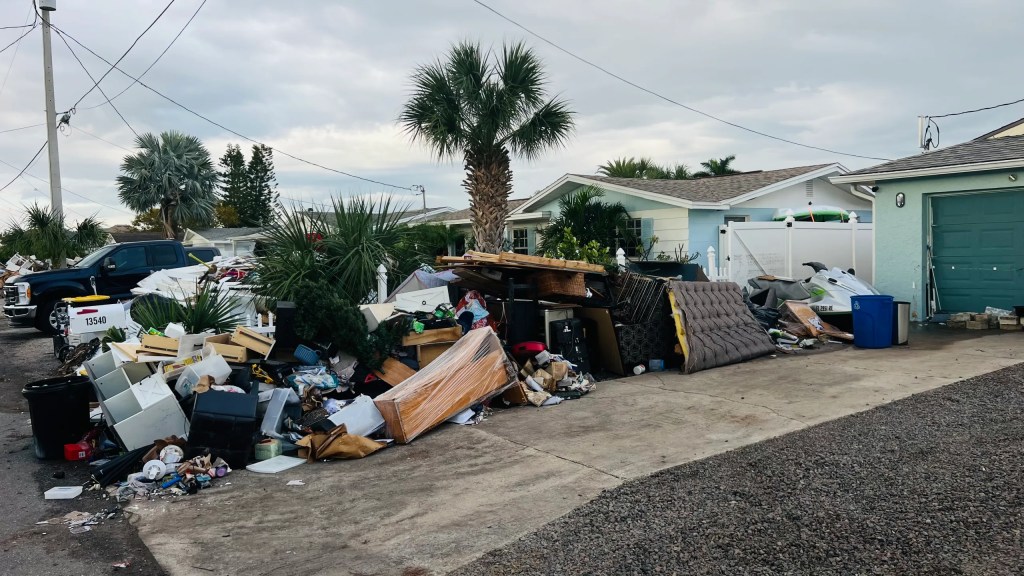
As hurricane season looms, Florida’s House Bill 1535 is making waves with a bold proposal to ease the burden on property owners recovering from devastating storms. Backed by Rep. Fiona McFarland (R-Sarasota) and with a Senate counterpart (SB 180) sponsored by Sen. Nick DiCeglie (R-Indian Rocks Beach), the measure aims to streamline post-storm recovery and could significantly impact Pinellas County’s coastal communities, which are no strangers to nature’s wrath. But will it deliver the relief homeowners crave, or is it a gamble with hidden costs?
Storm-Proofing Paradise: Florida’s HB 1535 Seeks Relief for Pinellas Property Owners—or Is It Too Good to Be True?
HB 1535, advanced by the House Transportation & Economic Development Budget Subcommittee on April 10, 2025, tackles a range of storm-related challenges. If passed, the bill would require local governments to pre-designate debris-management sites, develop clear permitting plans for homeowners and businesses, and establish mutual-aid agreements to bring in external help post-storm. It also prohibits counties from hiking building permit and inspection fees for 180 days after a hurricane or tropical storm emergency declaration, a move that could save property owners thousands during rebuilding.
For Pinellas County, where hurricanes like Helene and Milton in 2024 left homes battered and floodplains overwhelmed, the bill offers targeted relief. A key provision allows homeowners to rebuild homesteaded properties up to 130% larger than their pre-storm footprint without increasing taxable property values, preserving tax benefits under Florida’s Save-Our-Homes cap. Additionally, counties under federal disaster declarations from 2024 hurricanes would be barred from imposing rebuilding moratoriums through October 1, 2027, speeding up recovery. Local governments and school districts would also be prohibited from charging impact fees for rebuilding if land-use designations remain unchanged, easing financial strain.
Pinellas County, with its extensive floodplain management program, stands to benefit significantly. The county’s natural floodplains—wetlands, mangroves, and salt marshes—already buffer storm surges and filter runoff, but HB 1535 could enhance these protections by ensuring faster, more affordable rebuilding processes. Property owners whose homes were destroyed by Helene’s storm surge, could rebuild without the added burden of inflated fees or delayed permits.
However, the bill isn’t without critics. Some worry that loosening regulations could lead to unchecked development in flood-prone areas, potentially exacerbating future storm damage. Others question whether local governments, already stretched thin, can handle the mandated planning and coordination without additional funding. They point out it’s a great idea on paper, but who would foot the bill for all this preparedness? After all, Pinellas can’t just wave a wand and make debris sites appear.
If HB 1535 passes, Pinellas County homeowners could see a future where rebuilding after storms is quicker and less costly, preserving their financial stability and community ties. The bill also addresses election disruptions, allowing county election supervisors to adjust voting locations and extend early voting, a nod to the chaos storms like Milton caused during the 2024 election season.
As the measure heads to the House State Affairs Committee, McFarland and DiCeglie are optimistic about merging their proposals into a robust law. For Pinellas property owners, HB 1535 could be a lifeline in the face of increasingly fierce hurricanes—or a well-intentioned plan that falls short in practice. Only time, and the next storm, will tell.
Follow the St. Pete-Clearwater Sun on Facebook, Instagram, Threads, Google, & X
(Image credit: WFLA)
PIE-Sun.com: local St. Pete-Clearwater news


 St. Pete-Clearwater Sun
Leave a comment