
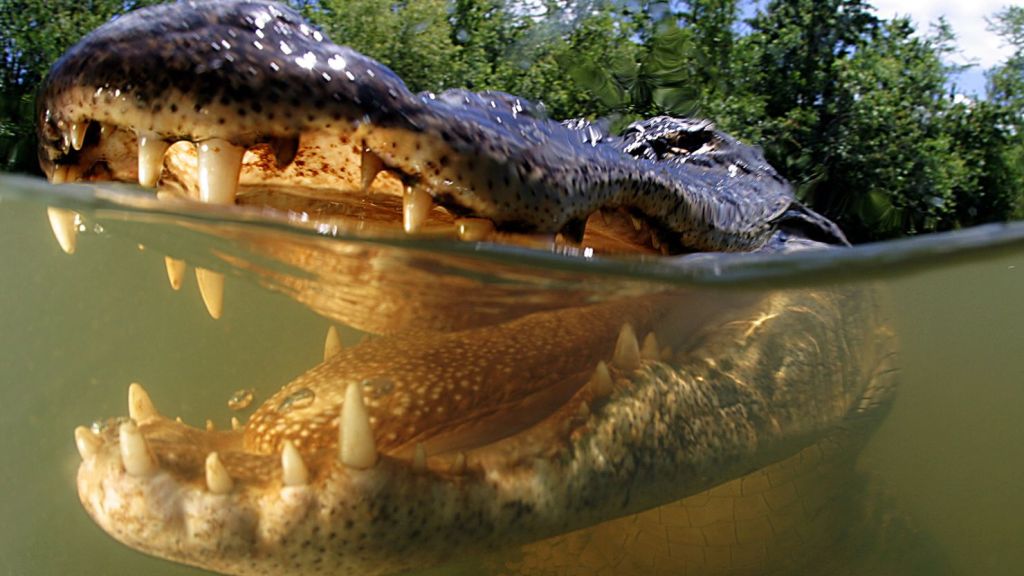
With alligator mating season underway, encounters are more common, but these reptiles often end up in the wrong place at the wrong time—thanks to human behavior.
A study from the University of Florida and Center College in Kentucky reveals that alligators aren’t usually to blame for bites. In 96% of cases, human risk-taking or inattention sets the stage for these incidents. Researchers stress that greater awareness could prevent many attacks.
Florida leads the nation in alligator attacks, and humans are the primary culprits, according to the study. “Alligators aren’t aggressive predators out to get you,” said Frank Mazzotti, a University of Florida wildlife ecology professor and study co-author. “They mostly just want to bask in the sun.”
The study, which reviewed human-alligator interactions from 1734 to 2021, found that nearly all bites followed risky human behaviors, such as swimming in alligator-inhabited waters or walking dogs near ponds. “A dog by the water is like advertising a meal,” Mazzotti noted, explaining that alligators are drawn to dogs, sometimes even lured by barking during trapping efforts.
These behaviors—splashing, swimming, or entering alligator habitats—act as “attractive stimuli,” prompting responses from alligators that aren’t typically seeking conflict. “It’s rare for an alligator to chase someone unprovoked,” Mazzotti said. “Most incidents involve people putting themselves in the wrong place.”
Mazzotti hopes the findings will spur better education on alligator risks, particularly for Florida’s newcomers.
Follow the St. Pete-Clearwater Sun on Facebook, Instagram, Threads, Google, & X
(Image credit: James Abernethy/Future Publishing/Getty Images)
PIE-Sun.com: local St. Pete-Clearwater news




 St. Pete-Clearwater Sun
Leave a comment