
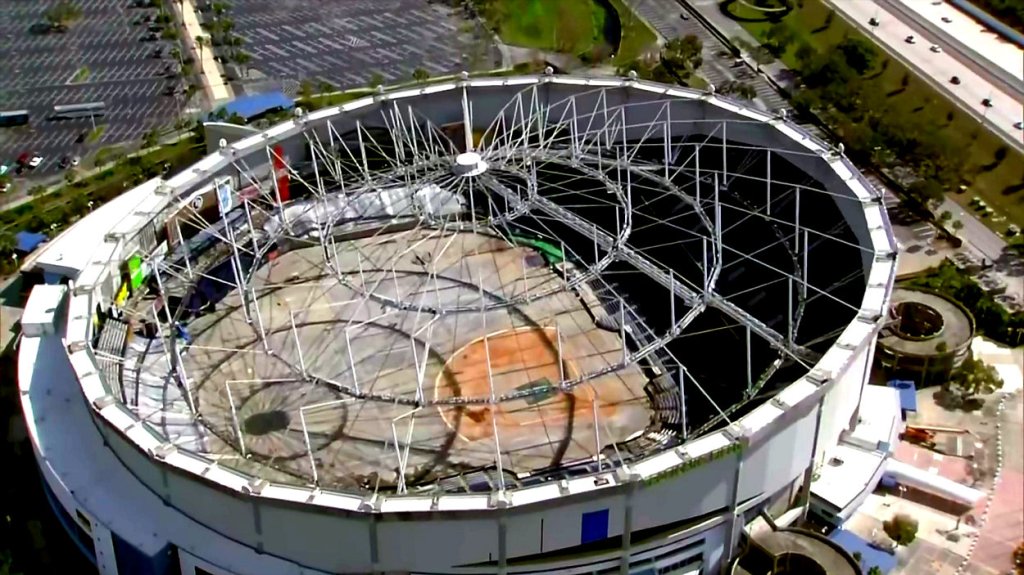
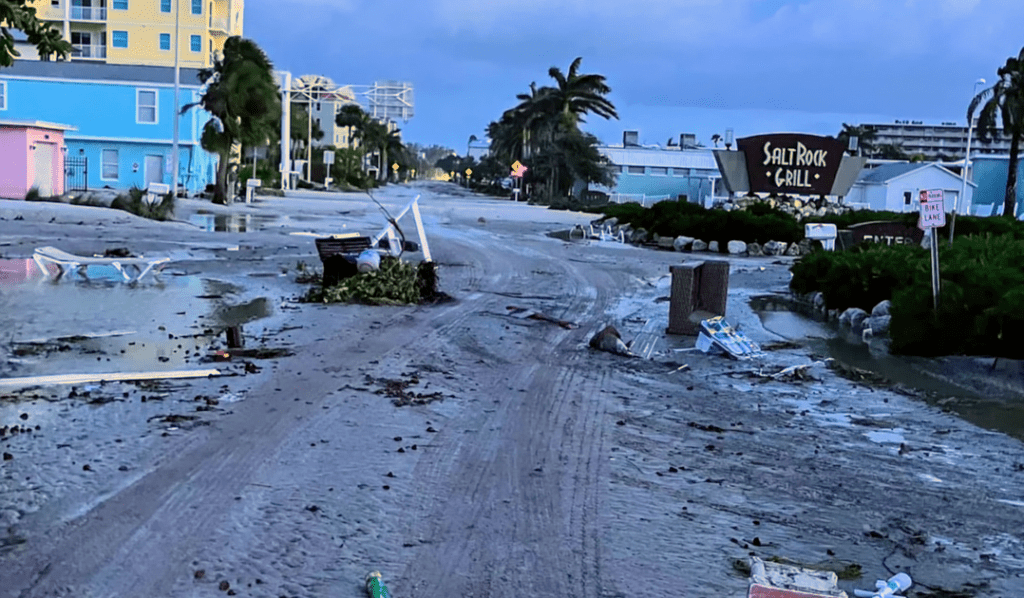
The City of St. Petersburg plans to secure an $85 million line of credit from Bank of America to help fund ongoing storm recovery efforts, including debris removal and repairs to Tropicana Field.
City officials say the borrowing strategy is a fiscally responsible move amid ongoing federal uncertainty and rising costs. The proposal, discussed during an April 10 Budget, Finance and Taxation Committee meeting, received unanimous approval.
The committee endorsed updates to the city’s financial policies, allowing tax-exempt debt to include lines of credit, raising the cap on variable rate debt from 5% to 10% of the city’s total, and exempting the $85 million line from existing borrowing limits. The city will have the option to repay the principal early using insurance payouts or FEMA reimbursements, helping to reduce interest costs.
“If emergencies happen, this is what the city is going to have to do,” said Councilmember Lisset Hanewicz. “It often makes financial sense—it’s cheaper to borrow than to deplete reserves. You don’t have $100 million just sitting there when that money is needed elsewhere.”
The discussion followed the council’s recent approval of $22.5 million to replace Tropicana Field’s storm-damaged roof. The repairs are expected to cost around $56 million, in line with estimates from November 2024.
So far, the city has spent approximately $10 million on planning and mitigation at the Trop. After covering a $22.5 million deductible, the city could receive up to $22 million through insurance.
Storm-related debris removal has cost $125.8 million. While FEMA has already advanced $37 million, the city expects an additional $88 million in reimbursements. However, uncertainty remains as federal leaders weigh potential changes to FEMA’s structure and funding.
In January, Budget Director Erika Langhans estimated the city’s net cost for storm recovery would be around $14 million of the total $274 million. Rising interest rates and international tariff concerns have since complicated the financial picture.
Jay Glover, managing director at PFM Financial Advisors, said the city’s conservative approach to debt has typically favored fixed-rate borrowing. But the current situation calls for flexibility.
“This is a unique circumstance where we believe a credit line is the most effective tool,” Glover said. “Historically, we’ve benefited from low interest rates, locking in long-term debt at 2% to 3%.”
With rates climbing in recent years, PFM estimates a fixed-rate loan would carry about 4.5% interest—or $4.7 million. By comparison, the proposed credit line carries a 3.94% variable rate, which could save the city roughly $1.5 million in interest.
Glover acknowledged the risk of rising variable rates but said current economic conditions suggest rates are more likely to remain steady or decrease. Still, Councilmember Richie Floyd pointed out the forecast remains speculative. If variable rates spike, Glover said the city could convert the balance to a fixed-rate loan.
Asked about fiscal priorities amid global instability, Glover emphasized maintaining a strong reserve fund. He said the city’s financial position is solid, and PFM supports the city’s ability to issue up to $300 million in tax-exempt bonds for the new Rays stadium and Historic Gas Plant District redevelopment.
“You have flexibility now,” Glover told the committee. “We’re very comfortable with where the city is financially.”
He also called previous debt policies too restrictive. Councilmember Brandi Gabbard agreed, noting the updated guidelines reflect lessons learned from a historic hurricane season. However, she and others voiced concern over shifting from biannual to annual rate reviews. Glover committed to daily monitoring and quarterly updates.
Councilmember Hanewicz reminded the committee that the city has already borrowed $50 million for storm recovery, with the 2025 hurricane season fast approaching.
“We’re going to see improvements and policy changes throughout our organization,” said Assistant City Administrator Tom Greene. “Now is the right time to reassess and adapt based on what we’ve learned.”
Follow the St. Pete-Clearwater Sun on Facebook, Instagram, Threads, Google, & X
(Image credit: Spectrum News)
PIE-Sun.com: local St. Pete-Clearwater news


 St. Pete-Clearwater Sun
Leave a comment