
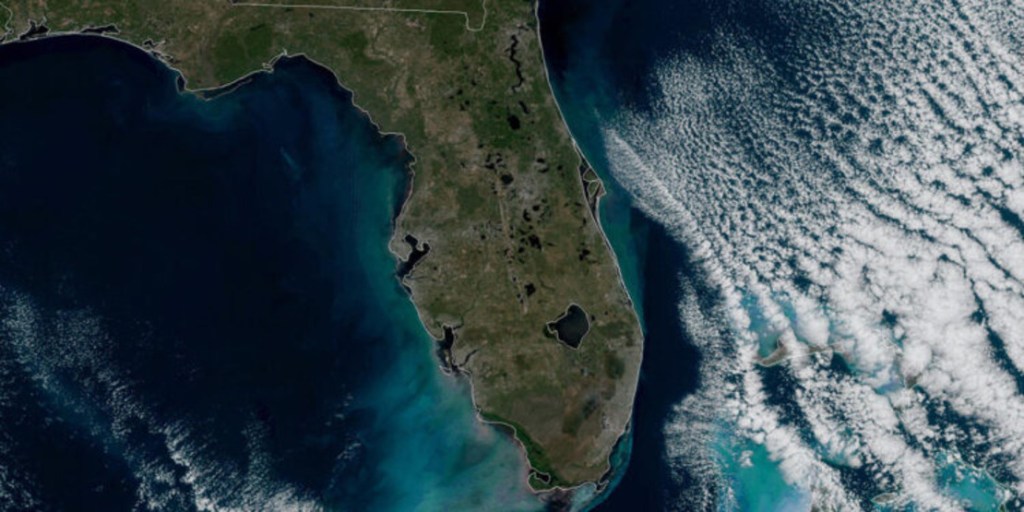
After a brief appearance this past winter, La Niña has officially ended, according to meteorologists.
The Climate Prediction Center at NOAA confirmed the shift, citing warming waters in the eastern Pacific and the weakening of cooler temperatures in the central Pacific as signs that La Niña has dissipated.
With neither La Niña nor El Niño in effect, the climate is now considered ENSO-neutral — a phase where global weather patterns become less predictable. Forecasters expect these neutral conditions to stick around through the summer and into early fall, including across Florida.
Last October, forecasters predicted a weak La Niña would emerge, and it did in January, bringing above-average temperatures and drier conditions to Florida. Now, without a strong climate pattern in control, Florida’s weather could become more variable.
“Without El Niño or La Niña, other less predictable climate factors will drive seasonal weather,” explained climatologist Bill Patzert in a NASA post.
The University of Georgia noted that another La Niña could return by late fall, but it’s too early to forecast with confidence due to unpredictable spring conditions.
This ENSO-neutral period has big implications for hurricane season, which starts June 1. Without Pacific-driven influence, other factors like sea surface temperatures in the Atlantic, soil moisture, and sea breeze interactions will shape Florida’s weather.
In general, Florida can expect a typical neutral summer: hot, humid, and stormy. And while the Pacific isn’t likely to boost or suppress Atlantic hurricane activity, models suggest a higher-than-normal number of named storms could develop.
NOAA currently predicts more than a 50% chance that ENSO-neutral conditions will persist through the peak of hurricane season (August–October). Later in the year, chances of La Niña returning are about twice as likely as El Niño, though neutral remains the most probable scenario into early winter.
With no dominant pattern in play, hurricane forecasts carry more uncertainty than usual. “We’ll be watching closely as we move toward June 1,” UGA officials said.
Follow the St. Pete-Clearwater Sun on Facebook, Instagram, Threads, Google, & X
(Image credit: NOAA satellite image)
PIE-Sun.com: local St. Pete-Clearwater news
 St. Pete-Clearwater Sun
Leave a comment