
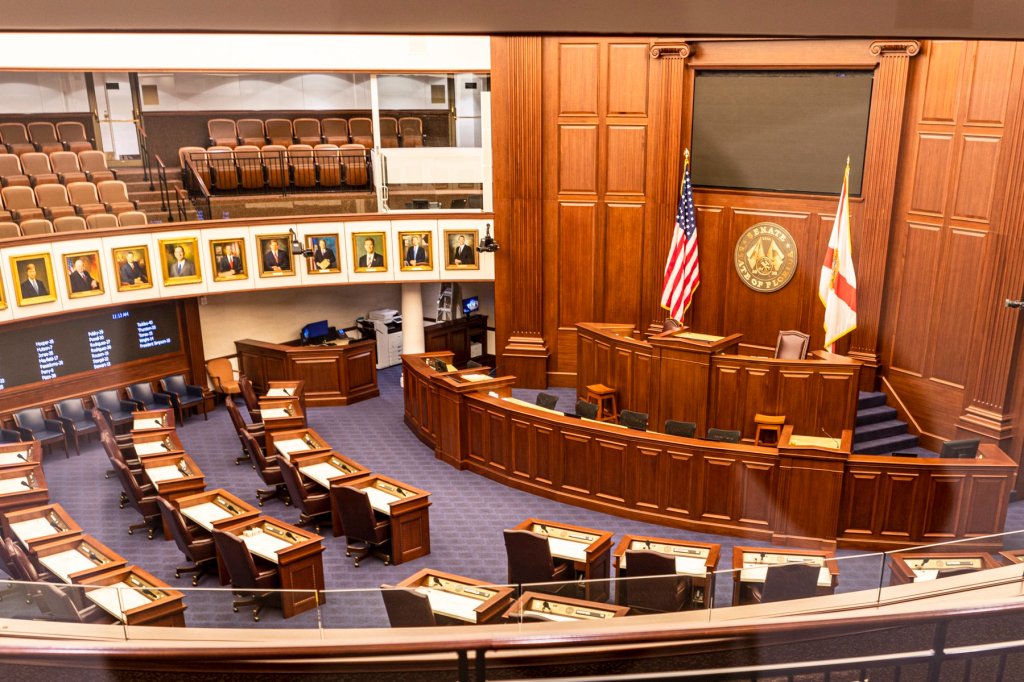
A bipartisan group of Florida legislators is moving forward with a proposal to slash the state sales tax from 6% to 5.25%, a change that would impact billions of dollars in annual revenue. Gov. Ron DeSantis, however, contends that lawmakers should prioritize property tax relief instead.
Defying the governor’s stance, the Florida House Ways and Means Committee unanimously approved the measure on Wednesday, which would permanently lower the state sales tax rate on a variety of goods and services. The proposal also extends the same 0.75% reduction to sales taxes on commercial rent, electricity, coin-operated amusement machines, and new mobile homes.
House Speaker Daniel Perez, R-Miami, who introduced the plan just last week, described it as a way to ease financial burdens for Floridians. “This measure will make Florida more affordable by giving people back their own money,” he said.
Since Florida relies heavily on sales tax revenue in the absence of a state income tax, the proposed reduction is projected to cost the state roughly $5 billion annually. Additionally, local governments, which receive a share of sales tax revenue, are expected to lose hundreds of millions of dollars, according to legislative analysts.
Acknowledging the potential impact on the state budget, Rep. Robin Bartleman, D-Weston, said adjustments would be necessary. “We will have to tighten our belts, but I believe this is a step in the right direction,” she said.
Gov. DeSantis has pushed back against the sales tax cut, arguing that it primarily benefits tourists and fails to address the concerns of Florida residents. “People aren’t clamoring for sales tax relief,” DeSantis said Monday. “They’re clamoring for property tax relief.”
Instead, the governor is proposing a one-time property tax rebate for homeowners, averaging about $1,000 per household, to be distributed by year’s end. Like the sales tax cut, his plan would cost the state an estimated $5 billion.
Senate President Ben Albritton, R-Wauchula, has remained neutral on the competing tax plans but cautioned against long-term financial risks. “Cutting taxes now does little good if we have to raise them later to cover budget shortfalls,” he wrote in a memo earlier this week. He suggested that a final tax package should focus on temporary cuts while allowing for further discussion on permanent reductions.
Florida’s state economists warn that the budget could face significant deficits in the coming years. With ongoing negotiations over broader budget proposals, legislative leaders, and the governor must find common ground on both tax relief and overall spending priorities.
Follow the St. Pete-Clearwater Sun on Facebook, Instagram, Threads, Google, & X
(Image credit: Chris Bern)
PIE-Sun.com: local St. Pete-Clearwater news

 St. Pete-Clearwater Sun
Leave a comment