
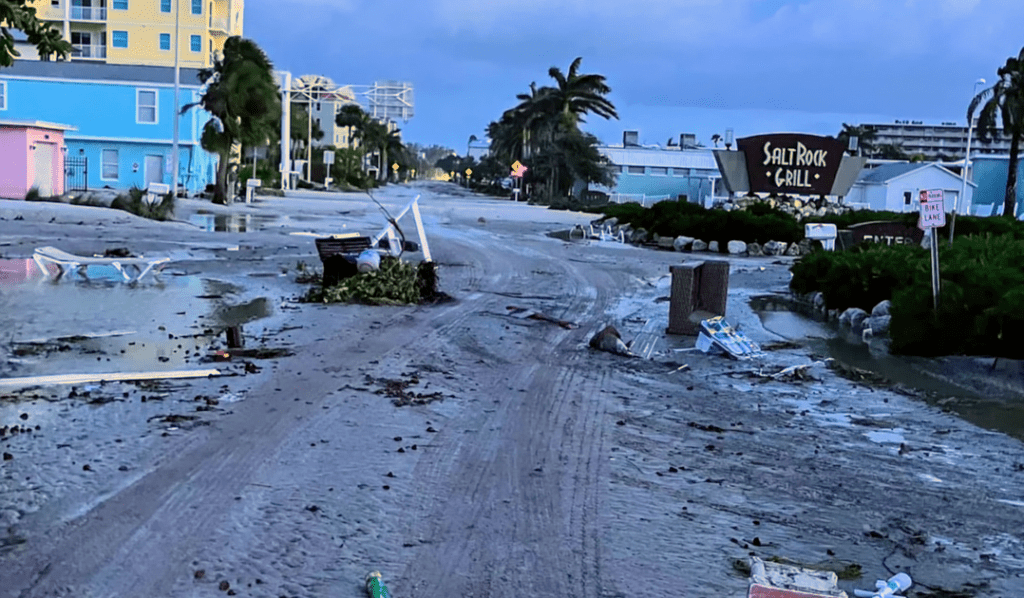
According to FEMA, the 2024 hurricanes—Debby, Helene, and Milton—resulted in over 72,000 national flood insurance claims. Specifically, Hurricane Helene alone prompted more than 54,000 claims within a month of its impact. FEMA data from 2003 to 2023 also reveals that 99% of U.S. counties have experienced a flood event, underscoring the widespread risk.
In response to recent flooding trends, a growing number of homeowners are opting to elevate their homes, a solution that, while effective, comes with significant costs and challenges. For many, this decision is a critical one, aimed at protecting one of their most valuable assets.
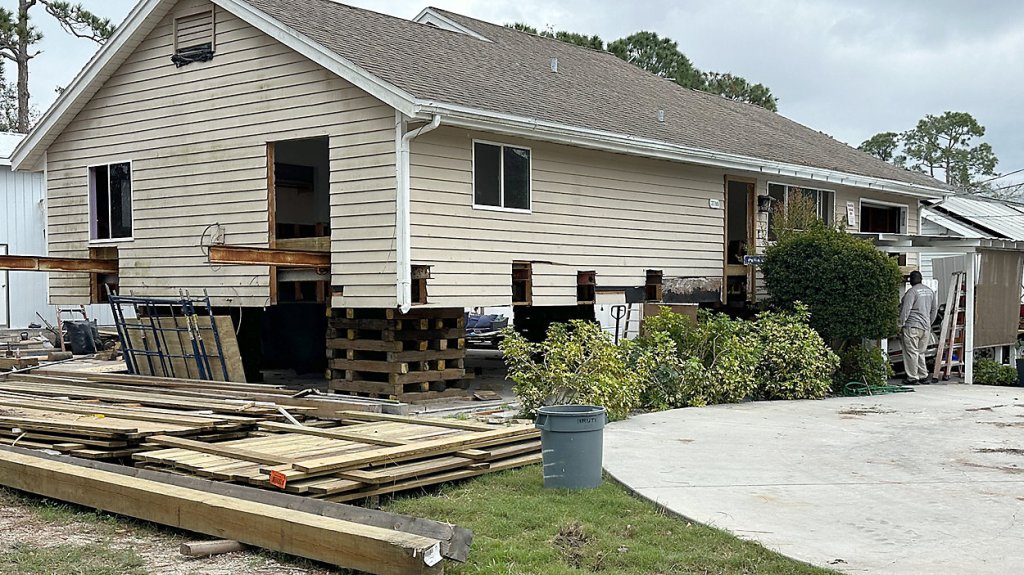
In New Smyrna Beach, Earl Wischmeyer has been working with movers for several days—not to relocate his home to a new address, but to raise it four feet higher. This elevation project is his response to the recurring flooding his property has endured in recent years. “We grew up here,” Wischmeyer reflects, gazing at his home. “We’re used to dealing with water, wind, and all that. It doesn’t faze us,” he told Spectum News 13.
The flooding issues began in 2022 with Hurricanes Ian and Nicole, and the problem resurfaced during Hurricane Milton in 2023. Determined to take action, Wischmeyer and his wife moved their belongings into a portable garage in their backyard, which has also been serving as their temporary one-bedroom living space. “It’s all temporary,” Wischmeyer explains during a tour of the setup. “We’ve got a mezzanine—storage is upstairs, with all our stuff above us.”
After nearly six months of preparation and securing permits, the day to lift the house has arrived. Youngblood Building Movers, a family-run business, is on-site to elevate the home using a unified hydraulic jacking machine. Randy Youngblood, who operates the company with his father, explains the process: “We’re lifting the walls off the slab, giving him about four feet of block work. Then he’ll remove the concrete slab, install a new wood floor, and create a crawl space.”
Randy, a third-generation home mover, works alongside his father, who has decades of experience and still operates the jacking machine. “We’re using six jacks for this job,” Youngblood says, gesturing toward Wischmeyer’s home. “You lock them in, ensure everything is level side to side, and the system lifts it all uniformly,” he explained to Spectrum News 13.
Wischmeyer’s home weighs approximately 40,000 pounds, and the steel rods used to lift it add another 20,000 pounds. The hydraulic jacking machine can hoist the combined 60,000 pounds in mere seconds. However, the process leading up to this moment takes months of planning and coordination. The cost is also substantial, ranging from $50,000 to $100,000, and can easily climb into the six figures.
Youngblood notes that demand for home elevation has surged since Hurricane Irma in 2017. However, due to permitting requirements, the process typically takes about six months. The Youngbloods can only handle three to four projects annually.
Wischmeyer remains hopeful that his home will be elevated and ready before the 2025 storm season, providing much-needed protection against future flooding.
Follow the St. Pete-Clearwater Sun on Facebook, Instagram, Threads, Google, & X
(Image credit: Spectrum News 13/Asher Wildman)
PIE-Sun.com: local St. Pete-Clearwater news
 St. Pete-Clearwater Sun
Leave a comment