
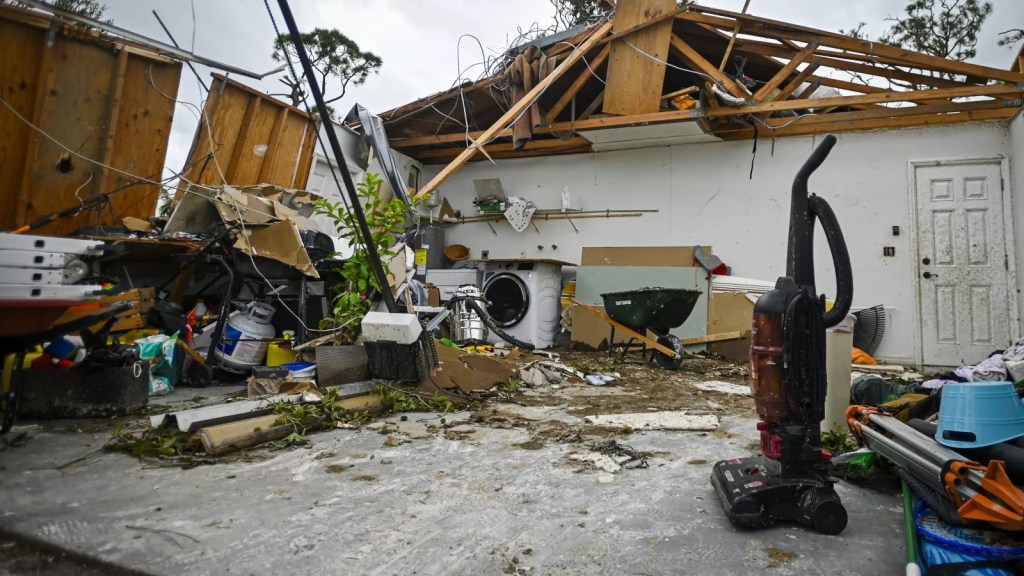
Florida lawmakers grilled the state’s current and former insurance commissioners for three hours last Friday, demanding answers about why they failed to disclose a 2022 report exposing massive financial transfers from Florida insurers to out-of-state affiliates.
Property insurers were pleading for legislative relief at the time, citing financial strain from major storms and excessive litigation. Yet, the report revealed they were simultaneously funneling billions to affiliated companies.
Commissioned by the Florida Office of Insurance Regulation (OIR) and prepared by Risk and Regulatory Consulting, the report was completed in March 2022—months before lawmakers passed legislation limiting lawsuits against insurers. However, the findings never became public until a recent Tampa Bay Times investigation unearthed them.
Lawmakers Demand Answers
House Speaker Daniel Perez convened last week’s House Insurance & Banking Subcommittee hearing after the Tampa Bay Times report uncovered that insurers, claiming financial distress after Hurricanes Irma (2017) and Michael (2018), had paid $680 million in dividends to shareholders while transferring billions to affiliates.
According to the report:
- 53 insurers reported just $61 million in net income, while
- Their affiliates, known as managing general agents (MGAs), reported a staggering $14 billion in income.
Republican Rep. Susan Valdes questioned former Insurance Commissioner David Altmaier on whether these disclosures raised concerns.
“Red Flags”
“It certainly raised some red flags, which is why we needed to verify the accuracy of the information,” Altmaier responded.
Lawmakers pressed Altmaier and his successor, Michael Yaworsky, on why the report remained unpublished. Both argued it was only a draft and not ready for release.
“A draft is a real thing to us. It means the document is incomplete,” Yaworsky stated.
Under further questioning, Yaworsky acknowledged that OIR and Risk & Regulatory Consulting discussed finalizing the report in late 2022 but claimed his office was overwhelmed with multiple insurer insolvencies at the time.
Altmaier, speaking under oath, admitted that the OIR had been aware of financial transfers to affiliates since 2014. However, it wasn’t until 2021 that legislation granted the agency explicit authority to investigate such payments.
“Hindsight being 20/20, I probably could have pushed harder to ensure this work continued,” Altmaier conceded.
Were Affiliate Transfers Driving Up Premiums?
Pinellas County Republican Rep. Adam Anderson asked if excessive affiliate fees contributed to rising policyholder premiums.
“There is a factor in there,” Altmaier responded. “If fees are reasonable, they’re justified in the rates. But if they’re abused, they can significantly impact premiums. The challenge is, we didn’t fully answer that question during my tenure.”
Yaworsky, who served as Altmaier’s chief of staff from 2017 to 2021 before becoming Insurance Commissioner in early 2023, claimed he wasn’t even aware of the report until late last year. Lawmakers expressed frustration that he hadn’t disclosed the information earlier, given Florida’s skyrocketing insurance rates.
Yaworsky pushed back, arguing that litigation, natural disasters, and reinsurance costs—not affiliate transfers—were the primary reasons insurers struggled or failed.
“Companies went broke because rates couldn’t rise fast enough to keep up. There’s no strong evidence that MGA or affiliate fees caused insolvencies,” he asserted.
Lack of Oversight on Affiliate Fees
A key issue remains unresolved: Florida still has no legal definition of what constitutes a “fair and reasonable” affiliate fee.
The Tampa Bay Times first requested the report in 2022 but didn’t receive it until late last year. Some lawmakers were outraged by the delay.
“We’re here to find out if insurance companies ripped off Florida residents,” said Republican Rep. Mike Caruso. “Yet this report is still a draft, only seven pages long, and based on data from 2017-2019. It’s 2025. That’s outrageous.”
Lawmakers are now considering commissioning an updated report, though no formal decision has been made.
The Future of Florida’s Insurance Market
In his recent State of the State address, Gov. Ron DeSantis claimed Florida’s homeowners’ insurance market is stabilizing, citing 130,000 new private policies in the past year and the lowest rate increases nationwide.
However, the Times reported last week that nearly 1 million policyholders with state-backed Citizens Property Insurance Corp. will see higher rates starting June 1. As the state’s largest insurer, Citizens remains the last resort for many homeowners.
With insurance affordability a top concern for Floridians, the debate over industry practices—and whether insurers exploited the system—shows no signs of fading.
Follow the St. Pete-Clearwater Sun on Facebook, Instagram, Threads, Google, & X
(Image credit: Miguel J. Rodríguez/AFP/Getty Images)
PIE-Sun.com: local St. Pete-Clearwater news


 St. Pete-Clearwater Sun
Leave a comment