
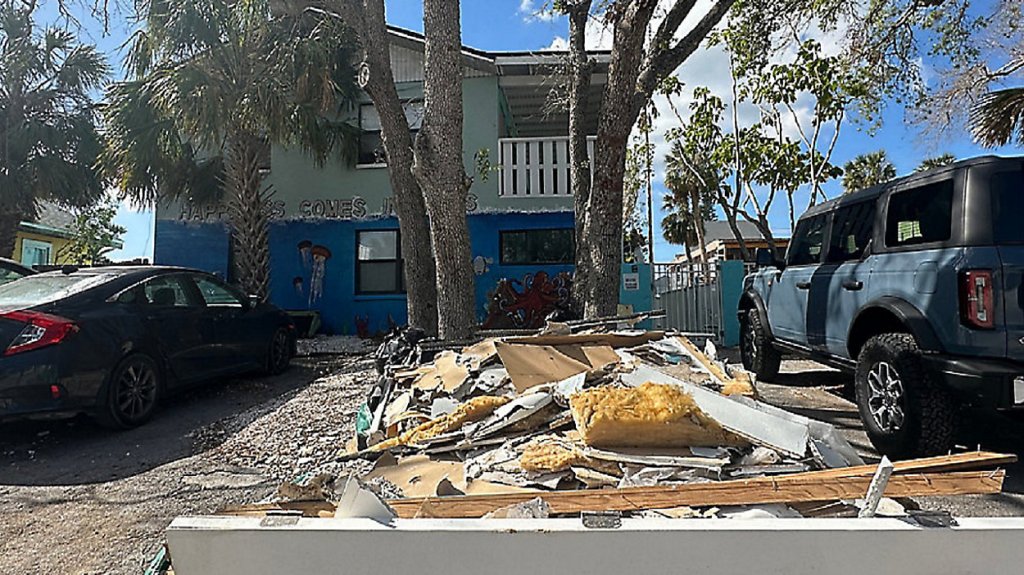
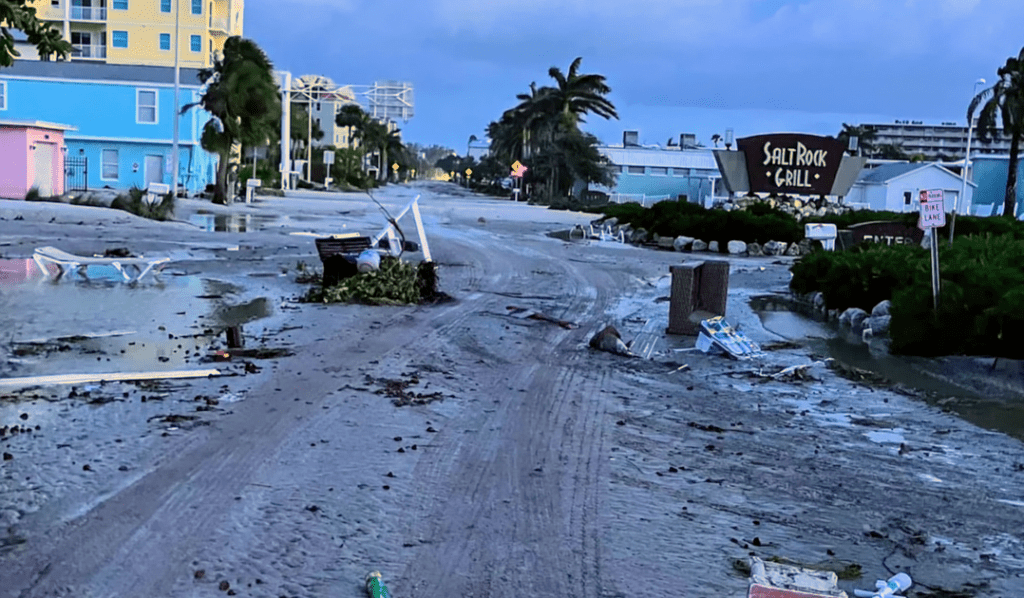
Hurricane Helene struck over 125 days ago. And 10 small towns across Pinellas County beaches have seen significant delays in rebuilding efforts, with many homeowners only recently learning if they can reconstruct their homes.
Barb Adams, a Treasure Island resident, finally received a permit to elevate her house last week after applying two-and-a-half months ago and making six trips to city hall. While she faces further delays due to contractor scheduling and inspections, the Tampa Bay Times reports that her stay at the Bilmar Beach Resort, courtesy of FEMA, has been extended into February.
City officials in St. Pete Beach, Treasure Island, and Madeira Beach are adhering to federal permitting guidelines to maintain discounted rates from the National Flood Insurance Program. Rushing the permits could result in higher costs for residents later on, said Madeira Beach Mayor Anne-Marie Brooks.
Tourism board members are concerned that long waits for rebuilding permits may impact the area’s tourism recovery during peak season. Though some hotels accommodated displaced residents, vacation rental supply dropped by 24% in November, and around 1,000 hotel rooms were unavailable.
The southern beach cities—Madeira Beach, Treasure Island, and St. Pete Beach—still have hundreds of permits to process. As of the last week of January, Madeira Beach had issued nearly 1,200 permits since Helene hit, with 600 still under review. However, over half of these permits only allowed residents to remove drywall, and only around 200 permits were for fixing or demolishing flooded homes.
Over 900 Treasure Island residents are awaiting permits, out of the 1,900 applications submitted. In St. Pete Beach, approximately 1,600 permits have been issued out of more than 2,500 applications filed since October. Issued permits took about a month to process, but many have been waiting for over 100 days.
The delays largely stem from FEMA’s substantial damage determinations, which require a contractor, Tidal Basin, to assess whether homes are more than 50% damaged. Homes deemed more than 50% damaged must be elevated or demolished and rebuilt. Residents must receive these determinations before obtaining permits.
Substantial damage letters are not the only cause of delays. Chris Clark, a Treasure Island resident, found out within weeks that his home was only one-fifth damaged, but it still took over two months to get his permit. Meanwhile, homes in other cities with less than 50% damage received permits within two weeks.
For residents like Marie Myslakowski in St. Pete Beach, rebuilding is out of their hands, as their complex hired a contractor to obtain permits. Myslakowski’s unit remains damp and at risk of black mold, and it could be over a year before she returns home. Others living in apartments and condos face similar struggles.
Pinellas County Commissioner Brian Scott said the beach communities lacked resources for a mass rebuilding effort. With populations under 10,000, the cities’ building departments have borrowed staff from other departments and the state. Scott suggested the cities consider consolidating to better handle future storms.
Yarisi Valero, a Madeira Beach resident, faced delays in her substantial damage determination due to an outdated property value. After making necessary adjustments and attending an in-person commission meeting, she finally received her permit.
Businesses like Grove Coffee and Sweet Brewnette are also struggling. Peter Gottschling, co-owner of Grove Coffee, has yet to submit his permit application four months after the hurricane due to contractor coordination. Meanwhile, Vicki Ferrari of Sweet Brewnette decided not to rebuild after waiting for grants and loans that never came.
As residents and businesses continue to face delays, they anxiously count down the days until the next hurricane season.
Follow the St. Pete-Clearwater Sun on Facebook, Instagram, Threads, Google, & X
(Image credit: Spectrum Bay News 9/Angie Angers)

 St. Pete-Clearwater Sun
Leave a comment