
If you’ve never visited Cedar Key, Florida, you’re missing out on one of the state’s most breathtaking coastal spots. Surrounded by sandbars and towering mangroves, its waterways are a true natural gem.
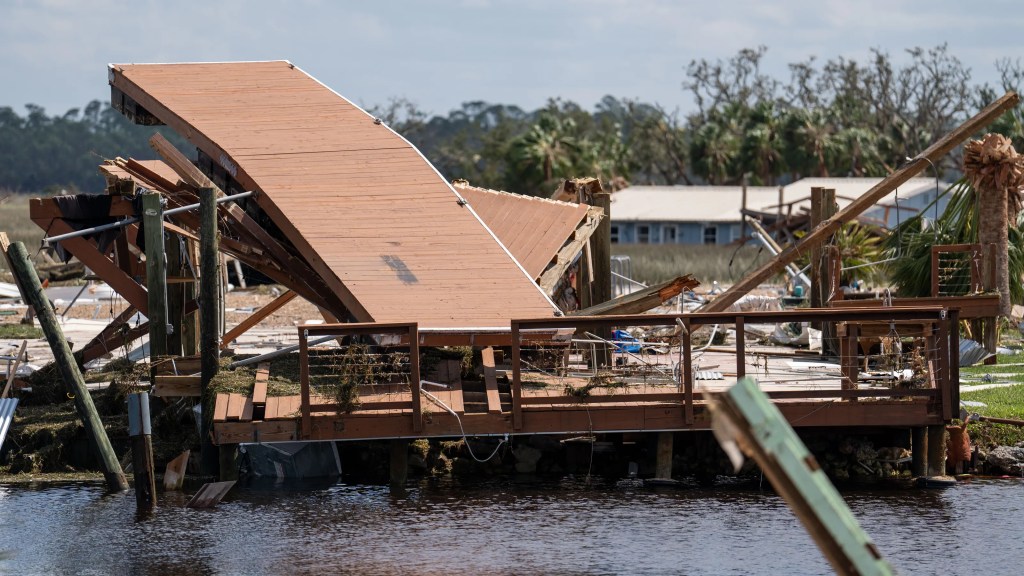
However, in recent years, hurricanes have devastated this small community and the aquaculture farms in the Gulf of Mexico. Now, a major cleanup effort is underway to remove marine debris left in the storm’s wake.
A Unified Effort to Restore the Waters
WFTS reporter Michael Paluska got an exclusive look at the extensive cleanup operation led by locals, volunteers, nonprofits, and state agencies. Their mission: to clear away marine netting from shellfish and clam farms about a mile and a half offshore.
“We’ve talked to locals who said the storm surge reached 12 to 13 feet, and I believe it,” said Captain Neill Holland, President of Ocean Aid 360. “Aquaculture equipment was carried by wind and waves and deposited far inland, deep in the tree line.”
Paluska, who previously covered Ocean Aid 360’s Ghost Trap Rodeo in 2023, joined Capt. Holland on an airboat to witness the cleanup firsthand—and even helped remove nets entangled in trees, water, and sandbars.
Challenging Conditions for Volunteers
“This is a tough job,” Holland said. “We’re constantly in the mud—shin deep, knee deep in some spots.”
In certain areas, the mud was so thick it acted like quicksand, making it impossible to reach some netting tangled high in the trees. Paluska himself stepped into a spot where the mud reached his knees.
“To do this work, we need specialized boats like airboats to navigate the coastline,” Holland explained. “Today, we have ten boats out here, thanks to Florida’s airboat community rallying to help.”
The marine debris came from aquaculture leases where clams and shellfish are farmed. The violent storms tore equipment from these farms and scattered it across the shoreline.
State Agencies Step In
Several state agencies, including the Florida Department of Environmental Protection and the Florida Fish and Wildlife Conservation Commission (FWC), have joined forces to aid the cleanup in the Big Bend Seagrass Aquatic Preserve. Ocean Aid 360 was awarded the contract to lead the effort.
Jennifer McGree, representing the FWC Marine Debris Program, highlighted the collaborative nature of the project.
“This Cedar Key clam cover net project is part of a broader initiative funded through the FWC Marine Debris Program to address aquaculture debris from recent hurricanes. The funding comes from the Gulf States Marine Fisheries Commission, in partnership with the Gulf of Mexico Alliance (GOMA) and NOAA’s Bipartisan Infrastructure Law funding. It’s a truly collective effort,” McGree said.
A Statewide Effort to Remove Marine Debris
The issue of marine debris extends beyond Cedar Key. Past hurricanes have left similar destruction across Florida’s coastline. Paluska previously joined cleanup crews in 2023 after Hurricane Ian, highlighting the ongoing battle to clear Florida’s waters.
Since October 2018, Ocean Aid 360 has removed over 450,000 pounds of plastic and derelict fishing gear, and the work is far from over.
“The NOAA Marine Debris Program and the FWC have been instrumental in ensuring experienced organizations like ours can mobilize quickly,” Holland said. “We’re gearing up for our biggest event yet—a derelict trap removal in the lower Florida Keys this summer. Last May, in just three days, we collected 1,002 derelict traps and 60,000 pounds of plastic and debris. This summer, we’re going for three weeks. The numbers will be huge.”
For those interested in supporting Ocean Aid 360, donations and volunteer opportunities are available to help keep Florida’s waters clean and thriving.
Follow the St. Pete-Clearwater Sun on Facebook, Instagram, Threads, Google, & X
(Image credit: Treasure Coast News)


 St. Pete-Clearwater Sun
Leave a comment