
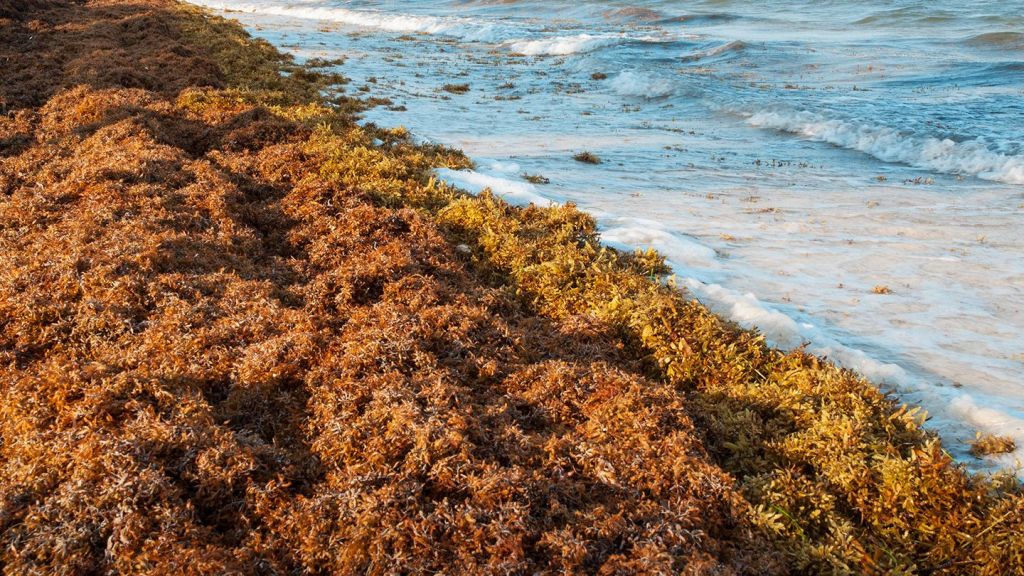
Experts from the University of South Florida predict that 2025 will be a “major” year for Sargassum seaweed, which forms dense mats that often inundate Florida’s shores.
These researchers monitor Sargassum levels and publish monthly updates on bloom locations. They reported that the quantity of Sargassum in the tropical Atlantic saw a significant increase in December, surpassing their forecasts. The Caribbean Sea and Gulf of Mexico, however, showed only “negligible” amounts of seaweed, with low numbers predicted for January. In December, small patches had already reached the Lesser Antilles.
Looking forward to 2025, researchers stated, “due to the relatively high amounts of Sargassum in the tropical Atlantic, 2025 is likely to be another significant Sargassum year.” They noted that current levels exceeded the 75th percentile of the past 13 years, indicating a strong likelihood of an active year ahead.
As Sargassum drifts between the Atlantic coast of Africa and the Gulf, it serves as a habitat for marine life and absorbs carbon dioxide. However, when it reaches the shore, it can cause problems, piling up on Caribbean islands and even reaching Florida. In the Sunshine State, thick, odorous clumps of seaweed are a common sight on some beaches during the summer months.
The “Great Atlantic Sargassum Belt” was not detectable by satellite until 2011.
Follow the St. Pete-Clearwater Sun on Facebook, Instagram, Threads, Google, & X
(Image credit: Alamy)


 St. Pete-Clearwater Sun
Leave a comment