
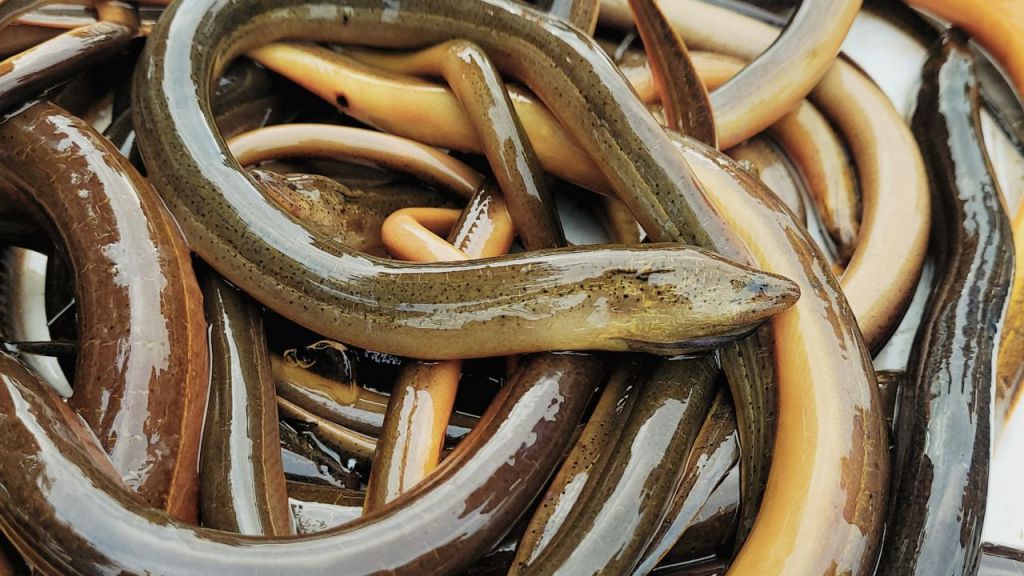
Concern is rising among various agencies regarding the population surge of the invasive Asian swamp eel in Florida.
The University of Florida, in collaboration with the U.S. Geological Survey, U.S. Army Corps of Engineers, and other agencies, is urging the public to report any sightings of this invasive species.
Scientifically named “Monopterus albus,” the Asian swamp eel was first identified in Florida in 1997. There’s growing worry about their increasing numbers throughout the southeast, especially in the Sunshine State.
Scientists are alarmed by the potential for these eels to invade new waterways, posing threats to Florida’s biodiversity. The impact of these eels on freshwater systems, which are crucial for recreational and commercial fishing, remains uncertain.
“Florida’s aquatic habitats are essential to our ecosystem and economy, and invasive species like the swamp eel can cause irreversible damage to our biodiversity,” said Paul Evans, research coordinator for the UF/IFAS Invasion Science Research Institute (ISRI). “Their role as a novel predator poses significant harm to our native species.”
The Asian swamp eel, native to Southeast Asia, is a unique, air-breathing fish that thrives in muddy, stagnant waters.
- Swamp eels are highly adaptable, thriving in various aquatic environments, from slow-moving streams to marshes and wetlands.
- They are opportunistic feeders, consuming a wide range of prey, including small fish, amphibians, and invertebrates.
- The species has the potential to disrupt food webs and harm native biodiversity, leading to ecological shifts in affected areas.
- Swamp eels reproduce prolifically, making population control difficult once they become established.
People in Florida’s waterways are encouraged to report sightings through the USGS Nonindigenous Aquatic Species website (https://nas.er.usgs.gov/), EDDMapS website (https://www.eddmaps.org/) or app, or by calling FWC’s 888-Ive-Got-1 (483-468) hotline.
Follow the St. Pete-Clearwater Sun on Facebook, Instagram, Threads, Google, & X
(Image credit: U.S. Geological Survey)


 St. Pete-Clearwater Sun
Leave a comment