
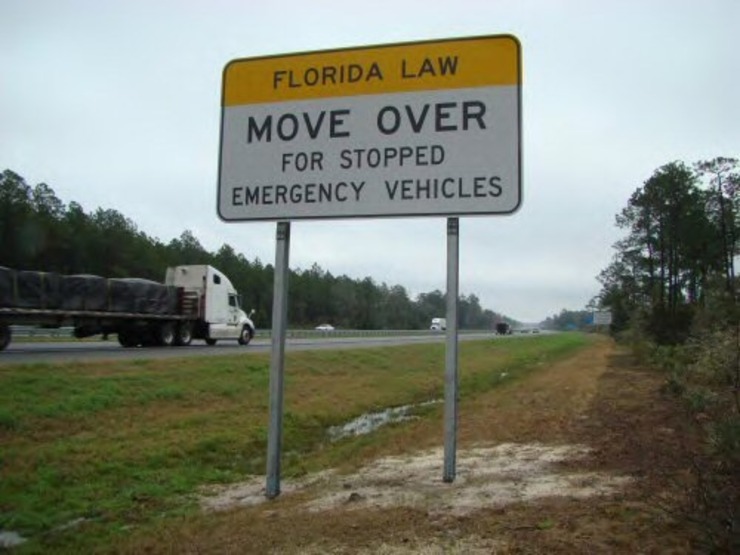
Florida Highway Patrol (FHP) troopers are using January to remind drivers that moving over for disabled vehicles isn’t just a courtesy—it’s the law.
What Is Florida’s Move Over Law?
The Move Over Law, first enacted in 1971, requires drivers to yield the right-of-way to emergency vehicles. Over the years, it has been expanded to improve road safety:
- 2014: Utility and sanitation vehicles were added to the law.
- 2021: Road and bridge maintenance or construction vehicles with warning lights were included.
- 2024: The law now covers all disabled vehicles stopped on the roadside with hazard or warning lights activated.
How to Comply
- On Multi-Lane Roads: Move over one lane when approaching a stopped vehicle with flashing lights.
- On Two-Lane Roads: If moving over isn’t possible, reduce your speed to 20 mph below the posted limit.
- Low-Speed Zones: When the speed limit is 20 mph or less, slow to 5 mph.
Failing to comply with the Move Over Law results in traffic fines, fees, and points added to your driving record.
Why It Matters
In 2024, there were 170 crashes statewide caused by drivers failing to obey the Move Over Law, leading to one death and 10 serious injuries. Additionally, more than 15,000 drivers were cited for violations of the law between January and November 2024.
RELATED: Outdated Traffic Signals Negatively Impact People and the Environment, New Report Reveals
A Message from FLHSMV
“By understanding and respecting the Move Over Law, every driver can contribute to a safer environment,” said Dave Kerner, Executive Director of the Florida Department of Highway Safety and Motor Vehicles (FLHSMV). “Safely changing lanes or slowing down when passing stopped vehicles not only protects lives but also reinforces our collective commitment to road safety. State troopers have zero tolerance for these dangerous violations and will take enforcement action when observed.”
RELATED: This Pinellas County Road Is the Deadliest, but It’s Not Necessarily the Most Dangerous
For further details, review section 316.126, Florida Statutes.
Follow us on Facebook, Instagram, Threads, Google, & X
(Image credit: iStock)


 St. Pete-Clearwater Sun
Leave a comment