
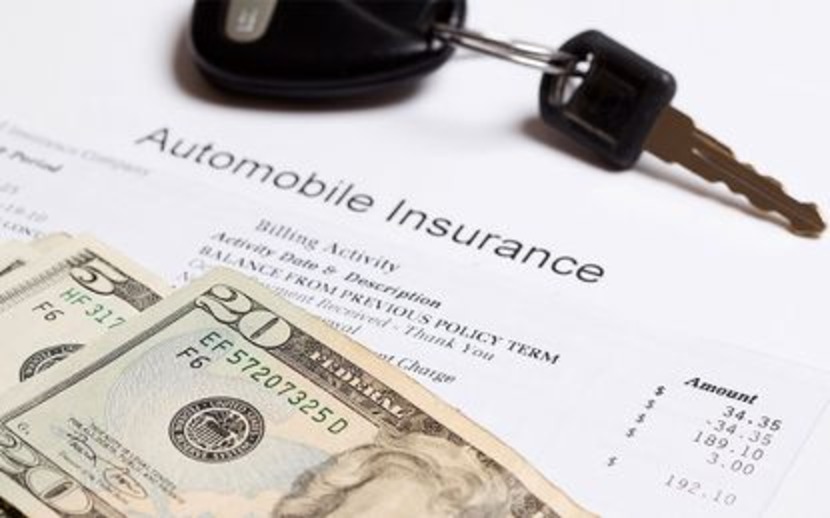
According to the Labor Department’s latest Consumer Price Index report, surging automobile insurance costs in Florida and elsewhere contributed to November’s annual inflation rate of 2.73%.
Together, insurance for autos, homes, and medical care accounted for 15% of the increase in the Consumer Price Index, with double-digit increases in auto premiums being a major factor, economists say.
According to an analysis by Bankrate, a personal finance website, car owners in Florida pay the highest auto insurance premiums in the country, averaging $4,088 annually for full coverage. In comparison, car owners in neighboring states pay an average of $2,876 annually in Georgia and $2,056 in Alabama.
Other states with high premiums for full coverage include New York ($3,846), Louisiana ($3,744), Missouri ($3,236), and Nevada ($3,194).
Most of the surge in auto insurance premiums over the past two decades occurred in the last two years, with costs rising 80% between January 2004 and January 2022, and 172% over the last 20 years, according to the Bureau of Labor Statistics.
Auto insurance is mandatory in all states except New Hampshire, and this requirement can significantly impact inflation. Josh Hirt, a senior economist at Vanguard, told The Washington Post that November inflation would have been closer to 2.37% without the soaring cost of auto insurance.
Federal Reserve Chair Jerome Powell has also highlighted soaring insurance costs as a significant source of inflation in recent years, complicating the Fed’s efforts to control it.
Several factors contribute to the rising auto insurance costs, including the increasing cost of new cars and repair costs as automakers focus more on high-end models. Scott Shapiro, who leads KPMG’s US insurance division, told CNN, “It’s a mosaic of factors that impact auto insurance costs. While there is a general correlation between the price of the vehicle and insurance, other factors beyond the price of the car impact premium costs.”
According to LexisNexis Risk Solutions data, An increase in the number and severity of accidents has also led to higher claims. Additionally, an increase in uninsured drivers is driving higher premiums. The Wall Street Journal reported that 14% of drivers, or 1 in 7 motorists, were uninsured in 2022, which has likely increased since then.
J.D. Power’s research, based on consumer surveys, also noted an increase in the number of people driving without insurance. For some, it’s due to budget constraints, while others are willing to take the risk of not needing insurance. John Mesirow, a personal injury lawyer in Washington, D.C., told The Wall Street Journal, “If you have to choose between paying rent and getting food and car insurance, it’s obvious what you’re going to pay for.”
Dale Porfilio, president of the Insurance Research Council and chief insurance officer at the Insurance Information Institute, said the short-term financial benefits of dropping coverage often outweigh the potential legal risks. “They’re having to make tough economic decisions,” he explained.
In Florida, an estimated 20.4% of drivers are uninsured, according to a recent analysis by Value Penguin and Lending Tree.
The study also showed great variance by state, with Mississippi having the highest share of uninsured drivers at 29.4%, followed by Michigan (25.5%), Tennessee (23.7%), Washington (21.7%), and New Mexico (21.8%). On the other end, New Jersey has the lowest percentage of uninsured drivers at 3.1%, followed by Massachusetts (3.5%), New York (4.1%), Maine (4.9%), and Wyoming (5.8%).
What Can Consumers Do?
One way consumers can save money is by shopping around for a better deal.
“We often believe that changing insurance might cause us to lose our ‘loyalty discount,’” Doug Heller, director of insurance for the Consumer Federation of America, told NPR. “Or we feel like the insurance company wins if we don’t stick with them.”
In reality, the opposite is true, Heller said, adding, “The insurance company wins if we do stick with them and don’t shop around.”
Some long-term policyholders are among the 42% of auto insurance customers who considered switching carriers in the last 12 months, mirroring a trend among those looking for better rates on homeowners’ insurance, according to LexisNexis Risk Solutions data.
Before making a switch, be sure to compare policies with the same coverage and deductibles. For most auto owners, “it’s kind of a plain vanilla product,” Heller said.
Follow us on Facebook, Instagram, Threads, Google, & X
(Image credit: Kiplinger)
 St. Pete-Clearwater Sun
Leave a comment