
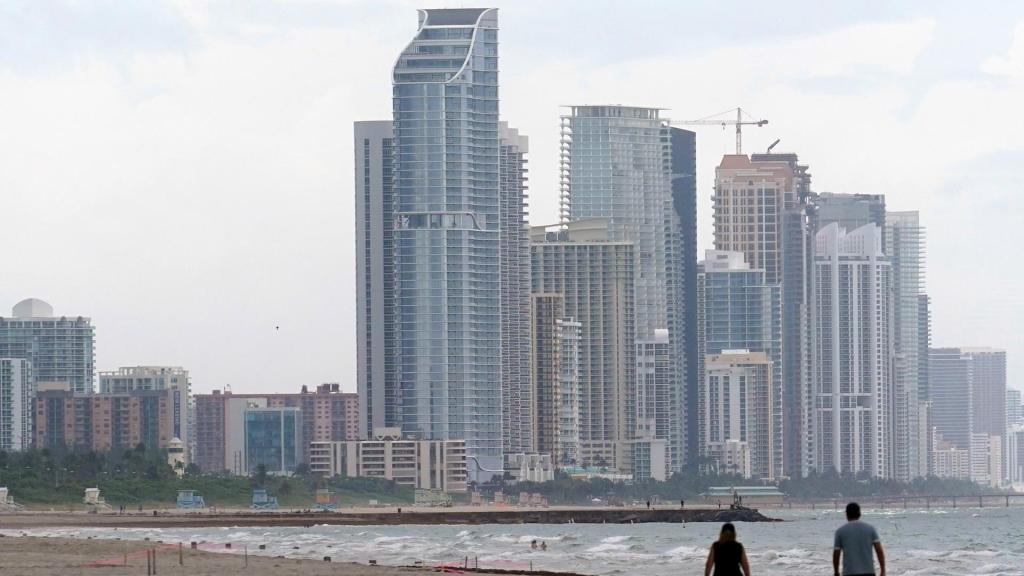
A recent study has uncovered that more than 30 high-rise condos and hotels in South Florida, many constructed within the last decade, are experiencing subsidence, with construction activities suspected as a contributing factor.
By the Numbers
Researchers examined 35 buildings over a 12-mile (19 kilometers) stretch from Miami Beach to Sunny Isles Beach, finding they had settled by between 0.8 and 3.1 inches (2 to 8 cm). Approximately half of these structures are less than ten years old, as reported by scientists from the University of Miami Rosenstiel School of Marine, Atmospheric, and Earth Science. The study was released on Friday.
RELATED: Is the City of St. Pete Really Sinking?
What They’re Saying
“The discovery of the extent of subsidence hotspots along the South Florida coastline was unexpected,” stated Farzaneh Aziz Zanjani, the lead author of the study. “It highlights the critical need for continuous monitoring and a better grasp of the long-term effects on these buildings.”
Why It Matters
Although it’s common for buildings to settle slightly during and shortly after construction, the extent and timing of the observed sinking were surprising. The underlying geology of the area, featuring a mix of limestone interspersed with sand layers, can shift under the weight of skyscrapers and due to construction vibrations. Tidal movements and construction impacts from up to 1,050 feet (320 meters) away have also played roles in the settling. Satellite imagery captured these changes, with the most significant effects seen in Sunny Isles Beach, and preliminary data hinting at similar issues further north in Broward and Palm Beach counties.
Local Perspective: The Surfside Tragedy
The study area included Surfside, where the Champlain Towers South collapsed in Florida in June 2021, resulting in 98 fatalities. While that incident was attributed to deteriorating concrete due to neglect and design flaws, it underscored the necessity for vigilant monitoring of building integrity, especially in corrosive coastal environments.
What’s Next?
Researchers aim to explore if different parts of these buildings are subsiding at varying rates, which might lead to structural issues like cracks or utility line failures in the long run.
This study follows another from earlier in the year, which found that several major cities along the Atlantic coast, including New York City, Long Island, Baltimore, and Virginia Beach, are also sinking at rates exceeding sea-level rise.
Want to win a $25 Amazon gift card?
To enter, simply follow us on Facebook, Instagram, Threads, or X between now and Tuesday, December 24th. (Psst… You can enter up to 4x by following us on all four! But sorry, U.S. residents only.)

(Image credit: First Coast News)

 St. Pete-Clearwater Sun
Leave a comment