
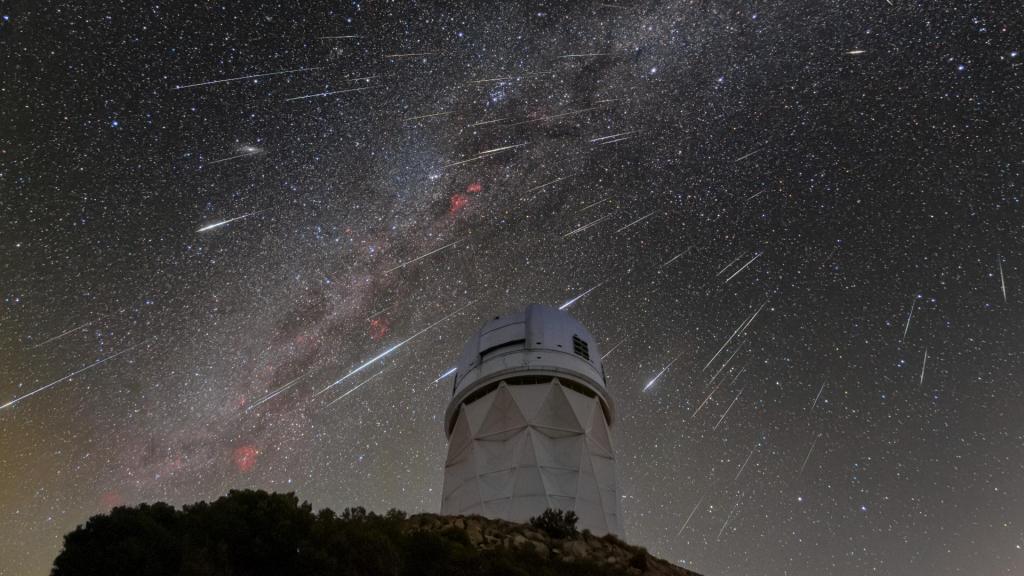
Stargazers, get ready! The dazzling Geminid meteor shower, one of the brightest and most reliable celestial events of the year, is about to peak.
When to Watch
The Geminids will peak on Friday night, Dec. 13, through the early morning of Saturday, Dec. 14, 2024. During this peak, up to 120 meteors per hour may be visible under clear, dark skies. In ideal conditions, NASA notes you could spot a meteor every minute.
However, this year’s viewing conditions are slightly less favorable due to a nearly full moon, which may reduce visibility of the usually bright and colorful meteors. Nevertheless, some meteors can still be spotted earlier in the week leading up to the peak.
What Makes the Geminids Special?
Unlike most meteor showers, which originate from comets, the Geminids are created by debris from an asteroid named 3200 Phaethon. Discovered in 1983, this asteroid is sometimes referred to as a “dead comet” or “rock comet” due to its unique behavior when nearing the sun.
Geminid meteors are known for their bright, colorful streaks, with many appearing greenish due to their unique composition. NASA considers the Geminids to be among the best and most dependable annual meteor showers.
How to Watch the Geminids
- Best Viewing Times: After midnight Friday until dawn Saturday. Meteor activity tends to increase as the night progresses, peaking around 2 a.m. local time.
- Location: Find a dark spot away from city lights with an unobstructed view of the sky.
- Preparation: Allow 30 minutes for your eyes to adjust to the darkness. Bring a blanket or sleeping bag, dress warmly, and lie flat on your back with your feet facing south.
- Pro Tip: Focus on the entire night sky rather than just the Gemini constellation, where the meteors appear to originate (known as the “radiant”).
Fun Fact: What Is a Radiant?
The “radiant” is the point in the sky where the meteors seem to come from. For the Geminids, this is near the constellation Gemini. While the meteors appear to originate here, they can streak across any part of the sky, so keep your gaze wide.
Why Meteor Showers Happen
Meteor showers occur when Earth passes through the debris left behind by comets or asteroids. In this case, the Geminids are caused by fragments from 3200 Phaethon, which burn up as they enter Earth’s atmosphere, creating a brilliant celestial show.
Whether you’re a seasoned stargazer or just stepping outside to catch a glimpse, the Geminids promise a memorable spectacle. Grab a cozy blanket, head outdoors, and enjoy the cosmic fireworks.
Follow us on Facebook, Instagram, Threads, Google, & X
(Image credit: AP)



 St. Pete-Clearwater Sun
Leave a comment