
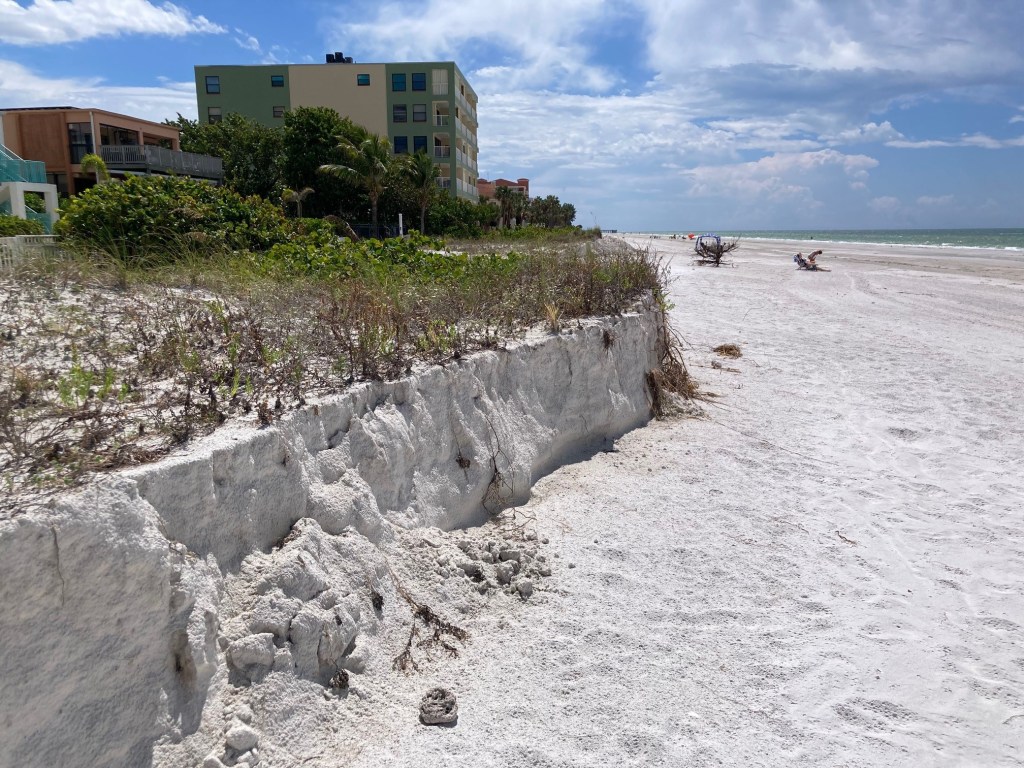
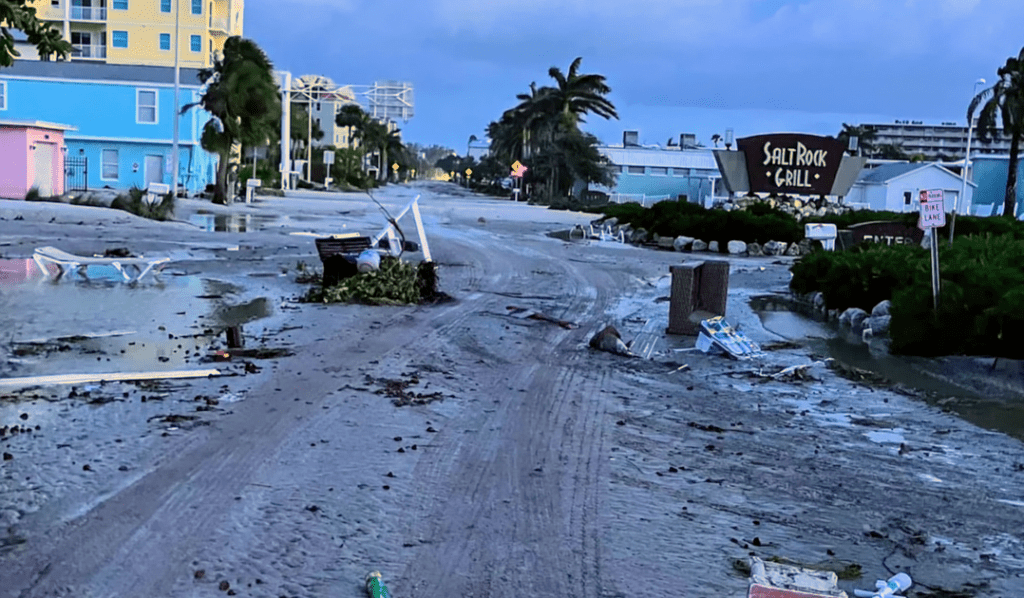
Pinellas County officials provided an update on recovery efforts for beaches and parks weeks after Hurricanes Helene and Milton caused extensive damage along the Gulf Coast.
During the briefing, Chief Resiliency Officer Dr. Wes Brooks joined Commission Chair Kathleen Peters and Florida Representatives Linda Chaney and Nick DiCeglie to discuss the county’s commitment to beach renourishment, a program deemed “vital and viable” in the wake of the storms.
The hurricanes left many beaches completely eroded, underscoring the need for resilience-focused recovery measures to restore the community. Peters emphasized that the county has been planning for such restoration efforts for years, and the recent storms have only heightened the urgency.
The county is collaborating with the Army Corps of Engineers to rebuild the beaches and provide resources to local communities. While $60 million had been earmarked for flood risk protection, officials continue to work with state leaders to secure additional funding for these recovery efforts.
A key concern is the missing sand, which could have mitigated storm impacts. After Hurricane Irma, beaches were left 5 feet below their normal elevation, reducing their ability to absorb storm energy. “This must remain our highest priority for the safety of our residents,” Peters stressed.
The county experienced a loss of up to 1 million cubic feet of sand. Areas such as Sunset Beach, Treasure Island, and Bel Air Beach suffered the worst erosion, while Pass-a-Grille fared better, though it also lost significant sand.
Officials reiterated the importance of the next steps in beach restoration, viewing them as critical not only for recovery but for the long-term resilience of the community.
Follow us on Facebook, Instagram, Threads, Google, & X
(Image credit: WUSF)



 St. Pete-Clearwater Sun
Leave a comment