
States will now be able to apply for waivers to accept digital identification cards, provided they comply with REAL ID protocols.
With the deadline approaching for Florida travelers to obtain a REAL ID-compliant driver’s license or state identification card, federal officials have introduced new guidelines for using digital IDs.
Under the REAL ID Act of 2005, travelers will need an updated driver’s license, ID card, or other documentation to board domestic flights, enter nuclear power plants, or access certain federal buildings. Recent amendments by the U.S. Transportation Security Administration (TSA) now allow individuals to use mobile driver’s licenses at airport security checkpoints. These digital IDs, stored on devices such as smartphones, can be read electronically at certain checkpoints.
Starting May 7, 2025, states can apply for a waiver from the TSA to accept digital identification cards, as long as they comply with REAL ID security protocols. Officials have also proposed a phased implementation, potentially pushing the full enforcement date to May 7, 2027, if the TSA and other federal agencies opt for this approach.
The TSA has published this rule on mobile driver’s licenses now to give states ample time to ensure their digital ID systems meet REAL ID fraud protection standards. More comprehensive mobile driver’s licenses requirements are expected once federal guidelines are finalized.
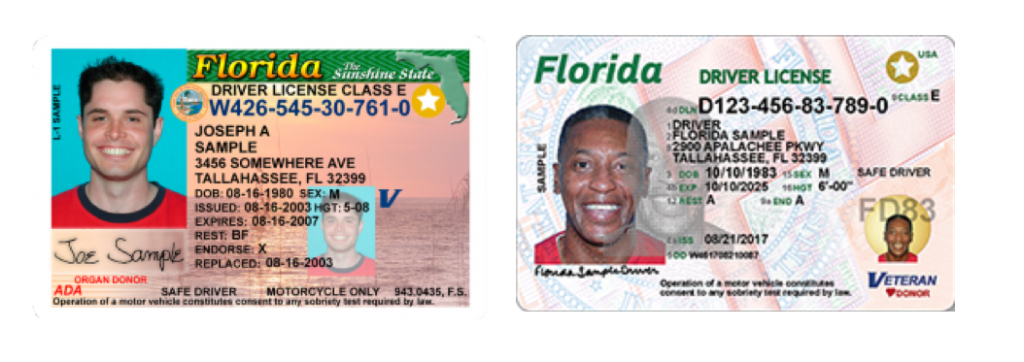
Currently, Miami International Airport in Florida accepts digital IDs. Although the REAL ID Act became effective nationwide on May 11, 2008, Florida began issuing REAL ID-compliant credentials after January 1, 2010, according to the Florida Highway Safety and Motor Vehicles Department. These new credentials feature a star in the upper right corner of the card, signifying REAL ID compliance.
Floridians must visit a driver’s license service center or tax collector office to obtain a REAL ID for the first time. U.S. citizens must bring one of the following primary documents to establish identity, proof of legal residence, and date of birth:
- Valid, unexpired U.S. passport
- Original or certified copy of a birth certificate
- Consular report of birth abroad
- Certificate of naturalization issued by DHS
- Certificate of citizenship
If the current name differs from the name on the primary identity document, you should also bring a court-ordered name change document, marriage certificate issued by the courts, and/or a divorce decree issued by the courts.
(Image credit: Pinellas County Tax Collector’s website)




 St. Pete-Clearwater Sun
Leave a comment