
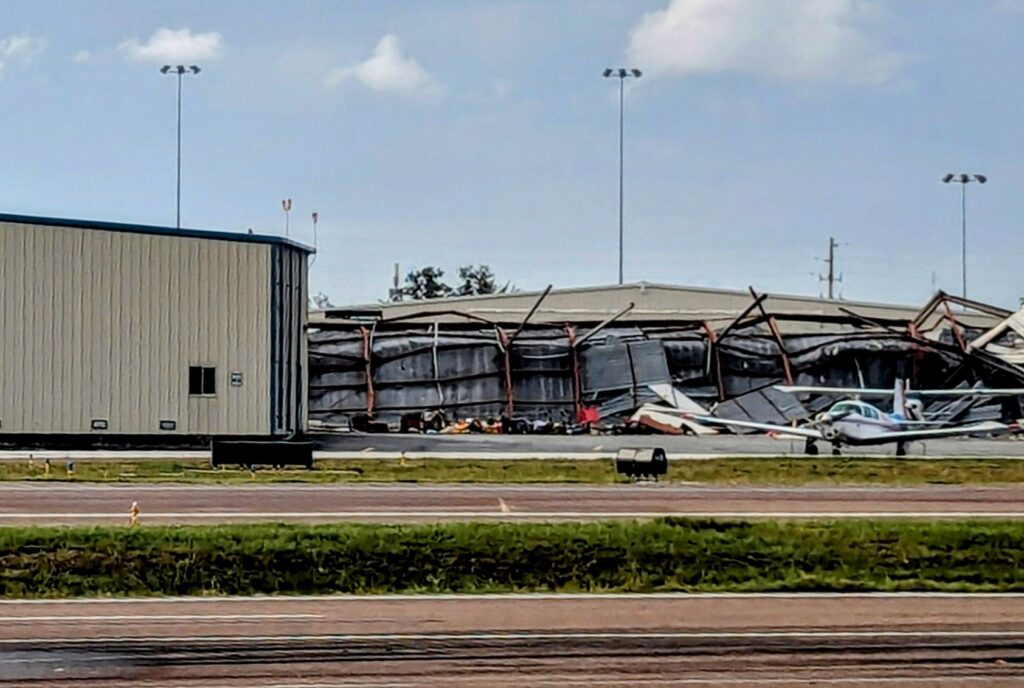
The City of St. Petersburg’s elected representatives will convene Thursday for the first time since October 3 to discuss issuing bonds to help finance a new Tampa Bay Rays stadium. This meeting marks the city council’s second since September 19 and Hurricane Helene, and the first since Hurricane Milton caused significant damage to St. Pete, including Tropicana Field. The members will act as an expanded Budget, Finance, and Taxation (BFT) Committee.
The administration plans to allocate $287.5 million to offset the construction costs of a $1.37 billion ballpark and $130 million for infrastructure improvements in the surrounding Historic Gas Plant District. The Rays will cover repair, maintenance, and insurance costs for the new stadium, which is designed to withstand a Category 4 hurricane.
“The long-term effects of the hurricanes, including any capital resiliency funding that may be required, is not known at this time,” the documents state. “However, the city does not expect that the financial impacts of Hurricane Helene and Hurricane Milton will have a material adverse impact on its ability to pay debt service on the bonds.”
Initial Storm Costs
Assistant City Administrator Tom Greene and Debt Finance Director Anne Fritz will lead a presentation initially scheduled for October 17. City officials updated documents to reflect storm impacts.
“Since submitting the BFT package for the 10/17/2024 meeting, certain documents were required to be updated to add disclosures relating to Hurricane Milton, as well as the final review process from the parties,” states the first page of a PowerPoint presentation.
A section titled “Climate Change and Natural Disasters” provides the first public storm-related cost updates. It begins by noting that Helene passed roughly 100 miles offshore of St. Petersburg before making landfall on September 26 in Florida’s Big Bend area.
The document states that “recovery and debris removal are ongoing” and “preliminary estimated losses to city property” are $18 million. This figure will likely increase as officials continue evaluating Helene’s damage.
The document also notes that Milton made landfall on October 9 near Siesta Key, roughly 55 miles from the city, as a Category 3 hurricane. “The city received significant wind effects, which resulted in damages to city property and Tropicana Field.”
Milton’s gusts, which topped 100 mph in St. Petersburg, shredded the stadium’s semi-translucent, Teflon-coated fiberglass dome. Engineers did not design the once-enclosed facility to drain, and subsequent water intrusion exacerbated storm damage.
Financial Losses Mount
“Preliminary losses to city property and Tropicana Field are $70 million,” officials wrote. “The city is currently evaluating damage to Tropicana Field and city properties.”
The city is responsible for repairs and has insurance on the stadium. However, this will not cover widespread storm-related expenses for municipally owned structures.
City officials expect “external insurance to cover a portion” of its expected losses from Helene and Milton. They plan to supplement that funding with state and federal assistance.
St. Petersburg’s general property insurance program has a $100 million combined windstorm and flood limit. Officials must pay 10% of the first $50 million.
Additionally, each insured location has a 5% windstorm and 5% flood damage deductible “for each cause of loss,” with a $1 million minimum. City-owned Albert Whitted Airport suffered extensive damages, and officials are still assessing water resource facility damage.
However, the document states those facilities are insured under a separate program. Officials also plan to tap into St. Petersburg’s economic stability and equipment replacement funds to “maintain city operations” and aid its recovery process.
Officials redlined previous language stating that the city’s storm losses would likely fall within “limits and sub-limits” of the external insurance program and that its exposure would not surpass deductibles. The documents now note that administrators, like many constituents, have requested Federal Emergency Management Agency and state assistance to help cover losses.
Council members will vote to approve $75 million in tax-exempt funding for “stadium-related infrastructure” and $212 million for “stadium-eligible costs.” They must also agree to use Intown Tax Increment Financing (TIF) revenues and an “up to amount” for “pricing flexibility and issuance costs.”
The administration’s resolution also certifies that the city “determined the project serves a public purpose” and that “it is in the best interest” to accept the underwriters’ offer to purchase the bonds “at a negotiated sale.”
St. Petersburg’s October 2024 debt service estimate for stadium and infrastructure costs is $671.9 million. This represents a $12 million decrease from April and a $32 million reduction from October 2023.
(Photo credit: Mark Parker)

 St. Pete-Clearwater Sun
Leave a comment