

Florida health officials reported Tuesday that 13 people have died this year from Vibrio vulnificus infections, following flooding from hurricanes Helene and Milton. The state has documented 74 cases of the potentially lethal bacteria, matching the record set during Hurricane Ian in 2022.
Vibrio vulnificus, which thrives in warm seawater, can cause necrotizing fasciitis—a severe condition where tissue surrounding wounds deteriorates rapidly. The Centers for Disease Control and Prevention notes that this infection carries a 20% mortality rate, with death possible within 48 hours of onset.
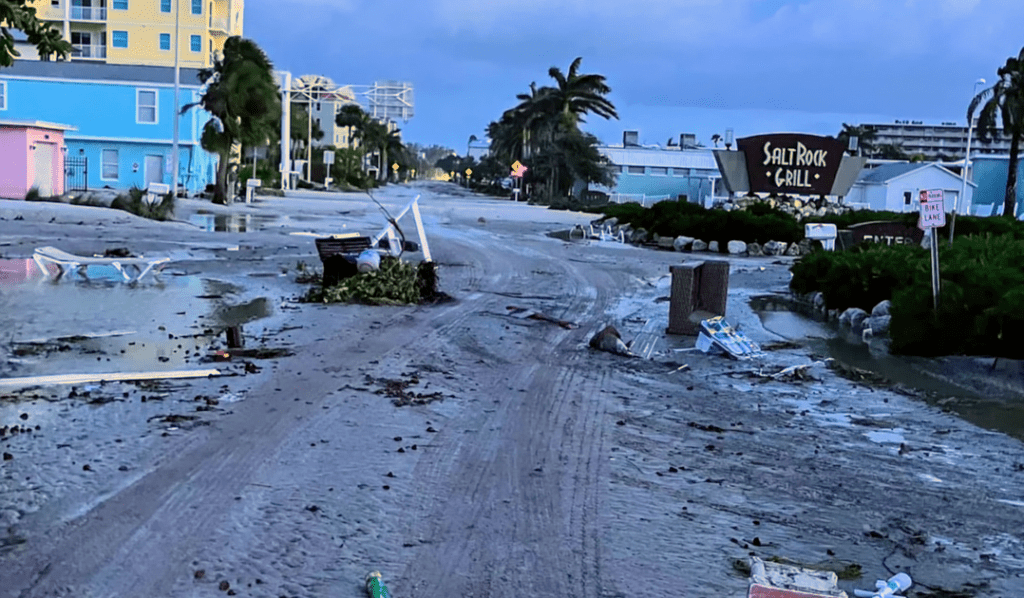
The impact has been particularly severe in coastal regions, with Pinellas County recording 14 cases and Hillsborough County reporting seven. Health authorities observed an unusual increase in infections across several counties, including Citrus, Hernando, Lee, Pasco, and Sarasota, following Hurricane Helene’s landfall on September 26 and Hurricane Milton in early October.
Health Officials Warn of Infection Risks
State health authorities advise avoiding water contact, particularly for individuals with open wounds. The current case count of 74 represents a significant increase from the 46 cases reported in 2023.
Recognizing the Symptoms
Gastrointestinal Infection
- Watery diarrhea
- Stomach cramps
- Nausea
- Vomiting
- Fever
- Chills
Bloodstream Infection
- Fever
- Chills
- Severe blood pressure drop
- Blistering skin lesions
Wound Infection
- Fever
- Redness
- Pain
- Swelling
- Abnormal skin discoloration
Prevention Guidelines
Florida Health Department recommends:
- Avoiding contact with flood, standing, sea, and brackish waters when possible
- Using waterproof bandages to cover any open wounds that might come into contact with contaminated water
- Thoroughly washing skin and wounds with soap and clean water after exposure to potentially contaminated water



 St. Pete-Clearwater Sun
Leave a comment