
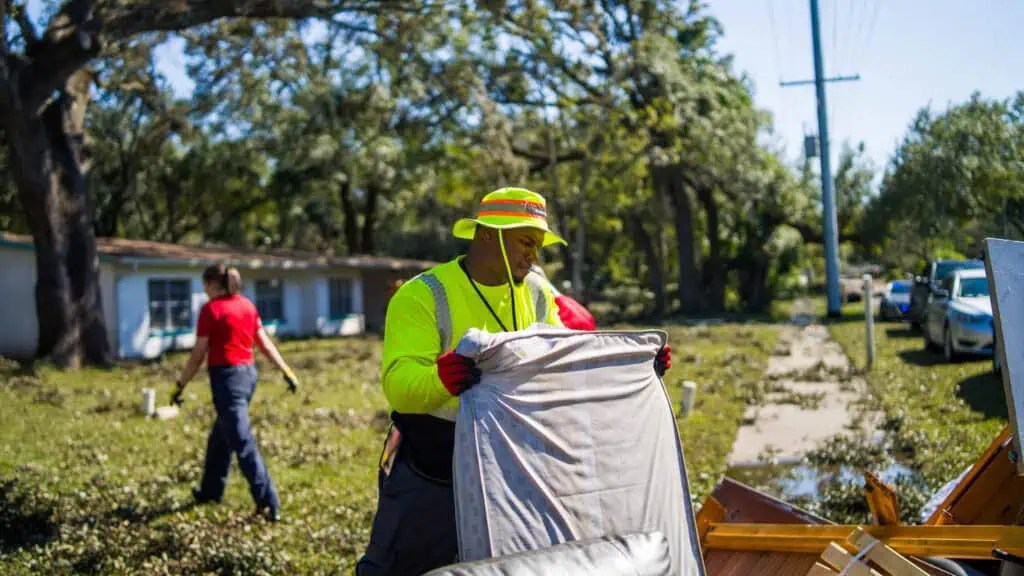
Back-to-back hurricanes have caused widespread destruction, leaving unprecedented debris throughout Tampa. The Solid Waste Department immediately set ambitious goals to tackle the challenge. Given the massive amounts of residential and storm debris left by Hurricanes Helene and Milton, the department increased payment rates, hired more haulers, and expanded capacity. (photo credit City of Tampa)
Currently, 32 Solid Waste trucks and 23 contracted trucks are actively collecting storm debris across the city, gathering an average of 3,750 cubic yards daily—equivalent to 18 football fields. Officials estimate the total debris from both hurricanes could reach around 1,000,000 cubic yards, covering an area equal to 10,000 football fields. By comparison, Hurricane Irma in 2017 produced 175,000 cubic yards of debris.
Helping Neighborhoods Recover Quickly
The city has released a map outlining storm debris collection areas. Updated daily, this map keeps the community informed about completed collections and upcoming clean-up zones. To speed up the process, haulers deliver debris to five drop-off stations throughout the city, reducing the distance to the McKay Bay Waste-to-Energy Plant, where all waste is burned to generate energy.
Speed and efficiency are top priorities to help neighborhoods recover quickly. Despite challenges such as regional competition for hauling services and higher rates, the City of Tampa aims to complete the clean-up within 90 days.
Where Residents Can Bring Their Debris
Tampa’s two authorized debris collection contractors are hiring subcontractors. Interested companies can contact Ashbritt at lcosta@ashbritt.com or Phillips and Jordan Environmental at bsmallwood@pandjenv.com.
Residents seeking faster debris removal can take their debris to the McKay Bay Transfer Station at 114 S 34th Street free of charge. Privately-hired companies pay $95 per ton.
The city reminds residents not to bag storm debris; instead, they should leave it in a pile next to the roadway.



 St. Pete-Clearwater Sun
Leave a comment