

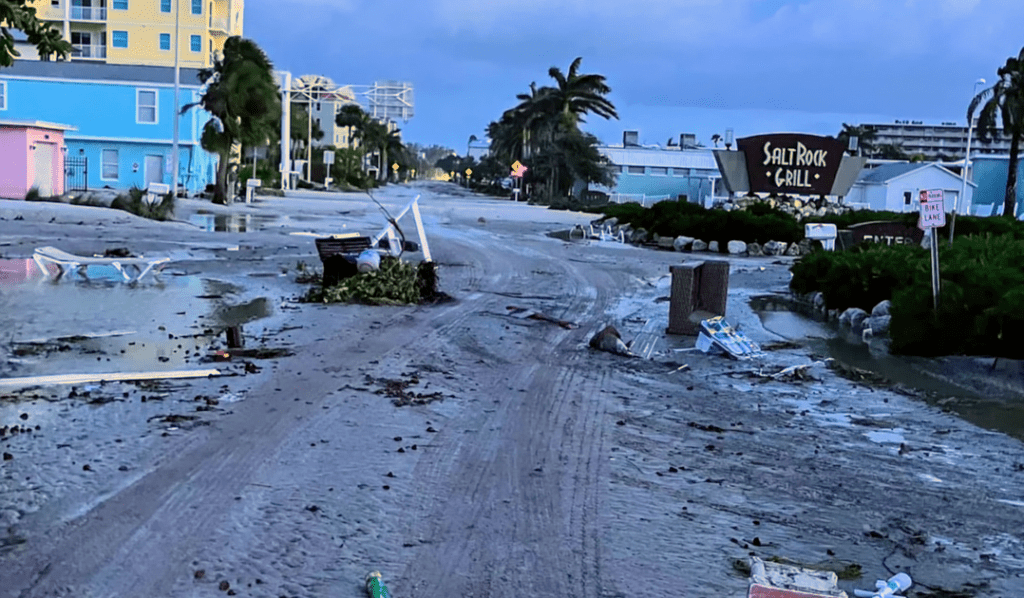
Hurricane Milton heavily impacted Tampa Bay, exacerbating damage already caused by Hurricane Helene. Many homeowners, especially those lacking wind and flood protection, face further challenges, and reinsurance prices are expected to rise. Florida’s Citizens Property Insurance will absorb much of the loss, though national insurers will also be significantly affected.
Hurricane Milton’s Devastating Impact: Economic and Insurance Implications
Hurricane Milton has emerged as one of the most expensive natural disasters to hit the United States, according to recent assessments by financial experts. Moody’s Analytics estimates insurance losses between $30 billion and $50 billion, while Morningstar DBRS projects the total economic damage could approach $100 billion.
Financial Toll
Morningstar DBRS analysts predict Milton’s costs will fall in the upper range of their initial $30 billion to $60 billion forecast. The National Flood Insurance Program (NFIP) is expected to face a $10 billion bill from the hurricane’s aftermath.
The storm’s impact was particularly severe due to its proximity to the Tampa metropolitan area, a major economic center in Florida. The region, still recovering from Hurricane Helene, ranks among the nation’s top 25 economic producers by GDP. Milton’s estimated losses are comparable to those of Hurricane Ian in 2022.
Compounded Challenges
The back-to-back occurrence of Hurricanes Helene and Milton presents unique challenges for insurers and policyholders alike. Mohsen Rahnama, chief risk modeling officer, highlights the potential for “coverage leakage,” where insurers may end up paying for non-covered costs due to the overlapping nature of the damages.
Many structures left uninsured or underinsured after Helene suffered additional damage from Milton’s high winds and rain. This situation complicates the claims process, as insurers grapple with attributing damages to specific events and determining appropriate payouts.
Insurance Market Implications
The Florida insurance market, already under strain, faces further pressure from these events. Citizens Property Insurance, the state-backed insurer of last resort, is expected to bear a significant portion of the losses. While large national insurers like State Farm are predicted to absorb extensive losses, smaller and mid-sized private insurers may face significant financial challenges.
Morningstar anticipates a likely increase in reinsurance prices, reversing recent signs of price stabilization. This trend could lead to higher premiums for property insurance consumers, as costs are passed down the line.
Consumer Impact and Advice
Robert Guinn, a partner at Cole, Scott & Kisssane, warns that many residents affected by both hurricanes may lack crucial coverage, particularly for wind damage. He advises consumers to ensure their properties are well-maintained and protected to potentially avoid claims and subsequent premium increases.
A critical issue highlighted by experts is the widespread misconception about flood insurance coverage. A recent study from the University of South Florida St. Petersburg found that over 73% of homeowners mistakenly believe they have flood insurance. Trevor Burgess, CEO of Neptune Flood, reports that only 12% of Florida properties actually have flood coverage, describing this as a “massive disconnect.”
As the region grapples with the aftermath of these devastating storms, the importance of comprehensive insurance coverage and proper property maintenance has never been more apparent. The long-term implications for the insurance market and property owners in hurricane-prone areas remain a significant concern for industry experts and policymakers alike.


 St. Pete-Clearwater Sun
Leave a comment