

Red tide, initially found in low concentrations around Pinellas County before Hurricane Helene, has surged following the storm’s aftermath. (image credit FWC)
Chris Robbins, the associate director of science for the Ocean Conservancy, confirmed a strong link between storms and red tide. Meteorologists predict Hurricane Milton, now a Category 5, will hit the area by Wednesday evening.
According to the latest Florida Fish & Wildlife Conservation Commission or FWC map, low to medium concentrations of Karenia brevis, the organism responsible for red tide, are present from coastal St. Petersburg to Clearwater. Water samples have revealed high concentrations of harmful algae offshore of Honeymoon Island.
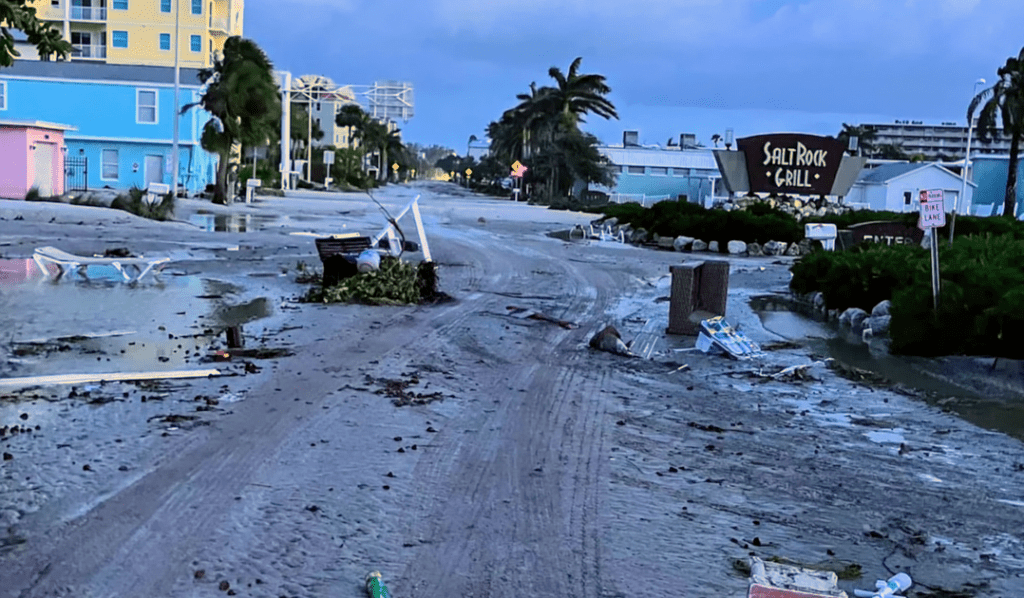
County officials have warned that residents cleaning their homes and businesses post-Hurricane Helene might experience respiratory irritation, particularly when the wind blows onshore.
“It is unclear if Hurricane Helene is connected to this red tide occurrence, nor when conditions will improve,” the announcement stated.
Red tide naturally occurs in the Gulf of Mexico, but excess nutrients like nitrogen and phosphorus can intensify and prolong its effects.
Fertilizer and stormwater runoff provide the nutrients needed for harmful algal blooms to grow. After heavy rains inundated much of the area in early September, FWC maps began showing low red tide levels.
Concentrations have dramatically increased since Helene, with over 1.5 million gallons of sewage spilling in St. Petersburg.
“The evidence is clear,” said Robbins. “There is a strong link between hurricanes, the rain, runoff they generate, and the release of untreated sewage when plants are overwhelmed and shut down.
“This undoubtedly fuels Karenia brevis and red tide.”
Robbins noted that the waters around Tampa Bay typically have low nitrogen levels. However, storm runoff supplies the necessary nutrients to “supercharge these red tide events” and other harmful algal blooms, which pose a greater threat to wildlife than to humans.
Red tide causes fish kills and all algal blooms block sunlight required to support seagrass, a crucial habitat. Nutrients from decomposing fish can create a positive feedback loop, increasing red tide and causing more marine life to wash ashore.
Local officials must allocate essential hurricane recovery resources to remove dead fish. “This will be financially and logistically taxing for a region already stretched thin by storm cleanups,” said Robbins.
The area now braces for a potentially catastrophic hurricane. Robbins explained that onshore winds from the west could push red tide into Tampa Bay, worsening the problem, while offshore winds from the east would push algal blooms away from coastal communities.
“Milton could disrupt the red tide forming in the area,” Robbins added. “However, the rainfall, runoff, and potential sewage releases that follow could lead to a resurgence in the coming weeks,” he explained.


 St. Pete-Clearwater Sun
Leave a comment