
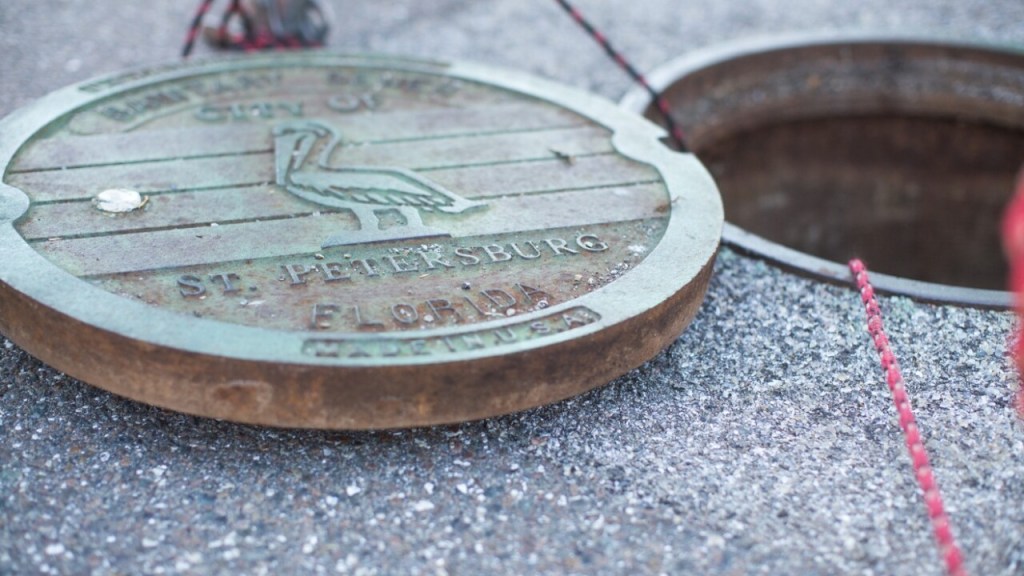
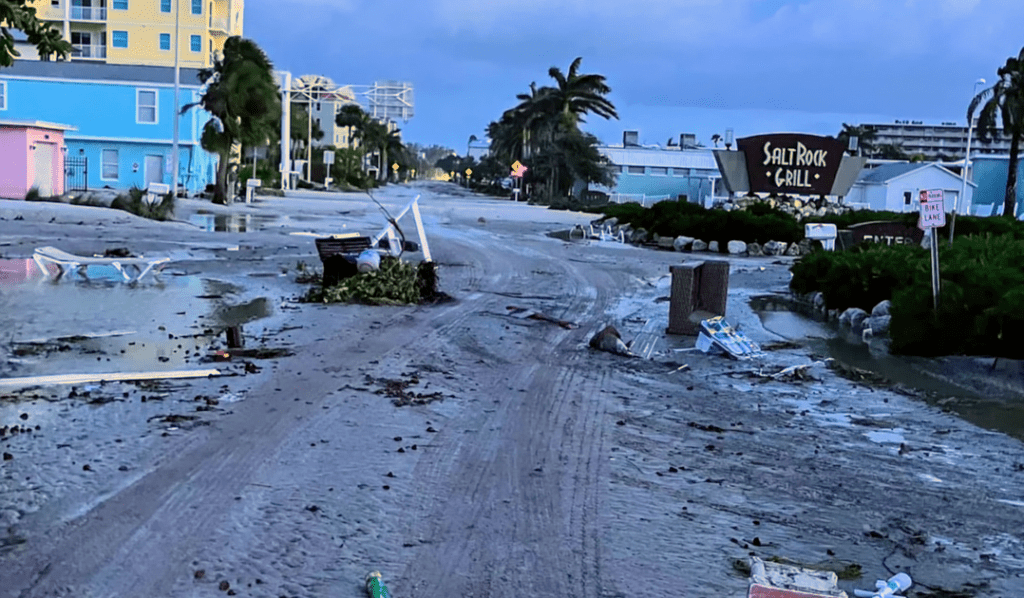
The recent tropical system that battered St. Petersburg has left in its wake an environmental crisis, as nearly 1.5 million gallons of untreated wastewater surged through city neighborhoods. The storm’s powerful surge overwhelmed the city’s infrastructure, leading to widespread sewage discharges.
At the heart of this environmental emergency was the Northeast Water Reclamation Facility (NWRF), responsible for a staggering 67% of the total pollution. City officials reported that the shuttered plant leaked 1.02 million gallons of sewage, beginning around 8 p.m. on Thursday and continuing into the following day. The effluent made its way south, contaminating Placido Bayou.
In an emergency briefing, Claude Tankersley, a city official, provided context for the situation. He noted that under normal circumstances, the plant processes between 8 to 10 million gallons of sewage daily. The storm’s 7-foot surge would have rendered the facility inoperable for up to six weeks. While acknowledging the severity of the current spill, Tankersley suggested that the outcome could have been far worse.
The decision to cut power to the NWRF was made late on September 26, as flooding engulfed much of the city and power outages became widespread. This difficult choice left approximately a quarter of the city’s population – those north of 30th Avenue and east of I-275 – without the ability to use basic sanitation facilities for at least 48 hours.
The notification process for this shutdown came under scrutiny from City Councilmember Lisset Hanewicz, who pointed out that earlier warnings could have allowed residents, particularly those with special needs, to make more informed decisions about evacuation.
Amidst the crisis, there were moments of heroism. Craven Askew and his team at the NWRF worked tirelessly to keep the plant operational as long as possible, even facing danger as they evacuated through rising floodwaters. Their efforts to reopen the plant within 24 hours were praised by Tankersley as “an amazing feat.”
Beyond the NWRF, the city reported six additional instances of untreated wastewater discharges, primarily from overflowing manholes. These spills affected various water bodies including Foch Lake, Edgemore Creek, Tampa Bay, Boca Ciega Bay, and Lake Caya Costa.
The environmental impact of these spills is compounded by recent events. In just under two months, St. Petersburg has seen at least two million gallons of sewage spilled into its neighborhoods, including over 400,000 gallons during Hurricane Debby in early August.
The aftermath of this crisis extends beyond immediate clean-up efforts. The city now faces potential fines from the Florida Department of Environmental Protection for these sewer discharges. Additionally, multiple water samples from both the NWRF and the Northwest Water Reclamation Facility failed to meet state standards in the days following the storm, with some samples showing alarming levels of fecal coliform and suspended solids.
In a silver lining to this environmental disaster, Tankersley reported that the city’s drinking water system remained unscathed throughout the ordeal. As St. Petersburg begins its recovery, the focus will undoubtedly be on addressing these infrastructure vulnerabilities to prevent future catastrophes of this magnitude.


 St. Pete-Clearwater Sun
Leave a comment