

The aftermath of last week’s devastating tropical system continues to unfold across the southern Appalachians, with western North Carolina bearing the brunt of the catastrophe. As of Friday, search and rescue operations persist in their grim task of locating hundreds of missing individuals amidst a rising death toll that has surpassed 200, making this the most lethal weather event to strike the U.S. mainland in nearly two decades.
The storm’s ferocity has left an indelible mark on the region’s landscape and infrastructure. Countless roads lie submerged or washed away, while compromised bridges have severed lifelines to remote mountain communities. These areas now grapple with widespread power outages and communication blackouts, complicating relief efforts.
A multi-agency response is in full swing, with federal, state, and local authorities pushing deeper into affected areas. Aid is being delivered by air to isolated pockets where ground transportation remains impossible. In a heartening display of community spirit, citizen-led volunteer groups have mobilized to supplement official relief operations, employing unconventional methods such as mule trains to reach the most inaccessible areas.
The situation in Buncombe County, home to Asheville and its environs, remains particularly dire. Local officials reported on Thursday that over 200 residents are still unaccounted for, with the county’s death toll standing at 72.
Key Developments
• Power restoration efforts continue, with approximately 757,000 customers still in the dark as of Friday morning.
• A collaborative effort between Airbnb and local 211 services is providing temporary housing for displaced residents across several affected states.
• Mission Hospital in Asheville has been operating at full capacity despite lacking municipal water supply, relying on tanker trucks to maintain operations.
• The governor has issued executive orders to ease housing and election regulations, while also addressing potential port worker strike impacts on recovery efforts.
Utility Companies Face Unprecedented Challenges
The mountainous terrain of western North Carolina presents unique obstacles for power restoration efforts. Duke Energy, the region’s primary utility provider, reports that while 1.2 million outages have been addressed, 170,000 customers in the mountain region remain without power.
Bill Norton, a spokesperson for Duke Energy, highlighted the extent of the destruction: “We’re dealing with catastrophic damage in areas where 105,000 of our customers reside. In many cases, our grid infrastructure has been completely washed away, and road collapses are hindering access.”
The scale of the damage is exemplified by a substation in Asheville’s Biltmore Village, which was almost entirely submerged. Its repair is estimated to take 3-4 months, necessitating the deployment of a massive mobile substation as a temporary measure.
Norton concluded with a sobering assessment: “In our company’s history, we’ve never encountered a storm of this magnitude. The road to recovery will be long, but we’re committed to seeing it through.”

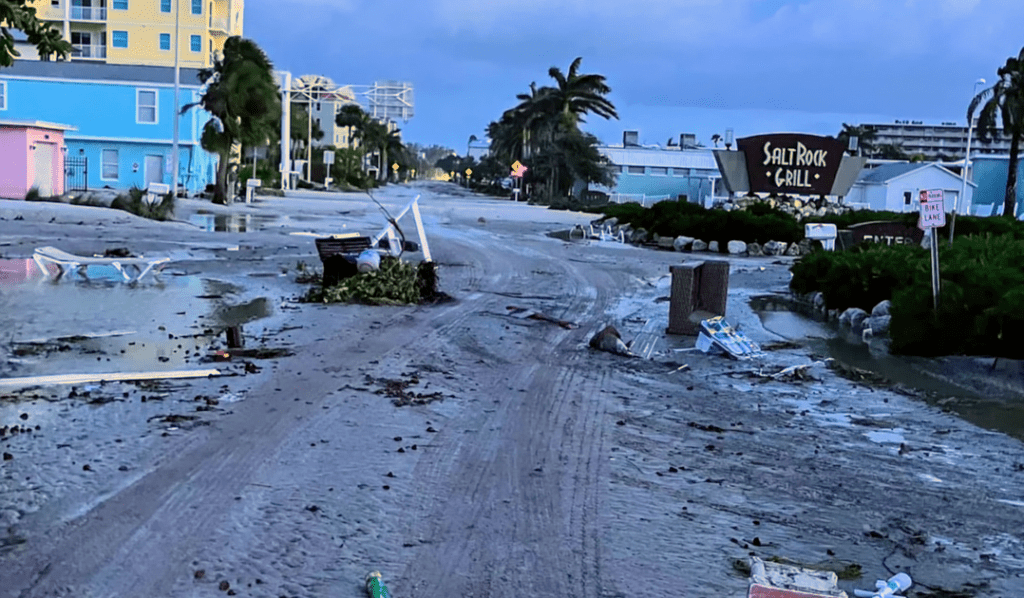


 St. Pete-Clearwater Sun
Leave a comment